THE recent proposal by the Malaysian Anti-Corruption Commission (MACC) and the Customs Department to establish a joint task force to monitor enforcement and tax collection at Malaysia's strategic ports is timely and commendable.
Industry expert Gary Foong, a former officer with Singapore’s Customs & Excise Department, said the initiative reflects the Government's commitment to addressing revenue leakage arising from smuggling, false or inaccurate declarations, document fraud, and other customs-related offences that undermine national revenue, trade integrity, and public confidence.
“Strengthening enforcement and improving compliance should be viewed as an important avenue for increasing government revenue collection, reducing losses from leakages and ensuring that existing tax frameworks operate more effectively, rather than relying on the introduction of new taxes or increases in existing tax rates.
“The Malaysian Border Control and Protection Agency (AKPS) was created to strengthen coordination among multiple enforcement agencies responsible for border control operations at ports, airports and land checkpoints.
“At sea, the Malaysian Maritime Enforcement Agency (MMEA) continues to play a critical role in safeguarding Malaysia's maritime borders by combating smuggling, illegal fishing, human trafficking and other cross-border crimes before they reach Malaysian ports.
“At the same time, MACC investigates corruption, abuse of power and organised criminal activities that contribute to revenue leakages.
“Taken together, these agencies form an important enforcement ecosystem,” he said. Therefore, Foong said, the proposed joint task force should be positioned as a platform to strengthen intelligence sharing, operational coordination and strategic oversight, rather than creating duplication of existing statutory responsibilities.
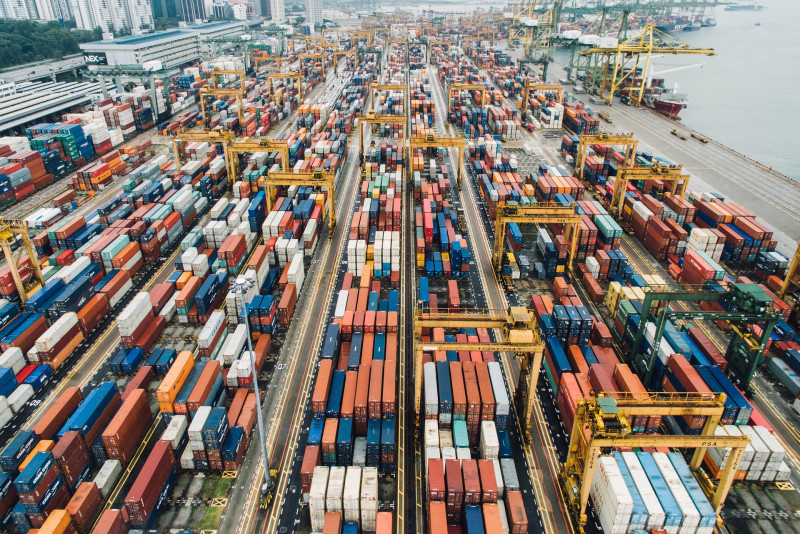
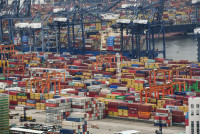
One area that deserves special attention is container management, which was specifically highlighted during discussions between MACC and the customs department.
“Container management should no longer be viewed merely as an operational customs function.
“In today's global trading environment, it has become a strategic national capability involving border security, revenue protection, trade facilitation and supply chain resilience,” he said.
He said containers for shipment are not simply physical box units transporting goods.
They represent complex movements of commercial information, financial transactions, regulatory obligations and potential security risks.
Every container entering or leaving Malaysia presents both an economic opportunity and a potential vulnerability.
“Without effective governance, containers can become channels for smuggling, customs fraud, false declarations, revenue leakages and other illicit activities.
“Therefore, Malaysia requires an end-to-end, intelligence-led container management approach covering the entire cargo lifecycle, from pre-arrival risk assessment, digital documentation and cargo profiling to port handling, customs clearance, inland transportation and post-clearance audit,” he added.
He also said that technology must become a key pillar in this transformation.
Modern border management increasingly depends on artificial intelligence (AI), predictive risk analytics, electronic container seals, digital cargo visibility, non-intrusive inspection systems, integrated trade platforms and real-time information sharing between enforcement agencies and industry stakeholders.
Equally important is ensuring clear governance.
“The Government is encouraged to clearly define the mandate of the proposed joint task force, including its relationship with AKPS, the Customs Department, MMEA and other enforcement agencies.
“Clear lines of responsibility will minimise duplication, improve operational effectiveness, increase integrity management, and strengthen public confidence in Malaysia's border management framework,” he added.
Foong stressed that the proposed joint task force has the potential to become a catalyst for this transformation.
Its success should be measured not only by enforcement outcomes but also by its ability to strengthen institutional coordination, embrace technology, leverage Malaysia's innovation ecosystem and enhance the country's position as a secure and efficient global trading hub, he added. – August 14, 2026


.jpeg)