By Murray Hunter
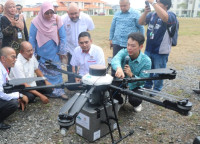
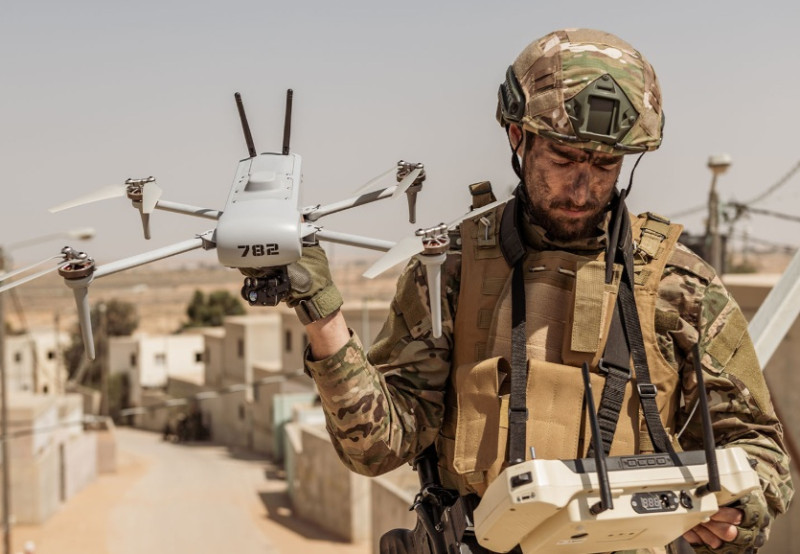
THE Thai Border Patrol Police (known locally as Tor Chor Dor) have been capability-testing Israeli-built Aero Sentinel drones near the tense Thai-Cambodian border.
The demonstration, led by Aero Sentinel’s chief pilot Or Shabat and reported via a social post by the company’s chief marketing officer, Ofir Avram, took place in highly complex terrain under challenging GPS-denied conditions.
According to reports in the Defence Blog, an independent defence and security outlet, Avram stated that the trial “delivered outstanding results, exceeding all expectations and proving the system’s reliability and operational effectiveness where it matters most.”
When this technology becomes fully operational with Thai security forces, it will probably be employed in the deep south (Pattani, Yala, and Narathiwat) against local insurgents operating in the region.
Attacks in the deep south have grown more intense and violent over recent months, with many Thai military servicemen and paramilitary personnel killed in insurgency assaults.
The new Israeli-designed and built drone surveillance systems would have clear practical applications against the militant groups active across the region.
Aero Sentinel systems have previously been used by Israel for sensitive intelligence missions during its 2025 military campaign against Iranian targets, aimed at identifying high-value targets.
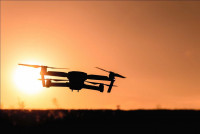
There are also stories that the system has been used in Ukraine against Russian forces. The uniqueness of the Aero Sentinel platform lies in its ability to operate without GPS signals (using capabilities such as visual navigation via onboard cameras), surveil large areas, and function effectively in contested or jammed environments.
Such a system, if deployed against insurgents who rely on surprise attacks in difficult terrain, could prove highly effective.
This capability is particularly relevant given the broader context along the Thai-Cambodian border, where tensions have remained high for more than a year.
Clashes that began in mid-2025 killed dozens and displaced more than a million people amid a long-running territorial dispute. Even after a ceasefire, Thai forces accused Cambodia of flying over 250 unauthorised drones in a single night, prompting temporary civilian drone bans and increased patrols.
Thailand has also released footage of strikes on what it described as a Cambodian drone control centre.
In an environment where GPS jamming or interference has become routine, resilient drones hold obvious appeal for border security forces.
The Aero Sentinel could potentially shift the equation, tipping the balance of military surprise away from unsuspecting targets and toward Thai security forces.
There has been no announcement by the Thai government or military as to when (or if) the Aero Sentinel system will be deployed into the deep south.
However, the effect of such a system on the insurgents could potentially be catastrophic, and potentially lead to an escalation in hostilities.
Aero Sentinel, an Israeli manufacturer of low-observable tactical drones, is currently expanding internationally, including a distribution agreement for its G2 and G3 systems into Kazakhstan and increased serial production in Israel with added visual navigation capabilities. – August 13, 2026