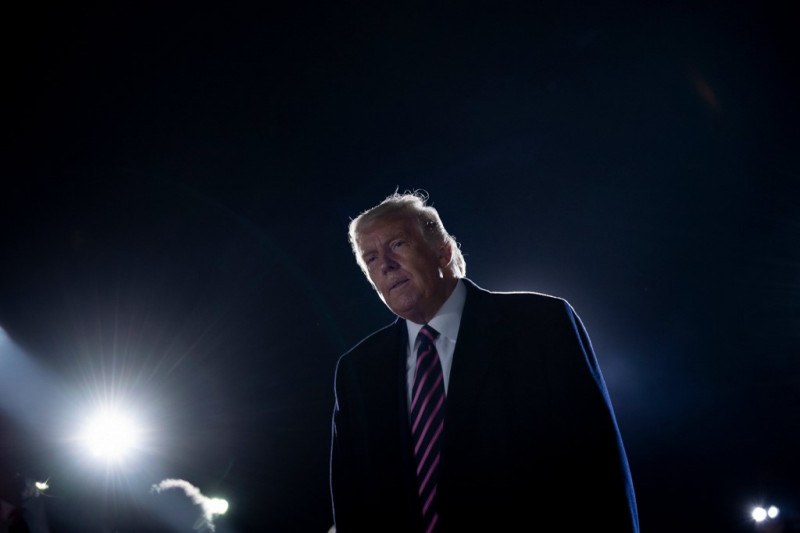
US Democrats are preparing investigations into allegations that President Donald Trump has politicised intelligence agencies and weakened their operations, with particular focus on the dismissal of intelligence personnel and growing pressure on analysts to avoid politically sensitive findings.
Incoming House Intelligence Committee chairman Jim Himes said investigations would begin after Democrats take control of the House of Representatives in January, following their sweeping victory in the Nov 3 midterm elections.
"There’s absolutely evidence that analysts are hesitant to write on topics that they think might be controversial. There’s absolutely evidence of a decline in morale in the analytic community because of the pressures that they are under," the Connecticut Democrat told Reuters on Nov 10.
Himes said the committee would examine what he described as retaliatory dismissals of intelligence officers whose assessments contradicted the administration's positions.
"We’re going to tell the story of the patriots who were fired because they said something that was inconsistent with what the president wanted to be true," he said.
The planned investigations follow two years of limited congressional scrutiny under Republican control, during which hundreds of intelligence personnel were reportedly dismissed or forced out, while the production of assessments on key issues, including Iran, was disrupted.
Former Director of National Intelligence Tulsi Gabbard reduced her agency's workforce by about 40 per cent in 2025, while CIA Director John Ratcliffe pledged to cut more than 1,000 positions over several years.
Both agencies also introduced deferred-resignation programmes offering employees pay and benefits to leave their posts.
The cuts included experienced analysts and senior officials at the National Intelligence Council, the analytical body overseen by the Office of the Director of National Intelligence.
At least two dismissed analysts had been involved in an assessment that contradicted the White House's official position on Venezuela.
Critics have viewed the reductions as part of Trump's campaign against what he has described as the "deep state", arguing that the moves have depleted intelligence agencies of institutional experience and expertise.
Reuters had also previously reported tensions within the intelligence community over projects undertaken by Gabbard's Director's Initiative Group, which revisited the 2020 presidential election and the origins of Covid-19.
Concerns over intelligence cooperation
Himes said the committee would also examine the impact of Gabbard's decision to revoke the security clearances of serving and former intelligence officials about a year ago.
The move reportedly disrupted intelligence sharing and cooperation within the intelligence community and between agencies and Congress.
"The moment the intelligence community stops telling the truth to national leaders, you get into an Iraq war because of weapons of mass destruction that don’t exist," Himes said.
He said he had reviewed a legally mandated intelligence community survey showing that personnel had begun experiencing what he described as significant political pressure in 2025.
Himes added that he was working to declassify other internal intelligence reports that could shed light on the effects of the dismissals and alleged politicisation.
The committee also plans to scrutinise the administration's relationships with defence and intelligence contractors, as well as US covert operations overseas. - November 11, 2026