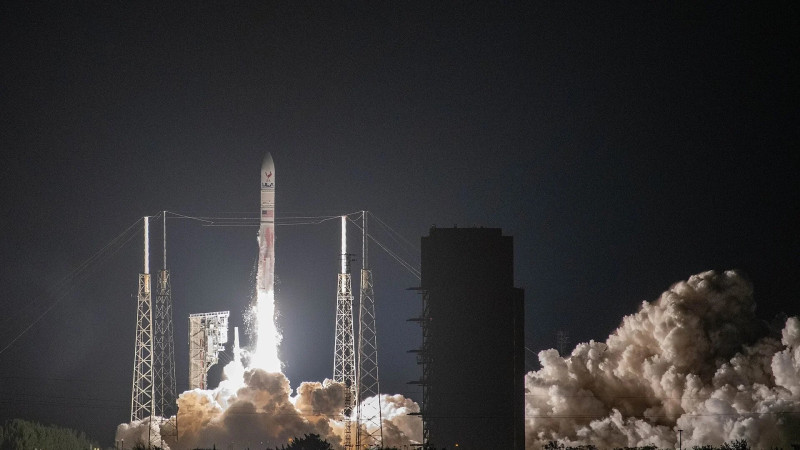
A UNITED Launch Alliance (ULA) Vulcan rocket failed about 10 minutes after liftoff from Florida on Sunday, destroying 40 Amazon satellites and dealing a major setback to the technology giant's bid to challenge SpaceX's Starlink internet network.
The failure marked the first mission loss in ULA's 20-year history and raised fresh concerns over the reliability of its flagship rocket, which is expected to play a key role in deploying Amazon's Leo satellite constellation.
ULA, a joint venture between Boeing and Lockheed Martin, said the rocket suffered an anomaly about 10 minutes into the flight after launching from Space Launch Complex 41 at Cape Canaveral Space Force Station.
"Based on data received by our Launch Director, we confirm that the Vulcan vehicle launched from Space Launch Complex 41 suffered an anomaly 10 minutes into the flight and failed to deliver the Amazon mission to orbit," the company said in a statement.
"Every flight generates data, and every flight teaches us something. Since the anomaly just occurred, we don't have any specific data yet to understand what occurred today," it added.
The cause of the failure remains unclear, with the incident expected to trigger an extensive technical investigation that could ground Vulcan for months.
The setback could further strain the US space launch industry, which is already facing capacity constraints amid other rocket failures and challenges across the sector.
Amazon said it recognised the risks associated with space launches and expressed confidence in ULA's ability to investigate the incident.
"There is risk with any launch, and that's especially true for inaugural missions like LV-01," Amazon said, referring to Sunday's mission.
"ULA has been a trusted partner for Amazon, and we believe they'll learn from this mission and deliver on their long-term plans for Vulcan."
Sunday's launch was Vulcan's fifth since its debut in 2024 and its first in nine months, following separate technical investigations into problems involving its solid rocket boosters and BE-4 engines.
The engines are supplied by Blue Origin, the space company founded by Amazon founder Jeff Bezos, which is also assisting ULA with the investigation, according to a person familiar with the matter.
Vulcan's previous two flights had encountered booster-related issues, including a February mission for the US Space Force. Both missions, however, successfully delivered their payloads into orbit.
The Pentagon had yet to approve Vulcan for the resumption of national security launches, pending its performance during Sunday's Amazon mission.
Blue Origin's New Glenn rocket also suffered a launchpad explosion in May, with an investigation identifying its engine as the cause. The company subsequently modified engines supplied to ULA for Vulcan.
It remains unclear whether the BE-4 engines contributed to Sunday's failure. Initial indications suggested the anomaly occurred after the second stage separated from the first-stage booster powered by the engines.
ULA was established in 2006 through the merger of Boeing's Delta rocket programme and Lockheed Martin's Atlas rocket programme. It had maintained a record of 100 per cent mission success until Sunday's incident.
The failure also compounds Amazon's difficulties in securing reliable launch capacity for its Leo satellite network, which is intended to compete with SpaceX's Starlink.
Unlike SpaceX, which operates its own rockets to deploy its satellites, Amazon relies on third-party launch providers, leaving its deployment schedule vulnerable to delays and failures across the industry.
Since 2025, Amazon has deployed 398 Leo satellites through 14 launches, representing about 12 per cent of the 3,236 satellites required for global service coverage.
The company had hoped to begin initial internet services this year, but Sunday's failure adds another obstacle to its deployment ambitions. - November 16, 2026