FALLING crude oil prices and a softer ringgit against the US dollar presented a mixed outlook for Malaysia's economy on Tuesday, as hopes of renewed diplomatic efforts to end the US-Iran conflict eased energy market concerns while expectations of tighter US monetary policy supported the greenback.
Brent crude traded below US$90 a barrel, while US crude hovered around US$80, recovering slightly after both benchmarks fell sharply in the previous session to three-month lows.
The decline followed reports of renewed diplomatic contacts, including talks between US Vice-President JD Vance and Qatar's prime minister on possible negotiations with Tehran.
US President Donald Trump has also delayed further strikes on Iran following the US midterm elections, although he warned that military action could resume after the new year if negotiations fail.
However, prospects for a resolution remain uncertain, with Iran demanding the removal of the US naval blockade and sanctions before fully reopening the Strait of Hormuz.
Crude shipments through the strategic waterway have also weakened. Kpler data showed average flows of about 9.5 million barrels per day in the 10 days to Nov 19, compared with 12.2 million bpd in October.
The decline in oil prices could ease pressure on Malaysia's fuel-related import costs, although prolonged disruption to shipments through the Strait of Hormuz remains a risk to global energy supply and price stability.
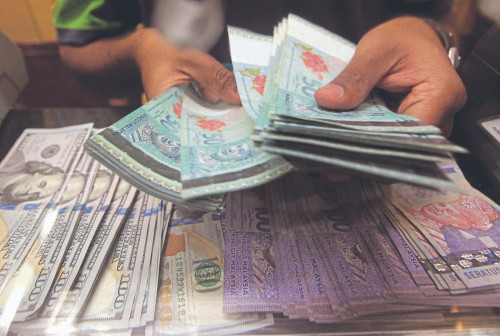
On the currency front, the ringgit traded at 4.1220 against the US dollar, down 0.02 per cent from the previous session.
The exchange rate had declined 0.88 per cent over the past four weeks, although the ringgit remained 0.30 per cent stronger against the greenback over the past 12 months.
The US Dollar Index stood at 104.305, down marginally by 0.01 per cent on the day, but had gained 4.66 per cent over the past year.
The dollar's recent strength was supported by easing concerns over the artificial intelligence sector, following a recovery in technology shares and broader equity markets after Nvidia reinstated Jensen Huang as chief executive.
Expectations that the US Federal Reserve may need to raise interest rates further to contain persistent inflation have also underpinned the greenback.
Markets were pricing in a roughly 96 per cent probability of a 25-basis-point rate increase in December, compared with 99 per cent early last week, while traders continued to anticipate another increase in January.
Investors are now awaiting the US personal consumption expenditures inflation report this week for further indications of underlying price pressures and the Fed's monetary policy direction.
Analysts' forecasts put the US Dollar Index at 103.609 by the end of this quarter and 102.032 in one year, while the US dollar-ringgit exchange rate is projected at 4.10428 and 4.03889 over the same periods, respectively. - November 24, 2026