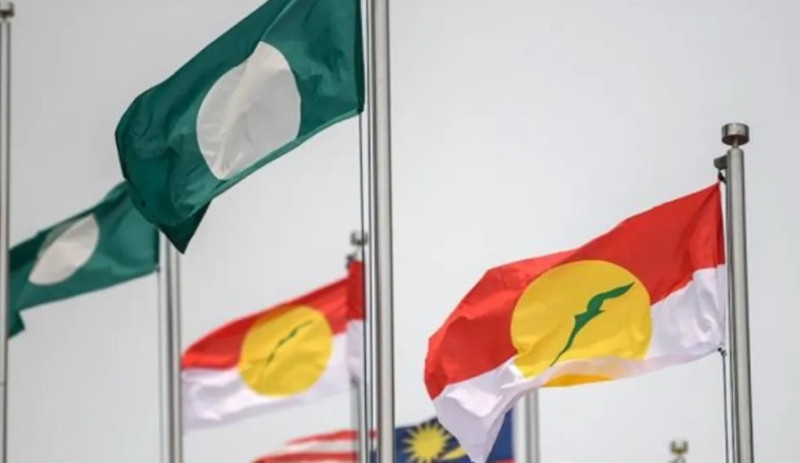
THE electoral cooperation between Umno and PAS, operating through Barisan Nasional (BN) and Perikatan Nasional (PN), has delivered three consecutive state election wins in Johor (July 2026), Negeri Sembilan (1 August 2026), and Melaka (November 2026).
Yet its future for Malaysia’s 16th General Election (GE16) remains uncertain amid competing ambitions.
What looks like a pragmatic Malay-Muslim partnership on the surface is, at its core, a high-stakes calculation in which each side is trying to extract maximum advantage from the other before the relationship inevitably frays.
Recent State Election Performances
In Johor, PAS instructed its supporters to back BN candidates in seats it did not contest, helping BN expand its control to 48 of 56 seats. In Negeri Sembilan, the combined BN-PN forces took 25 of 36 seats, reducing Pakatan Harapan (PH) to the opposition.
In Melaka, they won 24 of 28 seats with no overlapping contests—BN contesting 23 and PN only five—after formalising cooperation and launching a joint manifesto. These results demonstrate the power of avoiding a split Malay vote. They do not, however, show equal benefit.
PAS’s territorial gains outside its traditional northern and east-coast strongholds have been marginal. UMNO, by contrast, has used PAS’s organisational discipline and grassroots reach to rebuild relevance in the south. The pattern is already visible, where one party lends strength; the other consolidates recovery.

Tensions Ahead of GE16
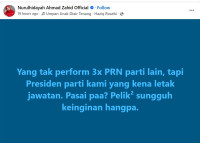
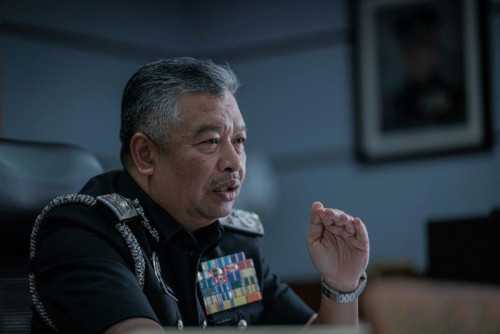
UMNO president Datuk Seri Ahmad Zahid Hamidi has stated that BN never planned to extend cooperation with PN into GE16. Insiders note that UMNO has historically been reluctant to appear dependent on PAS.
“Umno does not like having to cling to PAS. Umno still wants to be on top,” as one source put it.
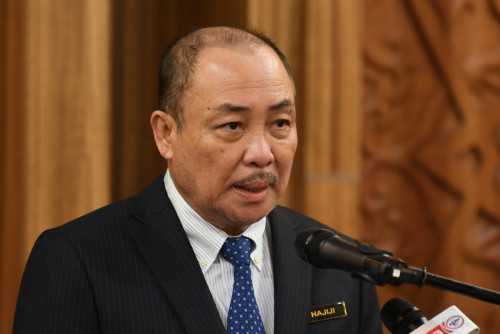
PAS leaders, including vice-president Datuk Mohd Amar Abdullah and Terengganu Menteri Besar Datuk Seri Ahmad Samsuri Mokhtar, insist that any arrangement must treat both sides as equals with no “big brother” dictating terms.
Discussions, they argue, must start from the parties’ existing political standing and current seat distribution.
Parliamentary arithmetic sharpens the friction. PAS holds 43 seats compared with UMNO’s 26. That disparity shapes every debate over seat allocations and leadership roles if the partnership extends to federal polls.
For PAS, equality means a meaningful say in decisions. For UMNO, continued cooperation remains a matter of electoral calculation rather than long-term commitment.
Analyst Commentary and the Symbiosis Temptation
Some analysts still expect cooperation at GE16. They argue that BN and PN need each other equally, with BN strong in the southern states (Johor, Melaka, Negeri Sembilan) and PN dominant in the north (Kedah, Terengganu, Kelantan), and that they will work together to avoid splitting the Malay and anti-PH vote.
Syaza Shukri of the International Islamic University Malaysia notes that PAS does not depend on BN in states such as Perak and Selangor, yet expects the party to remain willing to negotiate. Veteran journalist Datuk A. Kadir Jasin anticipates an extension of the pact to defeat PH, while warning it would be illogical for PAS to concede the prime minister’s post to UMNO if PAS wins more seats.
Mazlan Ali of Universiti Teknologi Malaysia has cautioned that seat-negotiation friction already visible in Melaka could make compromises in PAS-led states even harder.
An earlier analysis in Aliran described a possible “symbiosis formula”: an informal understanding rather than a formal alliance, in which PAS retains and strengthens its heartland strongholds while UMNO focuses on seats held by other parties.
Under this logic, the two parties need not openly unite if their strategic interests converge. The formula is elegant on paper. In practice, it does not resolve the question of who ultimately calls the shots when the prize is the federal government and the premiership.

The Core Problems with the Arrangement
Several realities cut against a stable, equal partnership.
First, cooperation has so far delivered PAS only limited gains in the south. The party has expended political capital and organisational effort to prop up BN’s recovery without securing comparable expansion in return.
Second, any further concession of seats—particularly former Bersatu seats or other Malay-majority constituencies in areas PAS firmly controls—would weaken the Islamist party inside its own perceived heartland. Defending its dominance in Kelantan, Terengganu and Kedah is non-negotiable for PAS. Yielding ground there would be self-harm dressed up as partnership.
Third, significant sections of PAS, especially younger professionals, are more interested in advancing a cleaner, reformist vision associated with figures such as Datuk Seri Hamzah Zainudin than in rehabilitating UMNO’s political brand.
They see their own party as the vehicle tasked with cleaning up Malaysia. Many actively oppose any long-term coalition that softens criticism of UMNO’s record on corruption and the 1MDB scandal, issues that were central to undermining UMNO’s credibility in both the 2018 and 2022 general elections.
Fourth, for UMNO, PAS is currently the indispensable key to returning to government. That dependence tempts UMNO to claim the senior role.
Zahid’s personal prime ministerial ambitions make any scenario in which PAS, with its larger parliamentary bloc, nominates its own candidate deeply unwelcome. If PAS emerges stronger after GE16, parliamentary logic would point toward a PAS nominee. UMNO is unlikely to accept that outcome quietly.
Fifth, the question of a full pardon for Datuk Seri Najib Razak continues to grate. PAS was prepared to accept home detention as a pragmatic concession, while a complete political rehabilitation would sit uncomfortably with the party’s public posture on accountability and would cost it credibility among its own base.
These tensions suggest that seat negotiations for GE16 will be far more difficult than the relatively straightforward arrangements in the southern states. UMNO needs PAS more than the reverse if it is to regain the senior position in the next government.
That asymmetry gives PAS leverage, but also creates incentives for UMNO to extract maximum short-term advantage before the relationship sours.
Who Is Taking Advantage of Whom?
In classic Malay political fashion, both sides are calculating how far they can ride the other. The state victories have bought momentum and demonstrated the electoral value of unity.
They have not resolved the fundamental imbalance: PAS brings the larger current parliamentary presence, stronger organisational discipline in the north, and a cleaner image among many Malay voters; UMNO brings residual machinery in the south and an unshakeable determination to reclaim the top job.
UMNO appears to be using PAS’s strength to rebuild its own relevance while intending to reassert seniority once the immediate electoral threat has passed. PAS risks helping UMNO recover political standing without securing lasting structural benefits or a genuine share of national leadership.
The “symbiosis” may work as a temporary electoral convenience. It is far less stable once the conversation turns to who becomes prime minister and whose vision shapes the government. This would effectively bring the instability that the Madani government experienced, all over again.
The real question is not whether the two parties can cooperate again. It is which one proves the more skilled operator when the seat negotiations begin in earnest, and the prize is no longer a state assembly but the country itself.
In the end, one side will discover that the alliance has served the other’s ambitions more than its own. That is the enduring logic of this particular chapter of Malay politics. - November 25, 2026