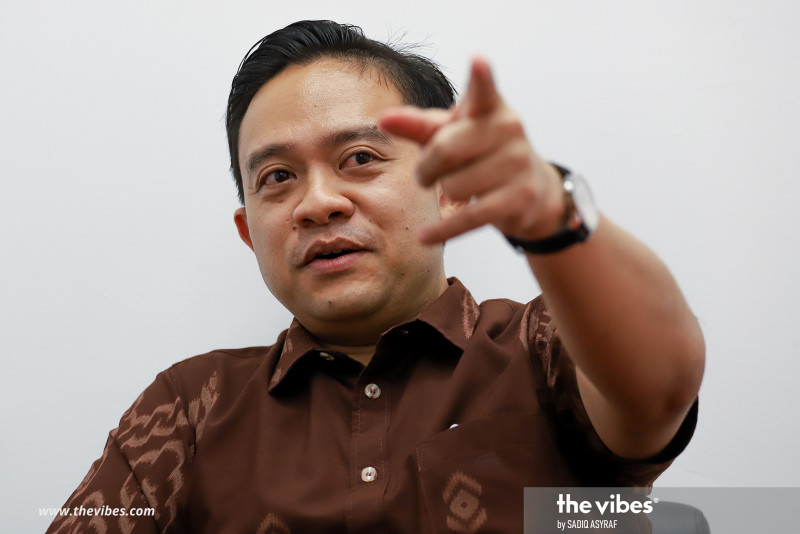
KUALA LUMPUR – The transition of Datuk Wan Saiful Wan Jan from chief executive officer of the think tank Ideas to Bersatu politician has been one of the most intriguing developments in local politics in recent years.
In an exclusive interview with The Vibes one year into the fall of the Pakatan Harapan administration, the Bersatu information chief affords revealing insights into matters of personality politics, policy challenges, and PH’s failure to grapple with the wider political landscape during its short-lived tenure.
Eddin Khoo: The internal fragilities within the PH coalition were apparent from the very commencement of its administration. Could you shed some light on what the innate difficulties of the PH government were from the onset?
Wan Saiful Wan Jan: If you go back to the period of the elections, PH made all kinds of promises. I was a ghostwriter of the manifesto, and that basically meant I knew what promises were made. I was also aware of the debates that were taking place. What I can say is that, in order to win, PH was willing to promise anything under the sun, moon, and everything in between.
It was a good manifesto, but too ambitious; as a result, when we started governing, we suddenly realised it was not clear what our priorities were. Prioritisation was messy, and people were competing to make sure their agenda came to the top. It is true that we promised the country institutional reform, but we also pledged to help them get a better quality of life, especially when the cost of living at that time was a serious consideration.
But what did we actually do to address the cost-of-living issue? We abolished the GST (goods and services tax), yes, but then, we started talking about the government not having money, stopping all cash handouts, and abolishing assistance. That was a very confusing step. That, I believe, began the feeling of disappointment among the public towards the government.
That was our problem – we failed to prioritise what should be done, and when. We wanted institutional reform while failing to realise that the country was asking for help financially, especially in relation to the cost of living. Since prioritisation was messy, that created a situation where the government could not make major decisions.
We also had a situation where the ministers were so reliant on the prime minister to make key decisions. When people have to rely on the strength of the PM alone, that is not the best government we can offer.
With regard to the manifesto, while I am critical of the process, I am not at all critical of the promises that were made in that book. It is a comprehensive document on how to improve Malaysia, but I think the implementation was messy. But as a document, I am quite proud to have been part of that team, even though my contribution was just as a ghostwriter. As a manifesto, it was not a very good one, but as a handbook on how to improve Malaysia, it was a very good one.
EK: How far were parties within PH willing to compromise individual party interests for the greater good of the government and the coalition?
WSWJ: I think everyone was trying to champion their own agenda. In Bersatu, the key concern was whether we were helping the Malay Bumiputeras or not; Keadilan (PKR) and DAP were, to an extent, for the multicultural agenda; Amanah was trying to show they were better than PAS.
Everyone was trying to champion their own cause.
To be honest, the manifesto was more or less forgotten within weeks of coming into government, as every single party and every single politician had their own agenda. That created rivalry internally as well… which is fine, since that is the very idea of a coalition government… but with PH being so new to government, it created many challenges.
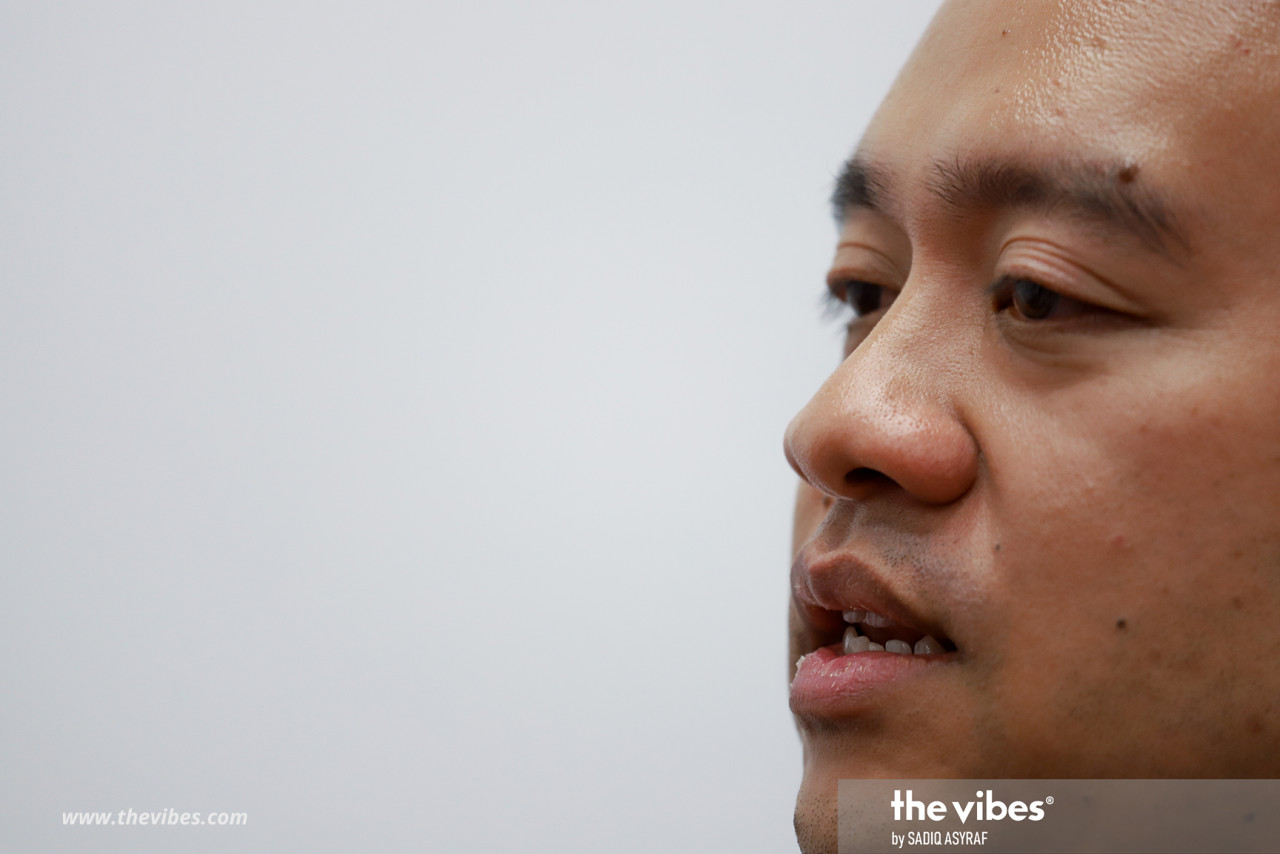
EK: Bersatu was, seat-wise, among the smaller parties in the PH coalition. Yet, it held major cabinet positions, including that of prime minister, the home affairs and education portfolios, as well as several chief minister positions in the states. What was the psychology of Bersatu within such a setting?
WSWJ: While there was disappointment that we didn’t win that many seats, the feeling was that we had won the election together. After all, without Bersatu – or any of the component parties, for that matter – that change would not have happened.
While the coalition had contributed to great change in our political history, the challenge was in the governing that came with that victory. So yes, we were happy at the beginning, but very quickly realised that the agenda of the government may not be in line with what the party was fighting for.
Still, we must remember that even the PH coalition was put together for the sake of contesting the elections, and was not really about a commonality of ideology.
EK: Did that give rise to a sense of insecurity within the party?
WSWJ: I don’t think it was about feeling insecure. It was more about having to fight for the cause. We very quickly realised that all the promises we made about making sure people are assisted, in tackling the problems of the cost of living, were difficult, especially when the minister of finance keeps saying we do not have the money. So, we came to realise that to achieve the aims we had in mind, perhaps, this government was not the right one, and that realisation came very soon after the victory.
And I can tell you that from March 2019 – not even a year after winning the elections – Tun (Dr Mahathir Mohamad) had already told the party (Bersatu) that we have to start thinking about bringing the Malay parties back together again, and about leaving PH.
EK: One of the earliest strategies by Bersatu was to invite members, principally from Umno, to join the party. Why was this felt to be necessary? Was it to create a counterbalance to more dominant parties within the coalition?
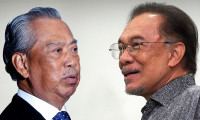
WSWJ: The invitation to Umno leaders came with the condition set by Tun Mahathir that Umno’s leaders must leave Umno, be independent for a short while, and only then join Bersatu. The engagement with PAS was in support of policies. In almost every meeting of the Bersatu supreme council, Tun would complain about how it was not easy to work with DAP, and that it was very difficult to work with Datuk Seri Anwar Ibrahim.
That was his stand consistently.
.jpg)
EK: Were there attempts to undermine the authority of the prime minister?
WSWJ: Certainly – by Datuk Seri Anwar Ibrahim’s supporters, on an almost weekly basis. If you look at all the talks and ceramah by these supporters – PKR treasurer William Leong, for example, there was a speech where he clearly said that Tun must be brought down.
So, efforts to undermine Tun were happening very regularly within the PH government, both in terms of government, as well as in terms of political alignment.
EK: Was the mistrust mutual?
WSWJ: It was definitely mutual. On Tun’s side, he was not happy with Anwar’s supporters undermining him, and Anwar’s supporters never stopped putting pressure on, and criticising, Tun. This is a situation where both parties must share the blame.
It is a bit rich for either side, now, to say they didn’t have a role in the collapse of PH. It is the rivalry between these two characters that directly contributed to the collapse.
EK: So, the hangover of 1998 still hovers?
WSWJ: Yes, we’re still very much there.
EK: What was the level of unease in PKR and DAP as Tun Mahahtir began meeting people from Umno?
WSWJ: Both DAP and PKR insisted that people cannot directly jump into Bersatu. But that was what Bersatu believed as well, so that was fine.
The problems with DAP and PKR were not so much about Tun making friends with Umno and PAS, but were more on policy grounds. At the policy level, there really was a disconnect between this desire to help people tackle the rising cost of living and the desire to implement austerity measures.
Personally, I may have an opinion either way, but as a government, once a decision is made, we have to follow through on this decision. The problem is that, the decision was never made. While the finance minister was talking about austerity measures, there were other people saying we needed to give handouts. At the same time, we had ministers saying we needed to help this, that and the other, with the minister of finance saying we didn’t have the money.
A clear decision was never made on this, and that was a real problem.
EK: Was Tun Mahathir not in control?
WSWJ: I think he was trying to…
A good example would be PTPTN (National Higher Education Fund Corporation). A few months following our victory in May 2018, I took part in a delegation to Japan with Tun Mahathir. On a bus trip from one location to the airport, I sat next to him. It was a good 30- to 45-minute ride, so I asked what the actual direction for PTPTN was. He said everyone who borrowed must pay.
That’s from the prime minister, and it was very clear. I reminded him we made a promise that those earning below RM4,000 will be exempt from paying till their salary reached RM4,000. He told me to forget about it. That was the direction from him.
(Then education minister) Maszlee (Malik) was on the same trip, and heard the instruction, but as soon as we got back to KL, the instruction from Maszlee to me was to implement our promise. Between the PM and the minister of education, who is responsible for PTPTN, I had a conflicting directive. In the end, the decision was not fully made. So, Tun had an idea, but he was not able to control everything.
EK: There has been such a myth that emerged around Tun Mahathir from his first incarnation as PM. Do you think we overestimated his political skills?
WSWJ: You can have a strong prime minister who is in control of everything if the whole coalition is firmly behind him. That was Tun Mahathir in Umno and BN (Barisan Nasional). The problem with this coalition was that everyone had their own mind. It’s not so much about overestimating his political skills, but the context was very different. He was not as commanding, because it was a very mixed bag, and it was not possible for him to be like he had been previously.
EK: What, in your view, were the principal reasons for public discontent with PH?
WSWJ: Failure to prioritise.
PH failed to appreciate that in order to create a stable government, you must never forget about Malay politics. Anyone who ignores the fact that the vast majority of Malays in the country are relatively nationalistic and conservative will not succeed in party politics.
I think PH failed to appreciate that, and things started to crumble. PH was not able to face criticism coming from Umno, PAS and many of the Malay NGOs, and the pressure was so great on them.
EK: In real terms, what was not being delivered to the Malay constituency?
WSWJ: A sense of security…
EK: That is very abstract…
WSWJ: No, this is very real. You can have a very feeble lock on your door, and still feel very secure; or, you can have 20 locks on your door, and still feel insecure.
The feeling of insecurity is real, and you cannot simply say, “What more do the Malays want?”. It is not about that. It’s about confidence in you – the government – and the majority of the Malay voters in the country did not have that confidence after about a year of the PH government.
EK: It was a convergence between disaffected factions within PKR and Bersatu that was the convergence upon which the PH coalition began to deconstruct. What was the meeting ground between this disaffected faction and Bersatu?
WSWJ: I believe it is a common cause, and the realisation that what was needed was to create stability. For me, the key point is stability. Anyone who knows my background may be quite surprised that I am talking about the need to entertain the Malay agenda. But, there is a difference between idealism and being idealistic. I think anyone who is into party politics should maintain their idealism, but if you continue to be only idealistic, you will fail in the political world.
The thing that brought these two groups together was this realisation – that stability is needed if we want to progress and grow the economy of the country, and that stability was not there because the majority population was feeling uneasy. I think the disaffected PKR group realised this, and Bersatu realised this, and the coming together was quite natural.
EK: But it was also about the fallout of personalities, and the fact that you find common ground because your natural home is no longer your natural home…
WSWJ: Possibly… I think personality politics contributed to things as well. Contributed both to the merger and the split.
But, I don’t believe it is the biggest factor. PH’s collapse, I think, was driven by a failure to develop strong, united and coherent policies to move as a government.
EK: At the final PH presidential council meeting, a decision had been arrived at, to allow Tun Mahathir to choose his own time for a transition, with no deadline set. Bersatu, however, had a series of subsequent meetings to decide on a pull-out from PH all the same. Top leaders, meanwhile, were meeting on their own to explore other possible alliances. How fluid was the situation at the time?
WSWJ: The final presidential council meeting took place within an environment where Anwar’s supporters were strongly putting pressure on Tun to confirm a deadline. Knowing that people outside were protesting, and putting pressure on Tun, Anwar suddenly agreed that there was no need for a deadline for a transition.
By this time, I think, the trust had been broken, and that was why in subsequent Bersatu meetings, the decision was taken to leave PH. Tun tried to convince the whole party to change its mind, but by then, it was too late since he had instructed us to start working towards that for almost a year before, so the momentum had already been set, and he then suddenly changed his mind on the morning the change was supposed to take place.
My personal feeling – and I had voiced my concerns about this in earlier meetings – was about creating a hugely Malay-majority government, because it is not reflective of the country. But when the party makes a decision, it is for me to follow the decision, because that is a majority decision. That then becomes your decision – that’s collective responsibility.
I was most disappointed that day mostly because after a year of driving the process for us to leave PH, on that morning when that was due to happen, Tun changed his mind. I thought, “What has happened here?”. You cannot put everyone in a situation where, after a year of telling us to go in a certain direction, you then want to change course.
The party is bigger than any one individual… With all the due respect I can give Tun, he is one person; the majority has made a decision. If you remember the leaked recording of that meeting, it clearly recorded the fact that he said, “Kalau majoriti bersetuju, maka saya ikut. Maka saya setuju kita keluar hari ini” (If the majority agrees, I will abide. And so, I agree we will leave today).
That was his statement, and so, he did acknowledge the decision at that meeting. The decision at that meeting was also for him to remain as PM; to go to the Agong and bring a bigger majority… I think it was 132 or 133 MPs who supported him as PM.
It suddenly seemed as if he was saying, “Yes, maybe, for the last year, I told you to do one thing, but now, you must follow me in doing something else”. It doesn’t quite work like that anymore. And, it is not a situation where one person can command the whole party; the decision of the party has to be made by the collective.
EK: When you say he had led this for one year, what do you mean?
WSWJ: In March 2019, he clearly told us we must find a way to form a new government with PAS and Umno, and leave PH. In July, he complained that this movement was too slow. In a meeting chaired by Tun, (Datuk Seri) Hamzah Zainudin was appointed to lead the process.
It was in a meeting he chaired that he said, “Kita kena buat kongress” (We have to organise a congress). And that was the birth of Kongres Maruah Melayu (Malay Dignity Congress). It was on that stage that he held the hands of Haji Hadi (Datuk Seri Abdul Hadi Awang) and (Tan Sri) Annuar Musa to say that the three parties were already united, with Bersatu leading them. That was all not only with his blessing, but with his guidance.
I am even more disappointed now because he is denying all this. It is as if he is trying to rewrite history.

EK: Why do you think Tun changed his mind? A pang of conscience? A sudden realisation about the importance of a multiracial Malaysia?
WSWJ: I really don’t know, to be honest. And it was because it was so unclear why he changed his mind that I decided to vote against him. If he were able to clarify his thinking a bit more, maybe the party would have followed him.
My point here is, he changed his mind, he was not able to explain himself properly, and he was not able to convince us, and as a result, we decided by a vast majority that we disagreed with him.
EK: Was Dr Mahathir’s hand forced in all of this? Had he been invited to the Sheraton gathering? Sources close to him at the time say he was oblivious to it…
WSWJ: That is not true. He had known of the meeting from before, which was why he called a Bersatu supreme council meeting that morning. That meeting was called suddenly, which meant he knew about that Sheraton meeting before everyone else.
And I really don’t see anyone forcing him – everyone was surprised when he resigned. I was in Sabah at that time, following the meeting on Sunday, and on Monday morning, we received the news that he had resigned. I had to return immediately. It was a surprise to everyone.
I don't think he was forced. Who, after all, can force Tun Mahathir?
EK: The formation of a Malay-Muslim-led government was declared among the principal reasons for the rise of Perikatan Nasional. There surely are real Malay-Muslim concerns – poverty, inequality, disparity – that don’t get translated into real terms, but instead, metamorphose into all kinds of political phantoms. In what sense is that different now?
WSWJ:
It does not matter whether there are real deficiencies in the Malay agenda or not; what matters is how the Malays perceive the actions of the government.
During PH’s time, the perception was that PH did not care enough for the Malay agenda. That was a big issue. We can go into the question of A,B or C – whether A was still there or not, whether B was given or not, whether C was cancelled or not… We can go into that debate, but when it comes to political support, whether it actually happened or not is not important; what is important is perception.
And I think this was the problem with the PH government, the failure to capture the narrative after being able to capture the imagination of the voting public. The narrative was lost. Policies were everywhere, and the Malays were feeling really insecure at that time; and knowing that the Malays were feeling insecure at that time, nothing was done to pacify the insecurity, and I think that is a very big mistake.
The chief justice, attorney-general, minister of finance – these are symbolic positions, they all went to non-Malays, and within days of winning power, the wrong signals were already sent.
I kept arguing with friends who were in the cabinet at that time – extend the cash handout programmes, provide cash transfers so that people can enjoy the fruits of the change they voted for. People needed help at that time because of the rising cost of living. But what did we give them? We argued about how the government did not have money, how we must have austerity measures in place…
Yes, institutional reform was definitely important, but the people were asking for something else. And, democracy is about making sure you fulfil the needs and demands of the majority.
EK: In real terms, there are serious Malay-Muslim concerns, yet to be made captive to perception politics is very dangerous?
WSWJ: But that is the reality of party politics – which election was won or lost on real, hard policies? I can tell you, almost none! How did (Donald) Trump win? All perception…
Democracy is about perception. You can have the worst government, but if the people like them, that government will still be in power.
EK: Can you shed some light on when, and why, Tan Sri Muhyiddin Yassin was decided upon as the most suitable candidate for the PM’s post? By all accounts, he appears to have emerged as PM by default.
WSWJ: Actually, it was Tun Mahathir who decided. Sunday, February 23, 2020, was the (Bersatu) supreme council meeting where we decided to leave PH; February 24 morning, Tun resigned, and in the evening, we had the meeting to decide to appeal to Tun to withdraw his resignation. Even in that meeting, Tan Sri Muhyiddin clearly said he did not want the PM position.
I was at his house from that time until he became prime minister. The conversation was always about making sure that Tun remained as PM. It was only on the Thursday when Tan Sri Muhyiddin, secretary-general of Bersatu Marzuki Yahya, and Syed Saddiq (Syed Abdul Rahman) went to see Tun M, in that meeting, that Tun said if Muhyiddin was able to form the majority, then he should go ahead since Tun did not have the numbers.
It was Tun himself who announced his agreement to that: when announcing his RM20 billion Covid-19 stimulus package, towards the end of that session, he said: “If Muhyiddin can confirm a majority, he should go ahead.” It was he who announced it.
I was at Tan Sri Muhyiddin’s house that day, and he was still saying, if possible, he does not want to be prime minister, but if he has to save the situation, he will have to take up the challenge.
EK: How difficult was the process of putting this alliance together?
WSWJ: I am not going to overplay my role… My role was very small in all this, and there are many other people who played far bigger roles, but that was a challenging and very steep learning curve.
But it was very difficult. I remember while at Tan Sri’s house, I tried to call up MP friends to stay with us, continue with support and continue with the party, to prevent the party from breaking up, but some of them had already made up their minds. I called up a few friends from the Umno and PKR sides, saying it was about time we joined together… Different people had very different concerns. I was very disappointed with some close friends who had very personal interests, but I was also feeling challenged by the need to call people up, persuade them to remain and be on the same side.
But in the end, there was unanimity in making sure a new structure was formed, stability could be returned to the country, and this perception that the Malays are losing out can be removed from the debate. There was also a unanimous decision and feeling that we need to move on, and that the agenda of DAP and PKR is not suitable for the country at this time.
I think all the parties came together to agree on that.
EK: Tun Mahathir has stated that he refuses to work with the “court cluster”. What are your thoughts on working with this group?
WSWJ: We need to be consistent on this issue – there was a court cluster in PH as well. Lim Guan Eng’s case, for example. He was still facing a court case when he was made minister of finance.
So, if Tun Mahathir wants to be consistent on this, Lim Guan Eng should not have been appointed minister of finance. There were other people facing different charges as well, so there needs to be some consistency on this matter.
EK: Today, and on a daily basis, Umno-Bersatu tensions appear to be fraying. There are further claims that PN is already a minority government. How long is this viable for?
WSWJ: There are two different matters here: one is the concept of a coalition government, the other is the political reality in Malaysia.
If you look at more mature democracies, a coalition is always formed after elections, not before elections. Malaysia is actually an anomaly, where a coalition is formed before elections.
What happened with PN is actually a norm in more mature democracies. I am quite happy with the fact that PN was formed after the election, and I really do not mind if a coalition is formed after the next election. But that is the ideal world in more mature democracies. Malaysia is still not quite at that stage yet.
The vast majority of voters in Malaysia are still asking, who are you with, will you have sufficient numbers? And, the coalition needs to be forged before the election, because they want to know who will eventually become PM, and who will emerge as the leading partner in the coalition. The reality in Malaysia is, we must form that coalition now, and I think the PN coalition is more acceptable when compared with other coalitions, and we have only two other coalitions – BN and PH.
PH, I think, will really struggle in the next election: the whole country is already moving forward, especially in the sense that we are not stuck with the leaders of the past. Tan Sri Muhyiddin is relatively new, even though he has served as minister for a long time. He has good approval ratings, and I think he is managing well given the situation now, and I think there’ll be a big challenge for PH or BN to name someone else to replace Tan Sri. Up till now, I don’t see a viable successor to Tan Sri Muhyiddin from outside PN.
This is a major issue for the voters, and because of that, I think PN will do well. There is no real competitor at the moment. But of course, there is the challenge of managing that relationship internally.
EK: Now that a Malay-Muslim government has been set in place, it cannot afford to fail. In real terms again, there are many issues – corruption, leadership, income disparity, identity – that need to be resolved for the Malay constituency. All this, now, without the presence of the “cultural spectres” of the past. What are the expectations? How has PN done so far?
WSWJ: We need to deliver. That is why I am very disappointed with all these internal quarrels. This is an opportunity to deliver, and Bersatu is not causing the problem, PAS is not causing a problem; it is Umno that needs to sort the internal order of their house properly.
I fully respect the need for Umno to handle their own internal issues, and don’t want to comment on what is happening, but my request is, please sort it out, so we can work together in a coherent way, and we don’t continue to be a disappointment to the nation.
At the moment, there have been many good things delivered by the PN government – the stimulus packages, for example, but news about this is few and far between. Why? Because it is being overshadowed by political quarrels. I am disappointed with the situation today. I think we can do more, but given the circumstances, I think we are doing very well.
EK: There is an opinion that you, personally, have “changed”. Perhaps, we can say “evolved”. What have you learnt about the operations of politics with your personal involvement these past few years?
WSWJ: I think the comment about me changing is quite a fair one. This is the difference between being on the theoretical side, and actually being inside the party’s political set-up.
On the theoretical side, you can say all kinds of things. Try bringing that attitude into realpolitik; I don’t think you will get anywhere, and you will not be able to implement any of your ideas.
The reality is, even within a whole government set-up, being able to implement even 5% to 10% of your ideas is a big achievement.
So personally, I think I have changed: I have become more realistic. I maintain my idealism, but I also believe that in getting towards that idealism, you need to take it step by step, the sequencing has to be right, and very importantly, you must know what to prioritise. – The Vibes, February 28, 2021