
KUALA LUMPUR – In the face of adversity, Malaysians still have the gumption to seek out a means of survival, even if forced to dig deep.
This especially rings true for those who are directly impacted by the implementation of the first movement control order (MCO), from March 18 to May 3 last year.
Forced out of jobs, incomes slashed, dried up savings, valuable assets sold – these are just some of the hardships that many have had to go through since the various MCOs were enforced.
Sharing their stories with The Vibes, some Malaysians spoke of how they have remained resilient and did not allow the MCO to dampen their spirits – and how the restrictions have been a lesson in survival for them, especially given the lack of meaningful assistance from the government.
Rider on the pandemic storm
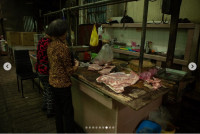
Azkhalim Suradi – who used to operate a food stall in Petaling Street here – said that since the first lockdown last March, he and many others trading in the area have not reopened their businesses, either due to government restrictions or because of increased costs as a result of fewer customers.
“I was selling fruits online for a while, then I sold durian on the roadside during its peak season,” said the divorced father of two. “But after the Hari Raya Aidilfitri period, I was jobless and without income. I tried doing business at the night market, but things did not work out.”
It was not until new year, when his savings almost dried up, that the 49-year-old decided to get back into business.
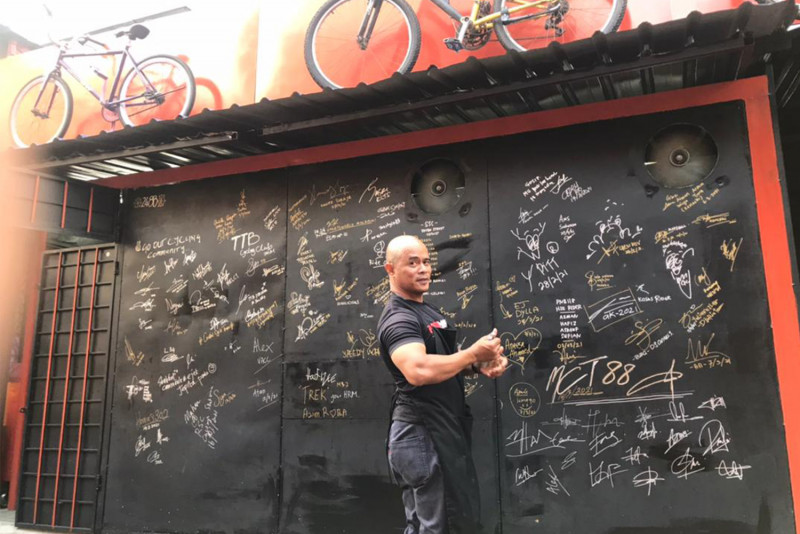
Inspired by the rising trend of cyclists around the city centre, he sold off his 2000 Mitsubishi Storm for RM13,000 to upgrade his premises and rebrand his food stall into a cafe, now known as the Cafe Beskal. “It cost me RM25,000 in total, and left me with virtually no change. All I could do was hope that the business would take off.”
At present, Azkhalim earns just enough to have some food on his table. Thankfully, a surau near the cafe was of help; he has become its guardian and is therefore allowed to live there. Although he is alone there, the entrepreneur says it saves him a lot as he does not need to rent a house.
And although the government has to date rolled out RM340 billion in stimulus packages, including direct cash aid and business loans, the cafe owner did not receive any financial assistance from the government, barring a one-off payment of RM300 from Kuala Lumpur City Hall.
Nonetheless, despite having been out of job for almost a year and enduring the ensuing difficulties, Azkhalim does not want a handout. “All I’m asking for is to please lift all the movement restrictions as soon as possible. This is the only way for the economy to recover and for Malaysians to get back on their feet. We don’t need financial aid, that won’t help.”
Driven to do dropshipping
For former full-time Grab driver E. Shaevitharoopan, 32, the prolonged movement restrictions forced him out of his job at the end of last year, as he was unable to break even on most days.
Since the first lockdown in March last year, passenger bookings were hard to come by – especially after there was an exponential increase in driver-partners on the platform due to job losses, coupled with the fact that more people were working from home.
“I couldn’t even cover my petrol money and car maintenance. I had no choice but to look for alternative income,” he told The Vibes, adding that he now does “dropshipping” on online shopping platform Shopee, as well as freelance delivery services.
Although dropshipping earns him a meagre RM150 a week at most, Shaevitharoopan said that it is definitely better than not earning anything. “What is concerning, though, is that my car’s loan moratorium ends this month. I’m not sure how I’m going to pay for it starting April.”
While his family of four is still able to rely on his wife to be the main breadwinner for now, Shaevitharoopan said he has to cut back considerably on spending.
Among other things, he said he had to pull his six-year-old daughter from kindergarten and music class last year, as well as to end his satellite TV account.
Shaevitharoopan said the government’s RM500 one-off aid for e-hailing drivers was laughable, adding that this does not make up even a quarter of what they normally make prior to the outbreak of Covid-19.
Indeed, he said it would have been more appropriate if it was RM500 monthly aid throughout the MCO period – and even then, the government should have compelled e-hailing companies to half the 20% commission they currently collect from drivers.

Luckier than most
Digital marketing executive Muzafar Rais Marwazi – who only started his new job with an automotive company this week after being laid off last December due to the pandemic – similarly believes the government’s aid for those out of a job was insufficient and absurd.
The 29-year-old said that while he was privileged enough to still have a roof over his head, many Malaysians do not share the same luxury. “It’s very saddening when you think about it, to be honest.”
Sharing his story, Muzafar recalled how shocked he felt when he first received his marching orders from his previous employers, knowing how hard it would be to find a job during the current pandemic.
“I went for 15 interviews before I landed my current job. At a point, I was so desperate that I was already thinking of doing food delivery – but my family advised me against it due to the danger of contracting Covid-19.
“In the end, I had to borrow money from some of my friends, and even cancel my house rental to stay with my family temporarily. Obviously, I also had to slash my food and telco expenses too.” – The Vibes, March 19, 2021