WASHINGTON – When the Covid-19 pandemic struck, Professor Gregory Gray at Duke University’s Global Health Institute tasked a graduate student at his lab with developing a pan-species coronavirus test in order to help prevent the next catastrophe.
The idea was to deploy the tool, once its accuracy was validated, to look back at test samples from human patients in order to search for signs of coronaviruses that might have begun to cross over from animals.
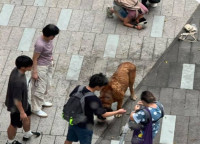
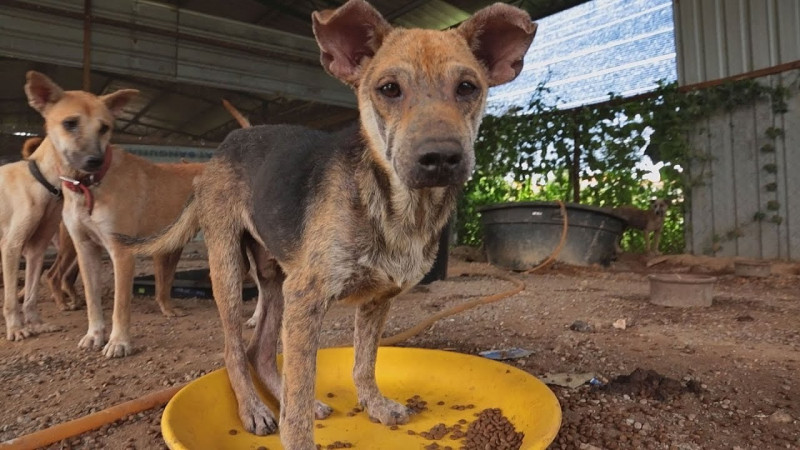
Gray and his colleague’s findings, released today in Clinical Infectious Diseases, showed a canine coronavirus was present in a group of mostly children patients admitted to hospital for pneumonia in Malaysia in 2017 and 2018.
The team suspect the dog virus caused their illness, as opposed to merely being present in the patients’ airways – but can’t conclusively prove it.
Given the genetic makeup of the virus, it is unlikely that it is currently circulating between humans.
“What we’re advocating for...is more application of pan-species diagnostics to look for five different viral families we think are the most problematic in causing epidemics in humans," Gray said.
Coronaviruses were understudied for many years, as they were mainly associated with common colds.
That changed after the SARS and MERS outbreaks of 2002 and 2012, which originated in civets and camels, respectively.
Most scientists believe the SARS-CoV-2 virus that causes Covid-19 also has a zoonotic origin.
Gray asked Lishan Xiu, a Chinese PhD student-scholar, to make a pan-species coronavirus test, which he did by finding where the genetic sequences of the various members of this family aligned.
They used this tool on nasal swab tests taken from pneumonia patients from the hospital in Sarawak, and found that eight of 301 samples appeared to have a canine virus.
‘We're missing the boat’
The finding was surprising, and to confirm it, they teamed up with leading virologist Anastasia Vlasova at Ohio State University, who was able to grow more of the virus and sequence its entire genome.
From that, they determined the virus, which they called CCoV-HuPn-2018, was mainly canine in origin but it also had feline and swine components.
It showed some mutations that were consistent with adapting to transmission among humans, but it is not known how long this evolution might take – maybe decades, maybe never, said Gray.
All of the patients recovered from their pneumonia and were sent home.
“But getting admitted for pneumonia in general means you’re pretty sick, the clinician is worried about you,” added Gray.
The fact that the team was able to detect canine virus in humans in what was essentially a small pilot study, together with recent similar findings from other research groups, could point to a much larger problem, he emphasised.
“We are missing the boat here,” said Gray.
“If we set up surveillance of pig workers, poultry workers, cattle workers, we’re going to be amazed at what their immune systems are being challenged with.
“That doesn't mean that they’re going to be the match that lights the next pandemic, but they would be a good resource to study.” – AFP, May 21, 2021