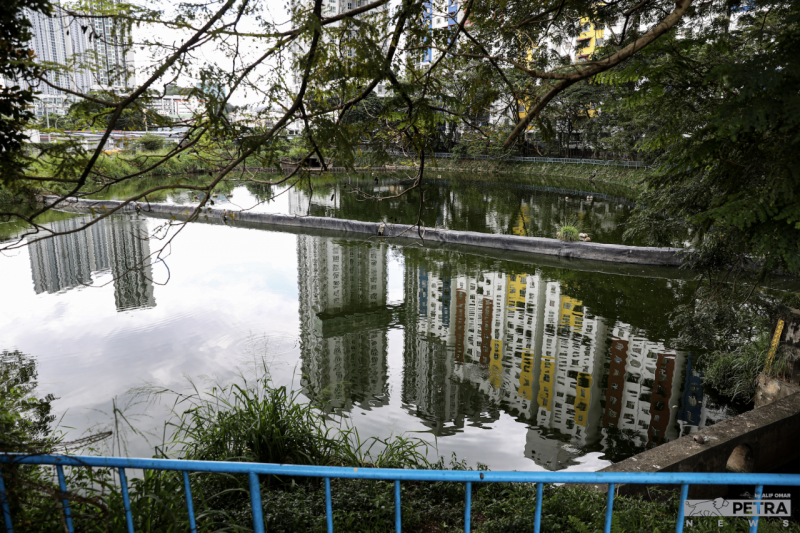
KUALA LUMPUR – At first glance, the two flood retention ponds located in Taman Wahyu and Delima in Kepong, here, look like any other man-made lake or mining pool.
There is no signboard whatsoever indicating that they are retention ponds, which are essentially structures designed to hold surface water run-offs during a heavy downpour to prevent flooding in the surrounding areas.
But what happens when existing retention ponds are earmarked for development – would it not defeat the purpose of having them built in the first place?
Controversy erupted after the Auditor-General’s Report 2019 Series 2 revealed last December that six retention ponds in Kuala Lumpur, including the ones in Taman Wahyu and Delima, have been approved for development. According to the report, the ponds concerned have been approved for the “transfer of ownership by the Kuala Lumpur Lands and Mines Office to four companies for residential and mixed development”.
However, Deputy Federal Territories Minister Datuk Seri Jalaluddin Alias told the Dewan Rakyat on March 16 that only two out of the six flood retention ponds in the city have been approved for the change in status for development purposes – the two being the ponds located in Taman Wahyu and Delima.
He said no approval has been issued for the remaining four ponds in Batu, Nanyang, Batu 41/2 and Taman Desa. He also gave his assurance that the developments involving the Taman Wahyu and Delima ponds would be carried out within the stipulated boundaries and would not affect their functions.
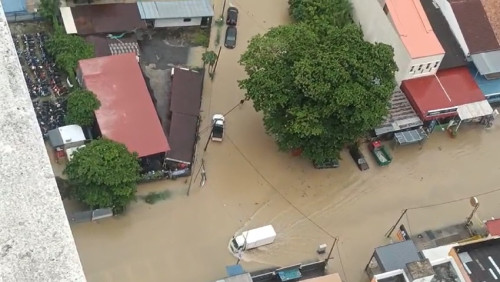
The controversy over the reported development of the six flood retention ponds also raised public concern, more so following the severe floods that hit various parts of the nation last December.
The people have every reason to be worried because, according to experts, any development in the areas concerned may jeopardise the ponds’ flood mitigation operating system, thus increasing the risk of flash floods in the Klang Valley.
Sedimentation could lead to soft soil structure
Nor Shahidah Mohd Nazer, an expert in geological engineering and soil mechanics, said any development near an existing flood retention pond may reduce its water holding capacity and possibly cause severe flash floods.
“Our capital city is already saturated with development, so if its retention ponds are developed, the issue of sedimentation may emerge as the next problem, as it can cause the soil structure to become soft.
“The new developments will also expand the impermeable zone around the capital, which indirectly will worsen the surface water flow whenever it rains, potentially causing flash floods on a bigger scale,” she said.
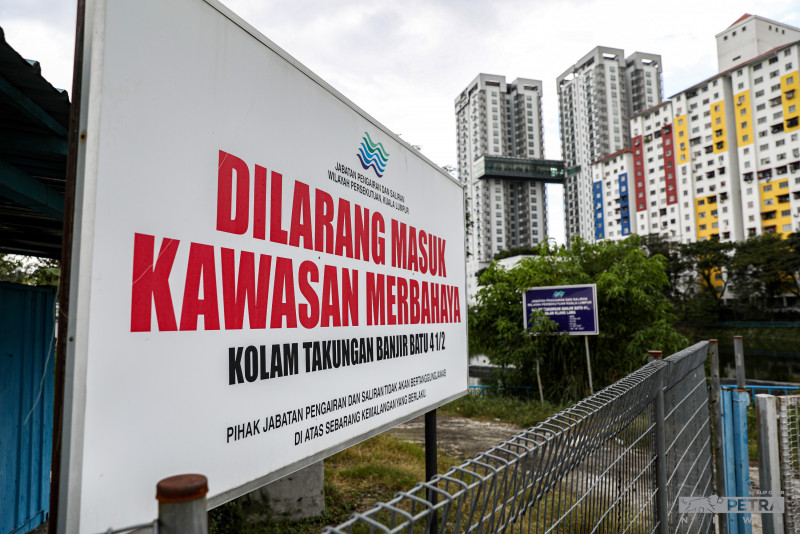
Shahidah, who is a senior lecturer at Universiti Kebangsaan Malaysia’s Department of Earth Sciences and Environment, said in this regard, there is a need for comprehensive follow-up action to regulate the existing rate of development in urban and suburban areas.
She also stressed that flood retention ponds should be gazetted to prevent the implementation of development plans that can potentially thwart the original function of the ponds, which is to hold excess water and prevent it from overflowing.
“The government must take the necessary action and listen to the people’s grievances. There’s no point in approving development after development if all they lead to is a series of disasters for the people to endure,” she added.
Underground reservoirs: a viable alternative
Shahidah also suggested that underground reservoirs be built, similar to the one Japan has built, if the surface water retention system is no longer able to cope with the current volume of rain.
“The capacity of an underground reservoir can be much bigger, but it serves the same purpose as a surface retention pond,” she said, adding that it is, however, costly to construct and operate an underground water storage facility.
Japan invested US$2 billion (RM8.4 billion) in its underground water discharge channel located on the outskirts of Tokyo in Kasukabe in Saitama Prefecture.
“It may be expensive, but one must look at its long-term benefits. It’s a realistic method (to prevent flooding) and (over the long run) can save the government billions of ringgit which it otherwise would have to spend whenever flooding occurs,” she said, pointing out that the floods that hit several states in Malaysia last December caused losses of between RM5.3 billion and RM6.5 billion.
“Based on simple calculations, if floods incur RM5 billion in losses each year, the losses will add up to a hefty RM50 billion over the next 10 years… this amount can be allocated to the construction of four mega underground reservoirs, similar to the one in Japan.”
Many residents unaware of retention pond purpose
Bernama, meanwhile, surveyed the Taman Wahyu flood retention pond area and found that many residents staying nearby were not even aware that the pond was built to store surface water run-offs to prevent flooding and thought it was either a former mining pool or an artificial lake.
In fact, work on a mixed-development project in the pond’s surroundings had started in 2018. The project, comprising condominium blocks and a shopping complex, is currently in its second phase and will be completed over 10 phases.
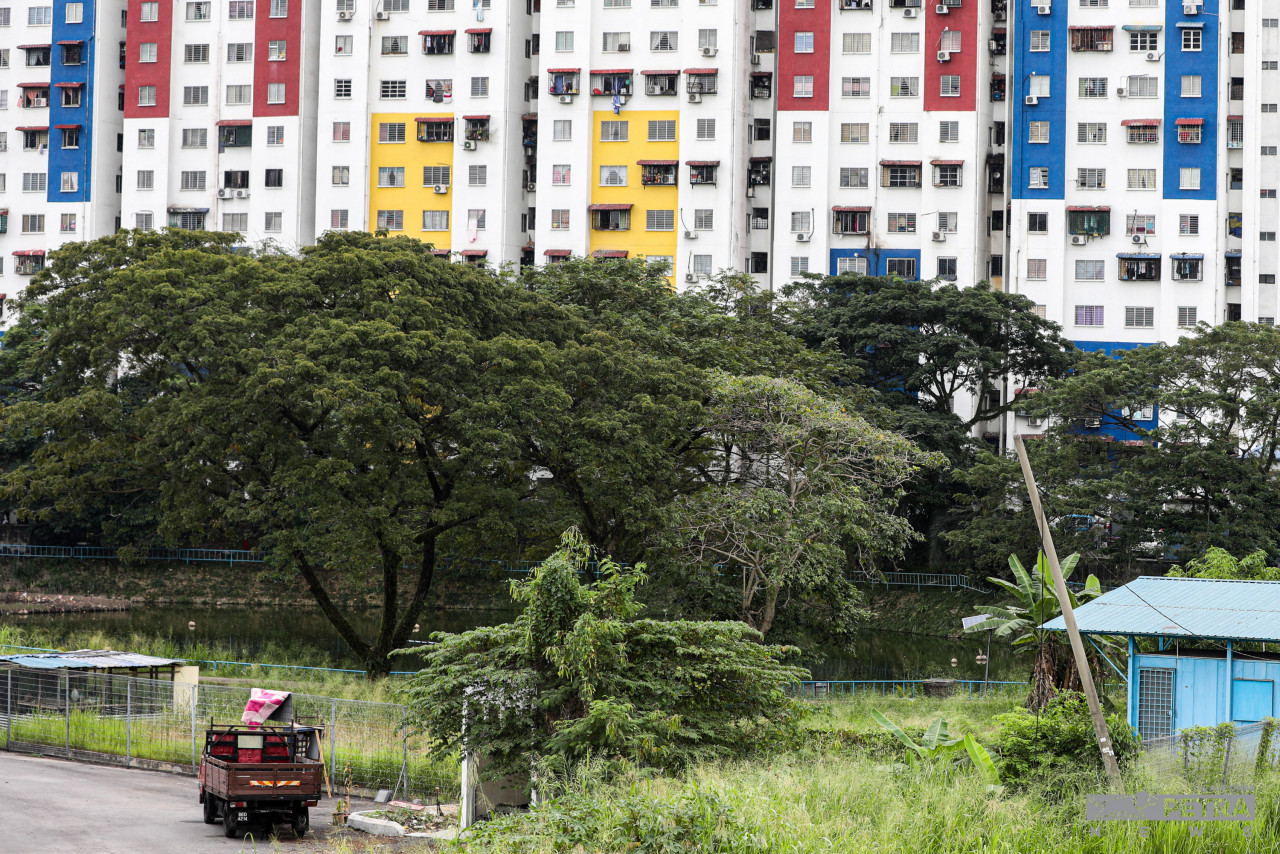
One of the residents of Taman Wahyu 1 Yusof Ismail, 57, said, “The pond has been here since I moved to this place 10 years ago. Most of us living here thought it was an artificial lake, while some said it was a former mining pool.”
He said when work on the mixed-development project started four years ago, they were made to understand that the pond area would be turned into a recreation spot and opened to the public once the condominium project is completed.
“However, after we found out the ‘lake’ was actually a flood retention pond, many of us started to worry. We don’t want the ongoing development to shrink the size of the pond to the point of impairing its original function and increasing the risk of flash floods, especially when it rains heavily,” he said.
Vincent Yap, former chairman of the joint management committee of MC Villamas 1 condominium at Taman Wahyu, said although the developer has given their assurance that the project will not jeopardise the pond’s function, the residents, however, are not convinced.
“We’re worried that they may reduce the size of the pond over the long term and there will come a time it will no longer be able to control flooding,” he said.
According to Yap, the developer is also erecting a structure over the water and has driven piles into the water to raise the building’s foundation.
“They (developer) are using the ‘sustainable development’ and ‘flood-free’ taglines to attract real-estate investors but have obviously not taken into account climate change and our unpredictable weather conditions.
“We certainly don’t want our area, which has never faced flash floods, to be exposed to flooding in the name of development,” he added. – Bernama, April 1, 2022