By William Leong Jee Keen
MONOPOLIES and cartels, in any form, can create an environment where consumers face higher costs, fewer choices, and a slower pace of innovation.
These factors ultimately undermine the quality of financial services available and can lead to market inefficiencies that harm consumers.
Encouraging competition and fostering a more diversified financial landscape would benefit consumers by promoting fair pricing, innovation, and improved service offerings.
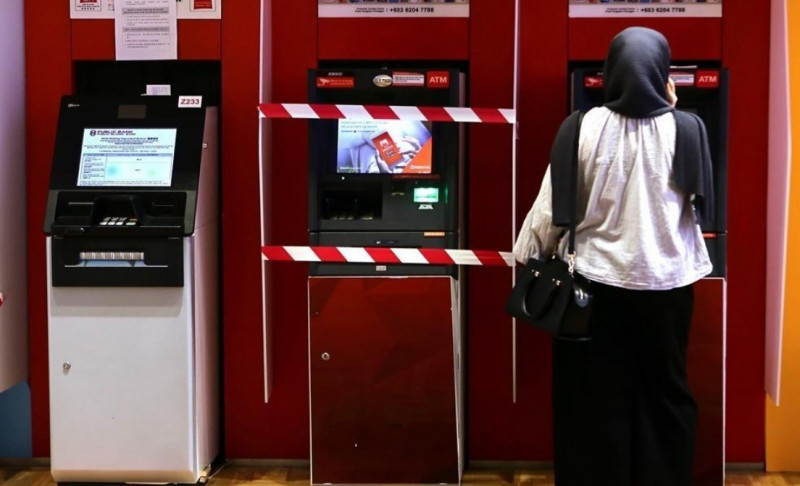
“Any form of a monopoly or cartelism is bad for Malaysian consumers and the economy,” said Selayang MP William Leong Jee Keen, when asked about the impact of the RM1 Automated Teller Machine (ATM) withdrawal fee charged on Malaysians for interbank transactions, especially on low-income earners.
Leong said that years ago, before electronic banking, consumers had the choice to use traditional (over-the-counter) banking services, which were cheaper, if not free of charge, as opposed to present-day services, where consumers are now forced to use electronic banking offered by all banks and charged mandatory fees.
“We see now that consumers have lost this choice, and now, as they use interbank ATMs, they are forced to pay the RM1 withdrawal fee. Remember, it’s the consumers' own money which allows the banks in Malaysia to earn huge profits,” he said.
Financial monopolies often limit consumers’ options for financial products and services. In a competitive market, multiple players offer a range of products that cater to different needs.
However, he explained that monopolies may consolidate services into one offering, leaving consumers with fewer choices or forcing them to use products they don’t prefer.
Leong, who is also the Chair of the Special Select Committee on Human Rights, Election and Institutional Reform under the present MADANI Government, said when all banks or financial institutions collectively form a single system to manage ATM services that this system is the only one present for the Malaysian consumers, the system is then a monopoly.
“As banks enjoy huge profits from the deposits made by consumers, each bank must have sufficient ATMs under their own brand name to be made accessible to all of its consumers and not form a cartel to be managed by a single company, which is then owned by the banks themselves — this makes it a cartel.
“In such a case, the banks must absorb all costs as they rake in huge profits and not pass such withdrawal fees to Malaysian consumers, more so one that burdens low-income earners,” he said.
“We cannot support any monopoly or one system which burdens the people. This adds strain to the consumer,” Leong added.
Possibilities exist that financial monopolies, allegedly like Payments Network Malaysia Sdn Bhd (PayNet), can be problematic for consumers as they can limit competition and negatively impact the overall financial ecosystem as it may create:
Lack of Competition: Higher Costs: – With fewer competitors in the market, a financial monopoly may have the power to set higher fees for transactions, payments, and services. Consumers are less likely to find affordable alternatives, and fees can become a significant burden. Limited Innovation: When there’s no competition, financial institutions have less incentive to innovate or improve their services.
This means consumers may face outdated technology, slower processing times, and limited features that could otherwise improve their experience.
Market Inefficiency: A monopolistic financial system may become inefficient because, without competition, there is less pressure to streamline operations or reduce operational costs. This inefficiency could be passed on to consumers in the form of higher fees or lower-quality service.
Potential for Exploitative Practices: Monopolies can exploit their market dominance, taking advantage of consumers because there is no competition to regulate pricing and service levels. For example, PayNet might control large portions of Malaysia’s payment infrastructure and could dictate terms that are not always in the best interest of consumers, such as imposing higher transaction fees or less favourable exchange rates.
Consumer Data Risks: A financial monopoly that controls payment systems, like PayNet, could have access to large volumes of consumer data. While this data can be useful for providing services, it also raises concerns about privacy and data security. A monopoly might be less motivated to safeguard this data effectively, as it has less incentive to compete on security measures compared to a more diversified market.
Economic and Social Inequality: Financial monopolies can exacerbate economic inequality by concentrating power in the hands of a few, making it harder for consumers from lower-income backgrounds to access affordable financial products and services. For example, PayNet’s dominance may restrict smaller service providers from offering more tailored solutions for underserved or rural populations.
These factors undermine the quality of financial services available and can lead to market inefficiencies that harm consumers. - December 30, 2024
This is the opinion of Selayang MP William Leong Jee Keen







.jpg)






_director_Datuk_M._Kumar.jpg)