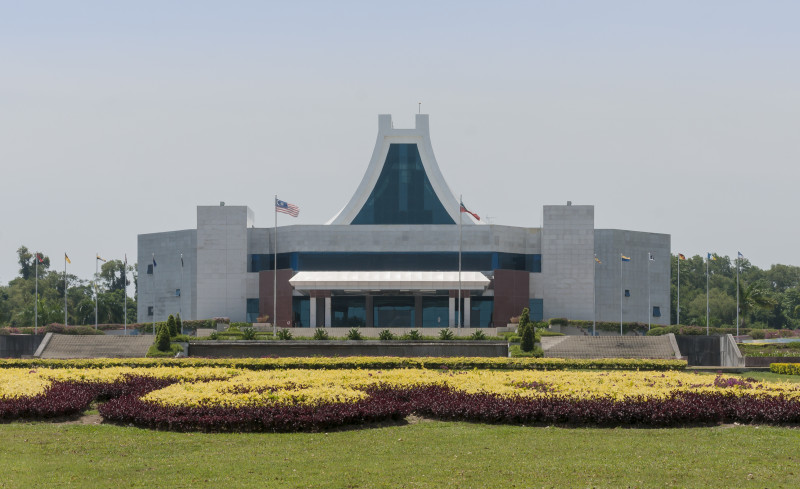
THE dissolution of the Sabah State Legislative Assembly has once again thrust the state into the national spotlight, triggering the 16th state election in as many years.
Yet, more than a contest for power, the coming election is being viewed as a litmus test of Sabah’s political maturity — and of the people’s resolve to reject the long-standing culture of party-hopping.
For many Sabahans, politics is no longer just a game of slogans and party colours, but a matter of dignity and the state’s future.
Over the decades, frequent changes in government — often not through the ballot box, but through defections driven by personal gain — have sown deep disillusionment among voters.
“Each time the government changes hands, development policies are disrupted, projects stall, investors lose confidence, and ultimately, the people pay the price,” says Dr Norhisam Bulot, a senior lecturer at UiTM Perlis, in a commentary on the situation.
The practice of party-hopping, though not new to Sabah’s political history, has increasingly been viewed by voters not as political manoeuvring, but as a betrayal of the public trust.
While the anti-party hopping law passed at the federal level was a step in the right direction, its full enforcement at the state level still requires firm political commitment.
“Sabah must lead by example in upholding this principle. If every elected representative honours their promises and stands firm on integrity, we can end this culture for good,” Dr Norhisam opined.
A Referendum on Integrity and Accountability
The coming polls offer voters the opportunity to deliver a decisive message — not just to local leaders, but to the entire nation — about the kind of politics they want. Will the electorate reward candidates with proven integrity, or fall for empty promises and recycled rhetoric? Will those with a history of defections be given another chance, or firmly rejected?
Sabah’s growing political consciousness, especially among younger voters, suggests the electorate is more discerning than ever. With the rise of social media and rapid information sharing, political narratives can no longer be controlled by soundbites and patronage alone.
“Young Sabahans are increasingly vocal. They want leaders who serve, not those who merely seek power,” Dr Norhisam noted.
Still, meaningful change will only happen if both the people and politicians move in unison. Voters must be prepared to reject unprincipled candidates, while leaders must have the courage to uphold values of integrity and public service — even under pressure.
Rejecting Old Politics, Building a New Era
Sabah, the author warns, cannot continue to be a testing ground for opportunistic political alliances. The state needs stable leadership, consistent policies, and a government that truly understands the aspirations of its multi-ethnic population.
Political maturity, the commentary argues, is not something that appears overnight — it takes time, reflection, and the willingness to learn from past missteps. Sabah has been through many phases, from unstable administrations to growing efforts at uniting communities across religious and ethnic lines. Each phase holds valuable lessons for charting a more stable and inclusive future.
As the countdown to the polls begins, Sabah stands at a critical juncture.
“Do we want to repeat history, or begin a more honourable and mature chapter? The choice lies with the people of Sabah,” Dr Norhisam said.
True democracy, they add, requires that leaders view politics not as a game of power, but as a sacred trust — and that voters recognise their ballot as both a symbol of hope and a tool for real change.
Sabah deserves to be remembered not as a state in perpetual turmoil, but as one that rose above its past to build a better future — politically stable, socially just, and economically vibrant.
And for that to happen, the people must first dare to choose differently. - October 11, 2025