MALAYSIA’S signing of the Agreement on Reciprocal Trade (ART) with the United States in Kuala Lumpur last Sunday marks a significant shift in the nation’s economic and diplomatic trajectory, offering both opportunities and obligations.
Under the pact, more than 1,700 Malaysian products will gain entry into the US market at tariff rates ranging from below 19 per cent to zero — a move hailed as a breakthrough for exporters. Yet, beneath these promising figures lies a costly trade-off.
To secure the preferential rates, Malaysia has committed to major purchases from the US, including Boeing aircraft, liquefied natural gas (LNG), coal, digital equipment and pharmaceuticals — estimated to total around US$240 billion (RM1.02 trillion).
In essence, Malaysia’s lower tariffs come with a price: becoming one of Washington’s key customers.
Critics have described the deal as uneven, arguing that Malaysia has conceded too much — from agreeing not to impose export quotas on rare earths to opening its agricultural market to American products exempted from the Sales and Services Tax (SST).
Still, observers note that in modern trade, absolute parity rarely exists. What matters, they say, is the ability to manage risks and secure strategic returns.
The deal exemplifies Malaysia’s pragmatic approach to balancing global powers — a stance likened to “trading with dragons” without getting burnt. Kuala Lumpur continues to strengthen economic ties with the United States while maintaining close relations with China, reflecting a policy of principled neutrality.
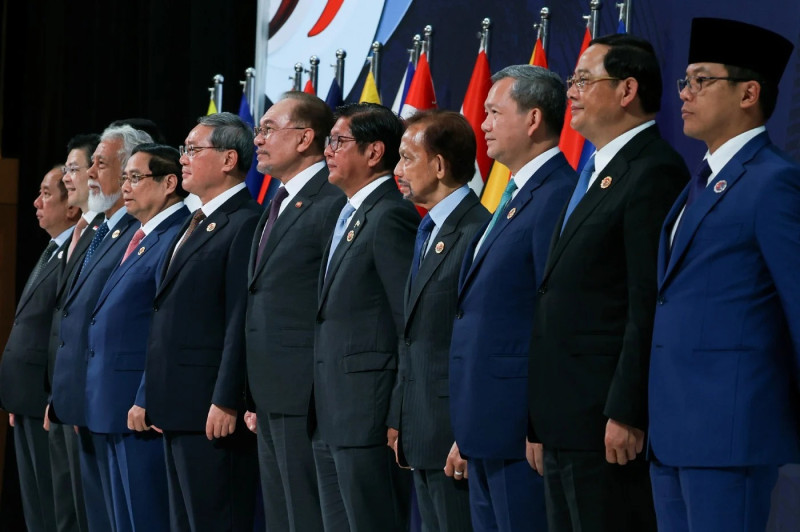
This balanced strategy was echoed at the recently concluded 47th ASEAN Summit, where leaders underscored the bloc’s maturity and independence in engaging major powers.
Associate Professor Dr Nik Ahmad Sufian Burhan of Universiti Putra Malaysia said ASEAN’s dual engagement with both the US and China “reflects the region’s maturity and quiet confidence.”
“The region is not choosing sides but keeping doors open to both. The upgraded trade deal with China strengthened economic links, while continued engagement with the US added balance and options,” he said.
Universiti Teknologi MARA senior lecturer Dr Mohamad Idham Md Razak added that ASEAN’s neutral posture “maintains engagement with both powers without taking sides,” even if its ability to shape global outcomes remains limited.
The summit also advanced key economic frameworks, including the upgraded ASEAN-China Free Trade Area (ACFTA 3.0) and progress on the ASEAN Digital Economy Framework Agreement (DEFA), set for signing in 2026.
For Malaysia, the ART with Washington was among the most closely watched outcomes. The Malaysian Palm Oil Council (MPOC) said the new tariff exemptions for Malaysian products, including palm oil, come amid robust bilateral trade growth.
“This measure will further strengthen Malaysia’s competitive position in a high-value and rapidly evolving market,” said MPOC chief executive officer Belvinder Sron. Between January and September 2025, exports of Malaysian palm oil and related products rose by 8.1 per cent to 346,000 tonnes.
The Small and Medium Enterprises Association Malaysia (SAMENTA) president Datuk William Ng noted that the deal could open opportunities for local SMEs to access niche segments of the US market, though compliance with US regulatory standards remains a hurdle.
“The Malaysia-US Agreement on Reciprocal Trade will also enhance Malaysia’s attractiveness to US investors seeking to diversify supply chains into Southeast Asia,” Ng said.
Federation of Malaysian Manufacturers (FMM) president Tan Sri Soh Thian Lai added that the deal “safeguards critical export sectors that make up about 12 per cent of Malaysia’s exports to the US,” covering industries such as palm oil, rubber, cocoa, aircraft components and pharmaceuticals worth around US$5.2 billion.
Ultimately, analysts suggest that Malaysia’s calculated engagement with both Washington and Beijing demonstrates a nuanced strategy — one that embraces opportunity without surrendering sovereignty. - October 29, 2025