SENIOR political figures and education experts have reiterated that schools should remain outside the sphere of political manoeuvring, warning that the ongoing dispute over the recognition of the Unified Examination Certificate (UEC) exemplifies how educational issues are frequently drawn into partisan conflict.
Observers note that the education sector is particularly vulnerable to manipulation, with controversies often exploited to exert pressure on stakeholders or gain short-term political advantage.
The UEC, administered by Chinese independent secondary schools under the management of Dong Zong since 1975, is primarily conducted in Mandarin and incorporates elements of a curriculum referencing Taiwan.
By contrast, Malaysia’s national education system is based on a uniform curriculum delivered in Malay, with public examinations such as the Sijil Pelajaran Malaysia (SPM) and Sijil Tinggi Persekolahan Malaysia (STPM) serving as key benchmarks for student achievement.
Some proponents of the UEC argue that international recognition should prompt the Malaysian government to follow suit.
However, experts caution that most foreign recognition comes from autonomous universities exercising academic discretion rather than any formal government endorsement.
Consequently, the UEC debate must be addressed within the legal and constitutional framework, including the Federal Constitution, the Education Act, the National Education Philosophy, and the overarching goal of national unity.
Concerns have emerged over calls for government recognition of the UEC coming even from Cabinet members, whose responsibilities include upholding collective governance.
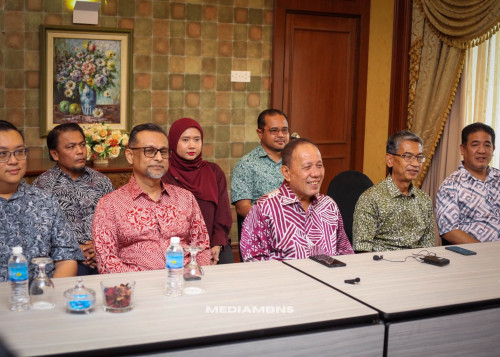
Datuk Seri Johari Abdul Ghani, UMNO Vice President, emphasises that Malaysians are free to pursue diverse educational pathways, but the national system must be respected, and reforms undertaken with careful deliberation.
Malaysia has long demonstrated tolerance for vernacular education, supporting Chinese and Tamil national-type schools within the public system and providing substantial funding annually.
Nevertheless, Johari warns that such tolerance should not be exploited to coerce the government into policies that could undermine national cohesion.
“Education must not be treated according to seasonal political agendas or used as a low-hanging fruit to regain political support,” Johari said.
“Our holistic national education system, clear academic pathways, and public examinations function effectively while allowing citizens to pursue higher learning.
“Education should remain a noble sphere for building future generations and advancing the country, rather than a battleground for political conflict that harms all.”
The statement underscores a wider call to safeguard Malaysia’s education sector from political interference, ensuring that schools remain a platform for unity, opportunity, and sustainable national development.- December 12, 2025