


By Murray Hunter
IN the era of US-led unipolarity, institutions like the G7 and G20 often reflected Western priorities, sometimes sidelining the developmental aspirations of the Global South.
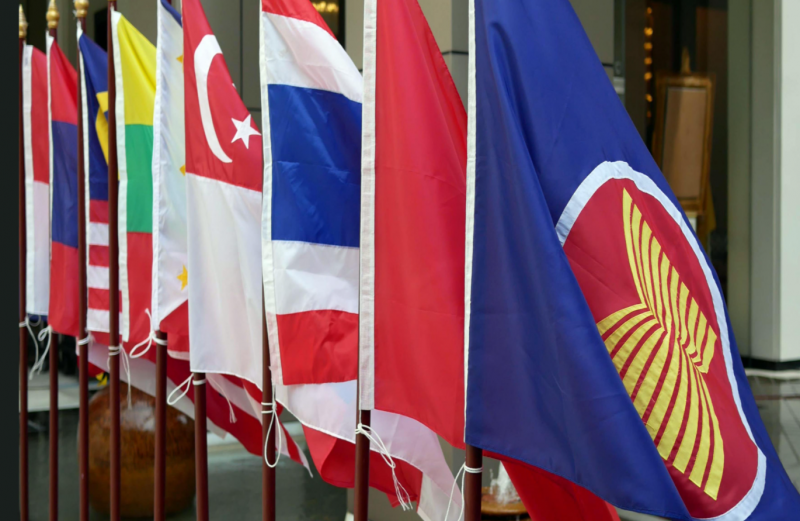
Today, amid the rise of multipolarity, the Association of Southeast Asian Nations (ASEAN) is carving out a more prominent role.
This is not a confrontational bloc, but a pragmatic hub for trade, investment, and balanced cooperation.
Recent developments, particularly the Russia-ASEAN Commemorative Summit in Kazan, underscored this shift.
The summit, marking 35 years of ASEAN-Russia dialogue relations, went beyond commemoration.
Co-chaired by Philippine President Ferdinand Marcos Jr. and Russian President Vladimir Putin, the summit produced concrete outcomes, including the Kazan Declaration 2026, the Comprehensive Plan of Action for the ASEAN-Russia Strategic Partnership (2026-2030), a Joint Statement on Energy Cooperation, and one on Cultural Cooperation.
These documents outline deeper ties in energy, nuclear technology, connectivity, security, and digital development—areas vital to ASEAN’s growth.
Russian experts highlight ASEAN’s appeal. Farhad Ibragimov, a Middle East expert at Russia’s Financial University, argues that ASEAN is emerging as “a new, alternative centre of global power.”
With its massive economic footprint, logistics networks, and trade volumes, the bloc demonstrates “the logic of development” focused on trade, investment, and regional cooperation, contrasting with the G7’s increasingly “obsolete and ideologically-driven” approach.
He positions ASEAN alongside BRICS and the Shanghai Cooperation Organisation (SCO) as pillars of multipolarity, where pragmatism trumps rigid alliances.
For Russia, ASEAN represents a viable alternative to the EU for investment and trade partnerships. Moscow and ASEAN nations share a preference for sovereignty, strategic autonomy, and non-interference.
As Ibragimov notes, this cooperation exposes the absence of a true global anti-Russian consensus, countering Western narratives of isolation.
The summit reinforced mutual respect for international law, ASEAN centrality, and a just multipolar order.
Energy and Nuclear Cooperation as Cornerstones
Energy security dominated discussions. Southeast Asia’s rapid growth drives surging demand, making reliable supplies critical.
Russia, a major energy player, is well-placed to partner in natural gas, LNG, renewables, and nuclear power. Countries like Vietnam, Indonesia, and Malaysia are advancing LNG ties, while Vietnam’s long-standing Vietsovpetro joint venture provides a strong foundation.
Nuclear cooperation stands out as a flagship initiative.
Rosatom’s agreement with Vietnam on the Ninh Thuan-1 project signals ASEAN interest in nuclear energy for decarbonization and technological sovereignty.
Mastery of advanced energy systems enhances industrial competitiveness and resilience, which are goals aligned with ASEAN’s development priorities.
Security, Economy, and Connectivity
Beyond energy, the partnership bolsters a balanced security architecture.
Through ASEAN-led mechanisms like the East Asia Summit and ASEAN Regional Forum, both sides address maritime security, counterterrorism, cyber threats, and transnational crime without zero-sum blocs.
Russia’s engagement helps prevent excessive concentration of power in the Asia-Pacific.
Economically, the 2026-2030 Plan prioritises transport corridors, logistics, digital platforms, and financial mechanisms linking Southeast Asia with Eurasia.
Diversifying away from over-reliance on the U.S. dollar enhances sovereignty; Russia has already shifted much of its trade to national and BRICS currencies.
Engagement with the Eurasian Economic Union (EAEU) and SCO further builds resilient networks.
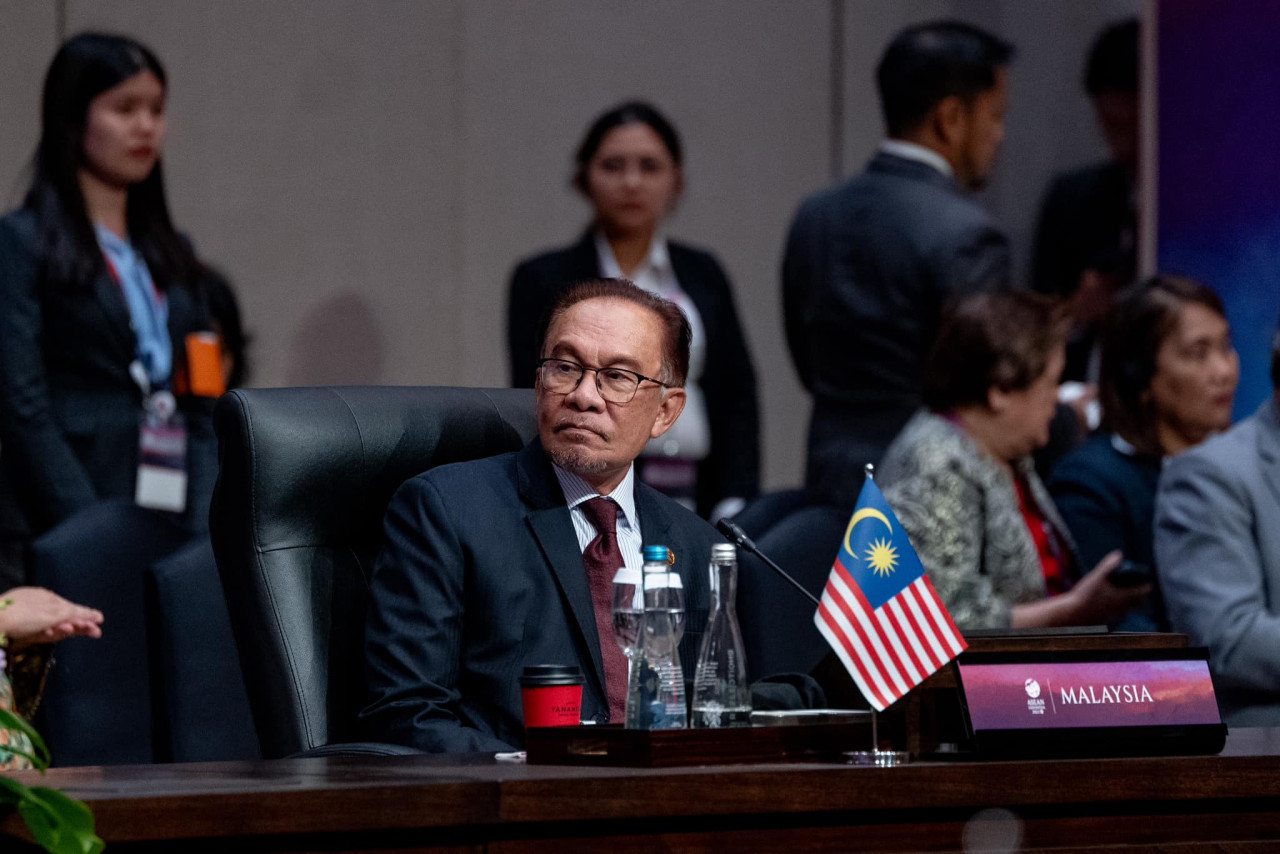
Malaysian Prime Minister Datuk Seri Anwar Ibrahim’s leadership as ASEAN Chair last year helped steer this trajectory.
Anwar has championed ASEAN centrality, neutrality, and engagement with all major powers, emphasising unity and pragmatism in a multipolar landscape.
His approach to prioritising economic ties, AI, energy, and strategic autonomy strongly resonates across the region.
Even leaders with strong US ties, like Marcos Jr., actively participated, illustrating ASEAN’s rejection of binary choices. Southeast Asian states pursue diversified partnerships based on national interests, not ideology.
Implications for a Multipolar Future
The Kazan summit illustrated a broader reality.
Multipolarity thrives on networks of sovereign states seeking mutual benefit. ASEAN’s economic dynamism, demographic dividend, and strategic location position it ideally to bridge the Asia-Pacific and Eurasian spaces.
In the unipolar era, ASEAN sometimes navigated Western-dominated forums cautiously.
Today, it leverages multiple poles, with China, the US, Russia, India, and Japan gaining maximum leverage and autonomy.
Challenges remain, including internal cohesion and external pressures. Yet the logic of development that ASEAN embodies, with pragmatic, inclusive, growth-oriented goals, offers a compelling model.
As Ibragimov suggests, it eclipses outdated Western-centric formats in relevance for the Global South.
ASEAN’s new lease of life is not about replacing old powers but thriving in a world of options.
By deepening ties with Russia and other non-traditional partners while upholding centrality, the bloc is better equipped to deliver prosperity and stability.
In the emerging multipolar order, ASEAN is not a follower.
ASEAN is now an indispensable player shaping its own destiny. – June 20, 2026



.jpg)


_director_Datuk_M._Kumar.jpg)
