By Murray Hunter
SATURDAY night across Yala, Pattani and Narathiwat saw a wave of coordinated violence that laid bare both the persistence of the insurgency and the fragility of the region’s economic lifelines.
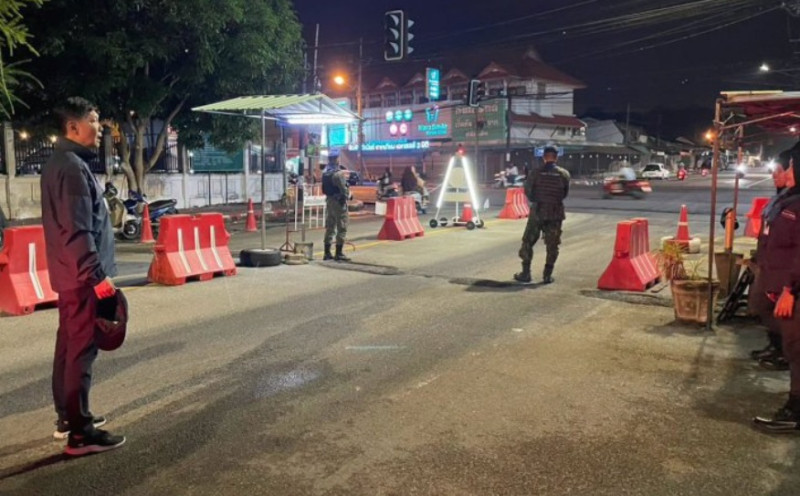
Between roughly 8 pm and midnight on 22 August 2026, more than 50 arson, bombing and incendiary attacks struck administrative buildings, utility poles, a convenience store, while roads were blocked by burning tyres, and at least one car was bombed.
Narathiwat recorded 22 incidents, Yala 18 and Pattani 11.
Two civilians were injured. Authorities imposed an overnight curfew in Narathiwat and the Internal Security Operations Command began sweeps the following day.
The timing, geographic spread and simultaneous nature point to deliberate coordination aimed at economic disruption. Human casualties were not the objective.
The deep south’s economy leans heavily on cross-border activity with Malaysia. Malaysian visitors form one of Thailand’s largest tourist markets.
In 2025, they numbered about 4.52 million out of roughly 32.97 million foreign arrivals, around 13.7 per cent of the total Thai tourism.
A large share of those Malaysians enter via southern land checkpoints and head to Songkhla, Hat Yai and the border provinces themselves.
Even short visits and day trips inject cash into local shops, restaurants, hotels and transport.
Targeting infrastructure, blocking roads and creating an atmosphere of insecurity directly threatens that flow.
The attacks coincided with a Malay biker protest calling for a boycott of Thailand due to discriminatory action by Thai police against Malaysian bikers.
Malaysian authorities have since warned their citizens to exercise caution when travelling to southern Thailand.
Western embassies have long maintained travel advisories for the area.
The combined effect is predictable: fewer visitors, quieter markets, delayed investment and a further squeeze on an already underdeveloped local economy.
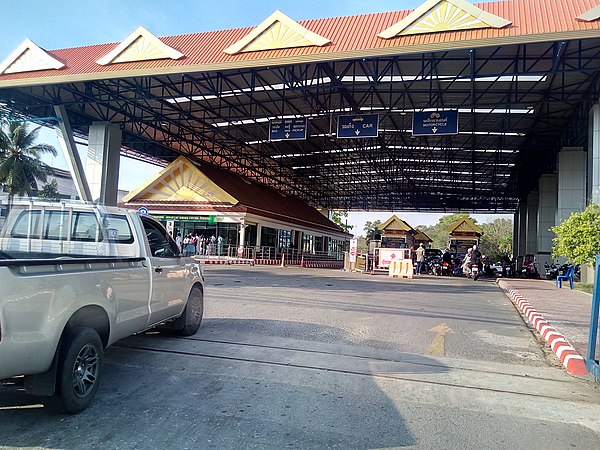
In a region where formal employment opportunities remain limited, and rubber, small trade and tourism provide much of the livelihood, repeated disruption risks locking communities into prolonged stagnation.
These events arrive just as Bangkok has begun talking of a paradigm shift over the Deep South insurgency.
Officials have signalled a move away from purely transactional security arrangements, such as short-term concessions in exchange for lower violence, toward addressing political root causes, governance reforms and possible engagement with the Barisan Revolusi Nasional (BRN).
Ideas floated include confidence-building measures such as amnesties or sentence reductions, a review of checkpoints and aggressive village searches that fuel resentment, and more inclusive dialogue involving community voices and BRN-aligned figures on questions of decentralisation and administration.
The stated goal is to tackle identity, historical grievances and structural problems rather than merely manage the symptoms.
Yet the scale and coordination of Saturday’s attacks suggest that ageing BRN leaders engaged in long-stalled, Malaysia-facilitated talks do not fully control what happens on the ground.
Semi-autonomous cells appear capable of acting in concert when they choose.
This points to other centres of influence and a capacity for escalation that formal negotiations have not constrained.
At the same time, authorities are trialling drones for deployment in the deep south. This is an indication that the security apparatus continues to prioritise technological and kinetic responses even while political narratives of reform circulate.
The deep south conflict has roots that stretch back more than a century to the annexation of the former Patani sultanate. Successive Thai governments have alternated between assimilationist policies, heavy security presence and intermittent dialogue.
The result has been a cycle in which violence flares, economic activity suffers, local resentment grows, and the underlying political questions remain unresolved. Tourism and cross-border commerce offer one of the few realistic avenues for broader prosperity, yet they are precisely the assets most vulnerable to targeted disruption.
If the latest attacks succeed in depressing Malaysian arrivals and deterring other visitors, the economic cost will fall hardest on ordinary residents, the Muslim Orang Pattani, Thai Buddhist and Chinese Thai alike, who have little stake in the insurgency’s aims.
A strategy that genuinely shifts toward political and governance solutions would need to demonstrate results on the ground faster than the next wave of coordinated violence.
Otherwise, the narrative of paradigm changes risks remaining confined to Bangkok briefings while the deep south’s economy continues to absorb the blows. The events of 22 August show that the capacity for disruption remains intact and that economic pressure has now become the preferred strategy. – August 24, 2026