TODAY marks a year of the nation’s battle against the Covid-19 pandemic, which is unprecedented in terms of its global impact on both public health and the economy.
In the face of seemingly insurmountable challenges, Malaysia has been able to remain resilient, thanks to our robust public health system and sound economic fundamentals.
Nevertheless, with the onset of the third coronavirus wave, our healthcare system has been subjected to even greater pressure, testing our capability and capacity to the limit.
When the movement control order (MCO) was first introduced in March last year, the overarching priority was to strike a balance between protecting lives and livelihoods.
Protecting public health has always been of paramount importance, in as much as it is crucial that the economic well-being of the people is safeguarded.
With this principle in mind, the International Trade and Industry Ministry (Miti) and other economic agencies were tasked with formulating strategies to minimise the impact on our battered economy.
Miti was entrusted with coordinating a list of essential economic activities allowed to operate. This proved to be a major challenge, as the economic value chain is deeply interlinked and highly complex.
As Malaysia is an important player in the global supply chain, it was incumbent on us to ensure minimal disruption to the supply of essential products, such as rubber gloves, personal protective equipment, and parts and components for medical devices.
Above all, the government has to ensure that the people’s livelihoods are secure.
Regular engagements were conducted with all stakeholders, including industry associations and chambers of commerce, on how the government could best collaborate with the private sector in restarting, reviving and revitalising the economy.
It bears repeating that in our efforts to fight this pandemic, a host of unintended economic consequences were unleashed, not least of which is the debilitating impact on the country’s gross domestic product. In the second quarter of 2020, Malaysia’s GDP suffered its worst-ever decline, namely a contraction to -17.1%.
Consequently, the government took the initiative to pump in a massive RM320 billion for stimulus packages, not just to mitigate the adverse economic impact on the rakyat, but also to jump-start and revitalise the entire economy.
By the third quarter of 2020, we managed to reduce the decline in growth to -2.7%. While this definitely manifests the effectiveness of the stimulus packages, bear in mind that it will still take at least another quarter before the economy sees actual positive growth.
This underscores the fact that despite our best efforts at economic recovery, it will take an extended period of time before the economy can actually pick up to show positive growth after the lifting of the MCO. Hence, the notion that the economy can revive instantaneously after a lockdown is lifted has no real basis.
The fact of the matter is, the economy does not run on a “switch off, switch on” mode.
In this regard, recent calls to reimpose a total lockdown to deal with the massive spike in infections amid this third wave must be viewed along with suggestions on alternative strategies and options.
For instance, the government could consider tightening the standard operating procedures to prevent outbreaks at ignition sites, and introducing clear guidance on geospatial planning, such as quantifying indoor settings at any given time.
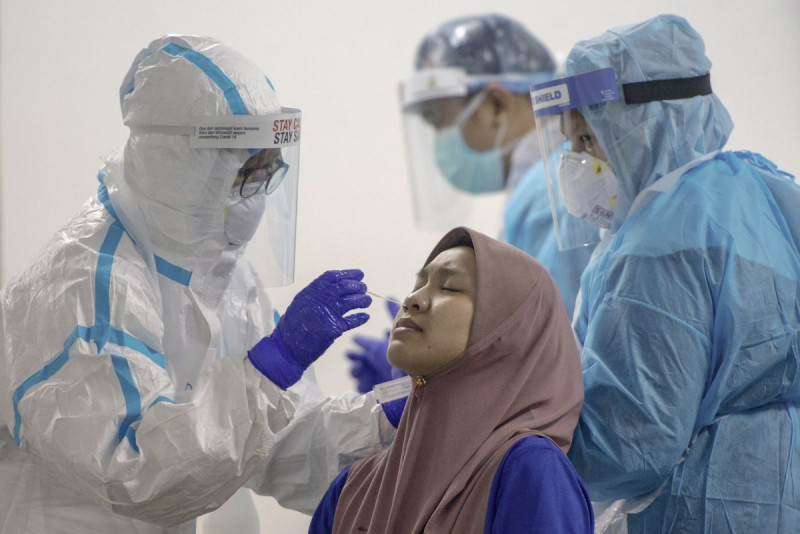
Additionally, we could step up targeted testing, as well as regulate the costs of RTK-Antigen test kits, to make Covid-19 testing more affordable and able to be conducted on a larger scale, particularly for industries.
It has also been suggested that SOPs for social events be tightened, while a full ban on interstate travel should be imposed for the interim. In any event, the call is for businesses to open on the condition that they fully comply with stricter SOPs. It cannot be overemphasised that at the end of the day, community engagement and empowerment is key.
This is because the pandemic starts and spreads in communities, and the solutions are within the communities themselves, through their behaviour, adaptation and compliance.
It is important to note that apart from the toll on public health and the economy, Covid-19 has a direct impact on the people. One loss of income affects the whole household. In practical terms, the loss of income for one breadwinner may adversely affect the livelihoods of at least four persons in a family.
Miti acknowledges the strong support and collaboration of industry stakeholders and the rakyat towards ensuring economic recovery and sustainability during the Covid-19 pandemic. Public-private-rakyat synergy is an invaluable value proposition for nation-building, and should be embraced by all.
Throughout 2020, security and medical frontliners, particularly those from the Health Ministry, have demonstrated their commitment, dedication and tireless efforts to containing Covid-19.
We owe them a tremendous and invaluable debt. – The Vibes, January 26, 2021
Datuk Seri Mohamed Azmin Ali is international trade and industry minister
* This statement was issued yesterday