A RECENT article by Dennis Ignatius, “Bersama is Malaysia’s best hope now,” is a work of fiction—a siren song for the disillusioned, wrapped in the gilded prose of a seasoned diplomat.
Beneath its lyrical veneer lies an exercise in breathtaking intellectual dishonesty.
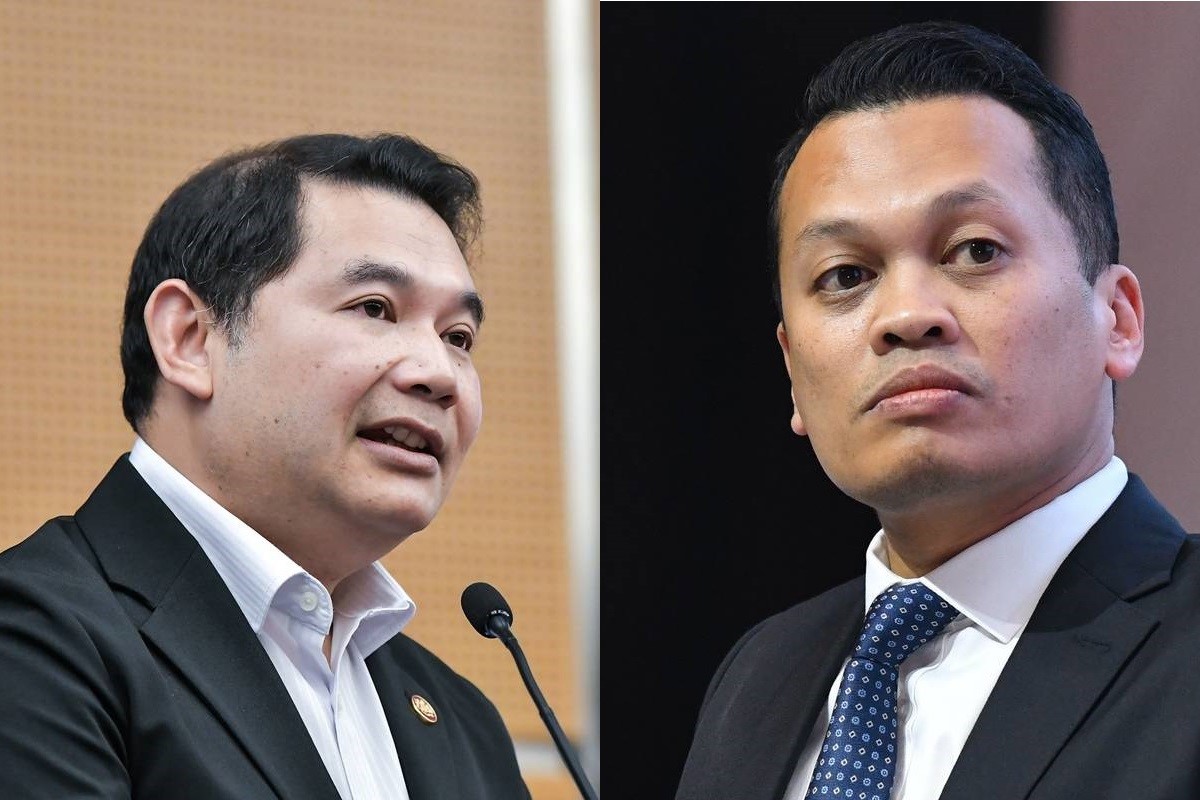
His anointment of Datuk Seri Rafizi Ramli and Nik Nazmi as principled outsiders ignores the fact that they were insiders who held power for a significant period of time and who failed to deliver meaningful reforms during their tenure as ministers.
The article is not merely naive but is a scandalous betrayal of historical fact. While I can understand his frustration with Malaysian politics, his arguments seem to suffer from a selective amnesia that ignores the tangible progress made under the current unity government.
The current government is stitching together a veritable tapestry of institutional revival through persuasion and garnering a consensus within a fractured coalition.
As the English filmmaker Ken Loach said, “If you're a politician, you can see there might be times when, to secure the greater good, you have to take a backwards step. That is a matter of tactics.”
This is exactly the predicament of the unity government.
The Bersama leaders are nothing more than political contortionists—the same tired actors, doffing one mask only to don another, hoping we forget their dismal record when they held the levers of power.
The Claim of National Stagnation Is a Malicious Falsehood
Ignatius would have us believe that Malaysia is trapped in an endless loop of decay, where "grand promises" evaporate into the ether.
This is a caricature that wilfully blinds itself to the undeniable renaissance unfolding under the Unity Government.
• Institutional Earthquake: In January 2026, Prime Minister Datuk Seri Anwar Ibrahim declared war on the archaic vestiges of executive overreach.
The impending separation of the Attorney General’s powers, the imposition of a strict 10‑year term limit on the Prime Minister, and the imminent enactment of a Freedom of Information Act are not hollow slogans—they are foundational pillars being driven into the bedrock of our Constitution.
This is genuine statecraft, not the cheap rhetoric of opposition grandstanding.
• Economic Resurgence: While Ignatius wallows in despair, the Malaysian economy is roaring back to life.
Having posted robust 5.2% growth in both 2024 and 2025, we have stormed into 2026 with a blistering 5.4% expansion in the first quarter.
Our ascent in the prestigious IMD World Competitiveness Ranking is a testament to the government’s steely stewardship.
The international community has responded in kind, showering us with upgraded credit ratings and a significant RM52.73 billion strategic partnership with Turkmenistan.
This is not a nation in decline; this is a phoenix slowly but steadily rising from the ashes of decades of past mismanagement.
• Integrity Restored: To claim corruption is rampant is to spit in the face of our improving Corruption Perceptions Index (CPI) score.
The current administration has tethered the leviathan of graft, compelling a level of accountability that was previously not done.
To dismiss these concrete achievements is not caution; it is the height of selective amnesia.
Rafizi and Nik Nazmi: The Ultimate "Turncoats"
Ignatius frames these two as a "generational change," unburdened by the baggage of their predecessors.
Let us be brutally clear: they are the baggage.
They served as full-fledged Ministers—Rafizi at the Economy Ministry and Nik Nazmi at Natural Resources—until mid-2025.
If they were the visionary saviours Ignatius claims, why did they leave the cabinet chamber in utter silence, without a single reform to their name?
• Mediocrity not Excellence: Rafizi, the self-styled data messiah, was pilloried for his staggering lack of executive distinction.
His subsidy rationalisation policy, rather than being a surgical strike, was a bludgeon that inflicted palpable economic anguish upon small businesses and the struggling masses during turbulent global headwinds.
His vaunted "People’s Income Initiative"—reduced to a joke involving automated vending machines—was so catastrophically inept that it invited calls for an Auditor-General’s inquisition.
• Opportunism Masquerading as Principle: Let us dissect the "courage" that Ignatius is praising. Rafizi and Nik Nazmi walked away from PKR only after they lost their internal party elections. This was not a principled exodus; it was reactionary and motivated by the loss. They did not resign their ministerial posts in protest—they clung to their salaries and perks until the political winds turned against them.
They are not reformers; they are sore losers attempting a hostile takeover of a dormant party.
The fact that PKR is now considering a RM10 million bond against them speaks volumes about the rancour and disgust they have left in their wake.

The Hollow Delusion of "New Politics"
Bersama is a barren two-man startup masquerading as a mass movement.
It is a party that was hijacked, not built. Where is the deep bench of leaders? Where are the clear, actionable policies to dismantle the Gordian knot of racial and religious polarisation?
On the recognition of the UEC, the future of MARA UiTM, or the delicate balance of Malay special rights—Bersama offers only silence or vapid platitudes.
They do not offer anything ideologically new.
Conclusion: The Real Danger Is This Treacherous Mirage
Ignatius asks, "What is the safe choice?" and insinuates that taking a gamble on Bersama is a virtuous risk.
I say the real risk is surrendering to this treacherous mirage.
We have seen Rafizi and Nik Nazmi in the corridors of power, and they left nary a footprint of progress.
To abandon the incremental yet undeniable reconstruction of our nation for the siren song of two disgruntled ex-ministers is not hopeful—it is a desperate romanticism. Malaysia does not need a return to the same faces, repackaged with a glossier marketing campaign.
It needs the unglamorous, relentless grind of holding the current government accountable while acknowledging its tangible victories. Bersama is not a fresh dawn; it is a fading echo of a past we have painfully outgrown.
Let us not trade the bird in hand—a government finally chipping away at the shackles of the old order—for the phantom, whose only talent lies in promising the moon while having failed to even climb a hill. - July 1, 2026
Datuk Dr Siva Ananthan
Dr Siva Ananthan is a graduate in Law from the University of London and is 40 years veteran of the legal fraternity, having founded Advance Tertiary College in 1987. He has also served as a Governing Council Member of the ASEAN Law Association, as President of the National Association of Private Educational Institution and as a Director of the Pan Pacific Association for Private Education.