THE government has recently announced that the movement control order for Penang, Selangor, Kuala Lumpur, and Johor will be extended. Other states will have relaxed restrictions while the Covid-19 vaccination plan is set to roll out by the end of the month.
These developments come following heightened anxiety over the spike in cases that have hovered between 3,000 and more than 5,000 daily for around two months.
At one point, our healthcare capacity was at breaking point due to the overwhelming number of cases, although the situation has now improved somewhat.
As restrictions rules change – in some places enhanced, others maintained or relaxed – controversies still rage on over whether the government’s reactions have been appropriate.
On the one hand, there are those who think the government needed to relax the restrictions to keep businesses afloat.
There are also those who blame the spike in case numbers on the government’s half-hearted attempts in implementing restrictions. Among others, they blame the government’s decision to lift interstate travel in December for the surge in cases.
To make matters worse, they point to various ministers or senior politicians who flout Covid-19 standard operating procedures (SOPs). They say that when leaders cannot follow the SOPs, how can they expect ordinary Malaysians to comply?
Both sides have valid points. But to me, two wrongs don’t make a right. It doesn’t matter whether the government has allowed dining in at restaurants or how many people can sit at a table.
The bigger question that needs to be asked, at a time when Covid-19 is still around us, is whether it is necessary to eat out even if the rules allow it.
I recall when the government first allowed dining in, subject to diners being seated at least 1m apart, many did not abide by the SOP.
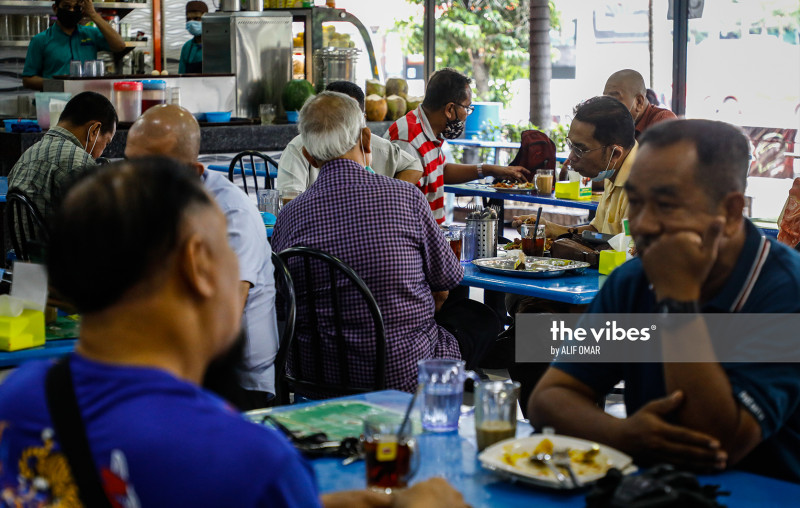
At mamak stalls and air-conditioned restaurants, diners were taking their own sweet time finishing their meal, and many lingered on long after they had finished eating.
Some brought along their children or the elderly despite the latter two being in the high-risk group. Couldn’t have they just dined at home?
In malls, I have seen shoppers out and about with toddlers tagging along, oblivious to the invisible enemy lurking in the air.
Once, I confronted a shopper who strolled along in a mall with her kid. I asked the mother why she brought her daughter, seated in a stroller, to the mall and if she was worried about the virus. She threw me the dirty look and hurriedly walked away saying that it’s none of my business. And, they were not even wearing their masks correctly.
Many of us like to blame the government for its shortcomings in handling Covid-19. While I wouldn’t say that the government is blameless, we ourselves should first do our part in keeping the virus at bay.
When the government lifts the ban on interstate travel, we should ask whether we should travel in the first place. Is it an urgent trip that cannot wait? Will the travel expose our loved ones or others at risk?
When we are allowed to dine in at restaurants, do we stay around longer than we should? Should we even dine in when we can just take away? Do we talk business over the restaurant dining table when we could have just Zoomed?
Very often, the people who complain about the government’s decisions are the same ones whose deeds elevate the transmission risk of Covid-19.
I wonder how many criticise ministers who flout Covid-19 SOPs on social media using their handphones from a mamak shop where they lepak long after they finish their meals? Do they remember to wash their hands frequently?
All I can say to those who keep blaming others is to stop doing that and start taking responsibility. – The Vibes, February 18, 2021
Matthew Ooi is from Bandar Baru Nilai