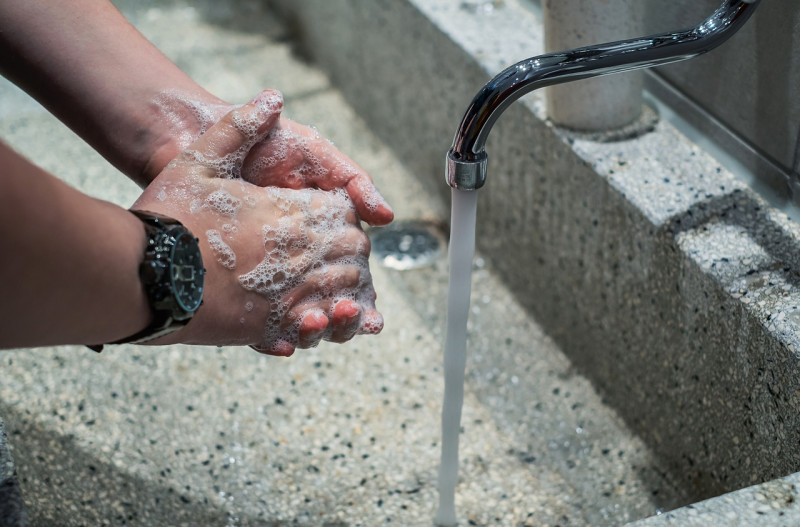
JUST about a week ago, we marked the first anniversary of the movement control order being enforced in Malaysia. Over the past year, one of the most frequent messages that we have heard is to wash our hands regularly to ensure personal hygiene is upheld during this Covid-19 pandemic.
By and large, we have been blessed with water supply, thanks to the location of our country, as it means that we benefit from plenty of rainfall. However, within Malaysia, there are areas that are suffering from lack of access to clean water supply. The repeated water cut-offs in the Klang Valley due to illegal dumping of industrial waste in rivers have also led to disturbed life in the past few years.
It has been estimated that over two billion of the global population live in countries with high water stress. Realising the need for unified action globally, the UN Sustainable Development Goals, which were launched in 2015, included this issue in Goal 6, with the theme “Clean Water and Sanitation for All”. Engineers have also taken this global issue in stride, making providing “access to clean water” one of the 14 National Academy of Engineers (NAE) Grand Challenges for Engineering in the 21st century. This has allowed for a focused approach to develop solutions that will enable clean water access in nations with high water stress.
Food and water security has also been identified as one of Malaysia’s grand challenges by the Science, Technology and Innovation Ministry (MOSTI), which was launched by its minister, Khairy Jamaluddin, earlier this year in January. Concurrently, the recently launched 10-10 Malaysian Science, Technology Innovation and Economy Framework (MySTIE) by the Academy of Sciences Malaysia (ASM) has also identified “water and food” as one of the 10 social-economic drivers.
Last December, UN-Water held its 31st Special Session of the General Assembly, in response to the Covid-19 pandemic. The body reiterated the urgent need for access to clean water and soap to ensure that the world population is able to come out of this pandemic safely, as water is the first line of defence in a pandemic. However, about three billion of the world’s population is lacking basic handwashing facilities at home, and better water and sanitation systems must be built in order for nations to be safeguarded from being susceptible to other pandemics in the future. Countries need to establish efficient water-management systems to cope with water scarcity and food insecurity issues.
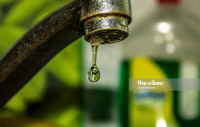
It has been reported that a single Malaysian wastes up to 50,000 litres of water yearly. We can reduce this by practising some simple habits in our daily lives, like reducing time in the shower, turning off the water while brushing our teeth, checking for leakage in pipes and toilet and much more.
During the session, the Global Acceleration Framework was launched in order to align efforts, optimise financing and transform capacity and governance to ensure that access to clean water is available to the people of the world. This will help meet some of the goals in the UN SDGs by 2030, such as improving water quality by reducing pollution, eliminating dumping and minimising release of hazardous chemicals and materials, halving the proportion of untreated wastewater and substantially increasing recycling and safe reuse globally; substantially increasing water-use efficiency across all sectors and ensuring sustainable withdrawals and supply of freshwater to address water scarcity and substantially reduce the number of people suffering from water scarcity; and, implementing integrated water resources management at all levels, including through transboundary cooperation as appropriate.
Within the context of Malaysia, we have been taking steps to address this issue. The National Integrated Water Resources Management Plan, published by ASM in 2016, served as a good guide for transforming the water sector in the country. It outlines various strategies and plans to be taken at the national and state levels. Some of the important recommendations include the formalisation of governing policy to ensure balanced development in meeting water, food and energy security targets, green growth through the application of the 3Rs (reduce, reuse, and recycle), etc. It is worth noting the Water Sector Transformation (WST) 2040 project by the Economic Planning Unit of the Prime Minister’s Department is at its halfway mark, and due to be completed by the end of this year. The National Agenda for WST 2040 aims to transform the national water sector so that water will be seen as a new economic sector that will boost national employment as well as forge Malaysia’s science, technology and innovation development and contribute to our gross domestic product.
Besides policymakers, each of us can play a part in addressing this global water issue. In 2019, National Water Services Commission (Span) statistics showed that consumption per capita in Peninsular Malaysia and Labuan has spiked to 230 litres per capita per day (LCD), which is 40% higher than the UN benchmark of 165 litres per person every day. This LCD value has been on the rise in recent years, i.e. up from 226 litres (LCD) in 2018 and 222 LCD in 2017. It has been reported that a single Malaysian wastes up to 50,000 litres of water yearly. We can reduce this by practising some simple habits in our daily lives, like reducing time in the shower, turning off the water while brushing our teeth, checking for leakage in pipes and toilet and much more.
This World Water Day, let us all take a moment to reflect on our water habits and improve on our actions in order to ensure that there is access to clean water for future generations. Through this, we can play a part to ensure they will have the same access to clean water that we have had the privilege of having during this last year, which has allowed us to stay healthy. – The Vibes, March 21, 2021
Professor Dominic C.Y. Foo is a research scholar who works on water minimisation and CO2 reduction for the process industry. He develops various novel techniques on industrial wastewater reduction and CO2 mitigation for the process industry to achieve the United Nation Sustainable Development Goals