THE Perikatan Nasional government has announced improvements to the Malaysian Indian Blueprint, to address the socio-economic problems facing the community.
In 2017, just before the 14th general election a year later, then prime minister Datuk Seri Najib Razak launched the blueprint, which sets targets to address the plight of Indians.
But this year, the PN administration feels that the targets are not specific, and therefore, require a reclassification so as to address the issues facing Indians in the B40 group.
The original 2017 blueprint sets a target of at least 7% Indian participation in the civil service in all ranks by the year 2026. It also targets an increase to at least 7% in Indian student enrolment in local education institutions. An allocation of RM500 million under the Permodalan Nasional Bhd wealth-enabling aid was set aside for this.
The blueprint was also designed to address the problem of stateless Indians born in Malaysia, welfare woes, repairs to dilapidated Tamil schools, and the needs of displaced former estate workers.
The Socio-economic Development of the Indian Community Unit (Sedic) was formed under the Prime Minister’s Office, serving as a task force.
Even though the hurriedly formed plan of the then prime minister was long overdue and much welcome, the lacklustre support from the bureaucracy and its agencies, and the slovenly attitude by an Indian ruling coalition partner, laid bare the political motives behind the much-needed initiative. Eventually, MIC took control of this agency, using it as the party’s political vehicle to enrich cronies and buy political support.
The blueprint’s purpose was defeated and its objective of empowering B40 Indians not achieved. Even under Pakatan Harapan, Tun Dr Mahathir Mohamad handed the agency to the Malaysian Advancement Party, without the participation of PH leaders or their representatives. Unfortunately, there was no visible difference in its function, and it failed to solve the community’s problems.
There are stakeholders who have benefited and have links with Sedic, which was later renamed as the Malaysian Indian Transformation Unit, or Mitra.
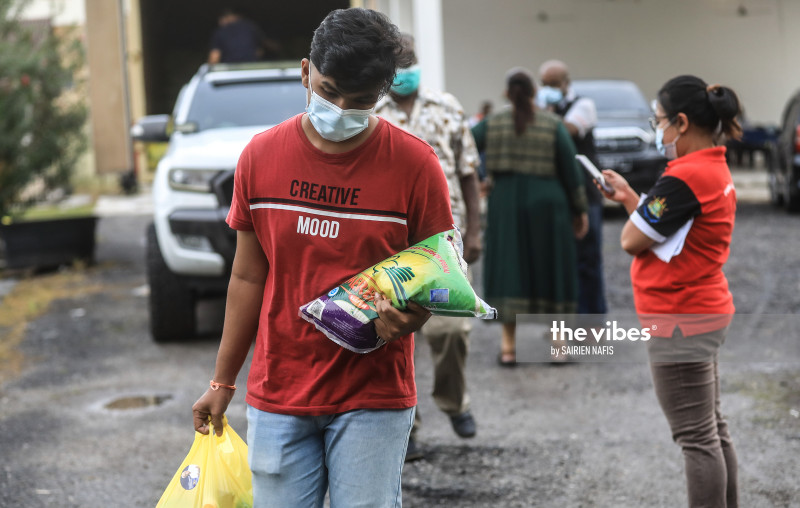
The move to alleviate the community’s woes needs a lot of political will and integrity, to reset and reorientate towards the original goal. The minority poor are totally disconnected, and they do not have the strength and familiarity to approach the authorities.
The authorities must identify their problems and work out an action plan to uplift the community. If not, it is the political intermediaries who will claim to represent the poor and divert funds from the original target group.
Poor Indians are more disconnected and left behind than others. The single-race-blinkered Malaysian bureaucracy and government machinery do not bother to understand and put in place a mechanism that will uplift these people. It is only those who know how to work the political system, who receive some kind of support, and not others.
Malaysian bureaucracy is very much focused on race and religion, and disconnected from non-Malay predicaments and issues. It lacks concerted effort and will to address the social ills of the Indian community.
Does Malaysia still think that other minorities do not have problems despite over 60 years of racial and religious alienation and discrimination? – The Vibes, April 17, 2021
S. Ramakrishnan is Bekok assemblyman and a former Johor exco