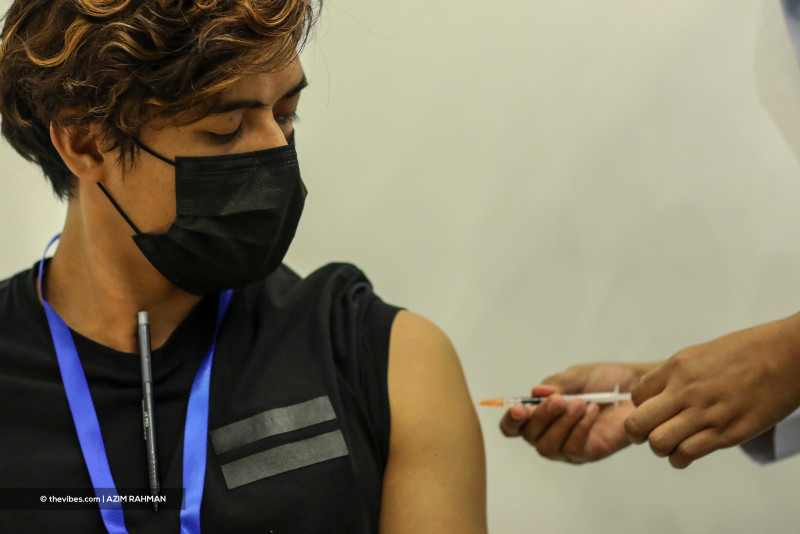
MUCH has been said since Health Director-General Tan Sri Dr Noor Hisham Abdullah announced that 40 healthcare workers had been infected with Covid-19 after completing their vaccinations.
Nine were infected more than two weeks after the second dose, and 31 were infected less than two weeks after the second dose.
Dr Noor Hisham also mentioned that 142 medical employees were infected after receiving the first dose.
All this is from a total of 438,220 individuals who have completed their vaccinations.
It is unfortunate that his announcement has been wrongly interpreted by various quarters, as many do not understand the science behind it.
So, allow me to explain in simple terms.
Fact 1: Asymptomatic with a mild case of Covid-19
Being infected with Covid-19 can be divided into 5 categories:
- Categories 1 and 2 are when patients are asymptomatic, and have mild cough and flu symptoms.
- Categories 3, 4 and 5 are more severe and require hospitalisation.
When an individual has Categories 1 or 2, they may not realise that they are infected with Covid-19. It may appear as if they have only a mild bout of cough or flu. However, they remain infectious and can spread the virus to others – which is why it is important for all to be masked and practise physical distancing.
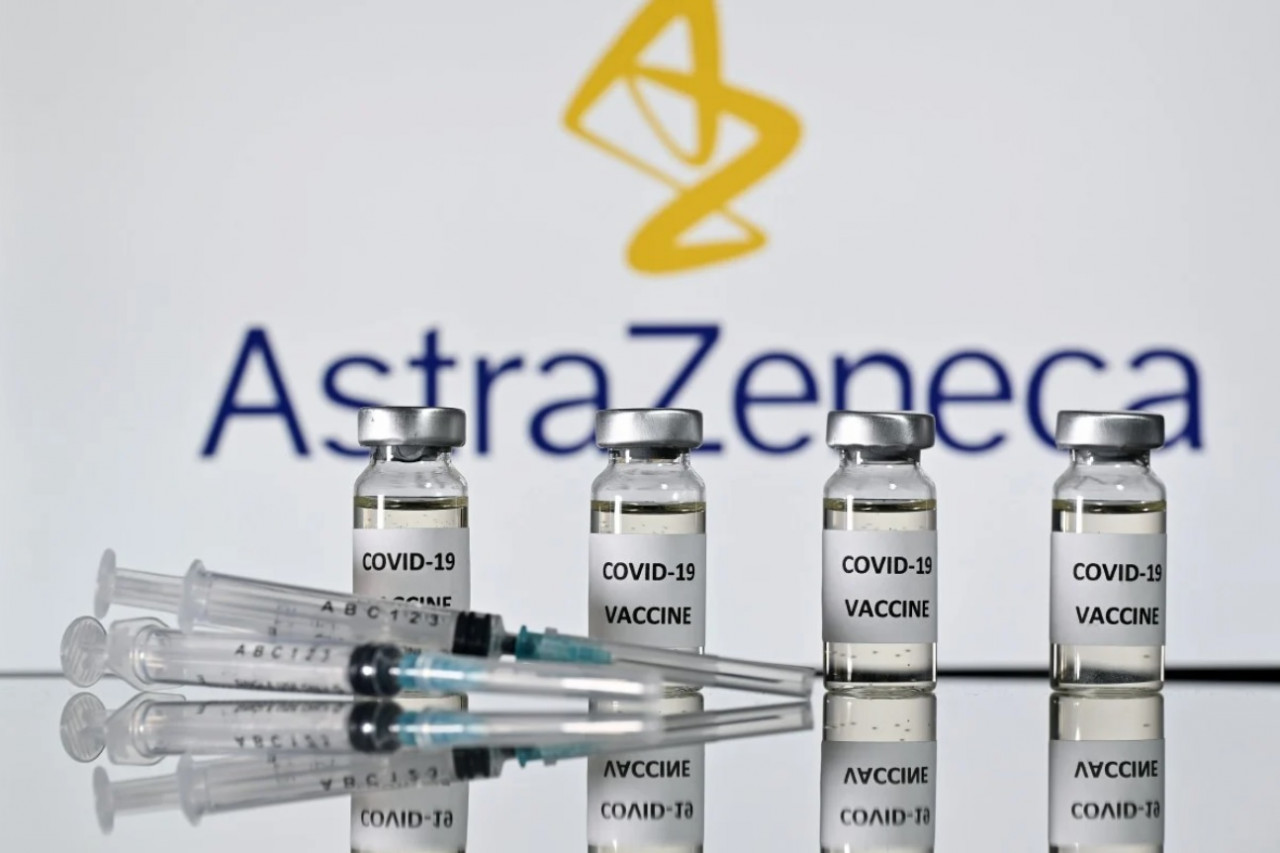
Fact 2: Covid-19 vaccines and their efficacies. When will they work?
Getting shot with any vaccine will protect you. Any will do!
There is a big fuss about their efficacies (some have a 50% efficacy level, and some have more than 90%). This is a most unfortunate way of comparing the shots.
A vaccine gets its efficacy level through clinical trials, which test the jab against a placebo. For example, a group of volunteers is divided by half – one half gets the actual jab, the other gets a placebo. Individuals in the vaccine group are screened to see who has been infected with Covid-19 and who hasn’t. In the case of a 50% efficacy level, 50% of those in the group will have contracted the virus, while the other half have not.
What people do not know, however, is that the 50% of volunteers who were vaccinated and infected end up contracting only Categories 1 or 2 of Covid-19.
What is essential to know is that all vaccines have reported that none of their patients required intubation or hospitalisation, or were in intensive care, or died due to Covid-19. This is what the public should note!
It is not about the vaccine’s infectivity after it is administered that matters, but the risk of dying from Covid-19.
If you think about it, the coronavirus will end up being like the normal flu. But this can happen only if the masses are vaccinated, and fast.
As stated in Fact 1, a person who contracts mild Covid-19 can still spread it to someone else, but the newly infected person can contract Categories 3, 4 or 5 unless they are vaccinated (and, if infected, will only get Categories 1 or 2).
The vaccine starts to kick in two weeks after the shot in the arm. Some say full immunity starts after the first dose, while others say it starts after the second.
Regardless, it is safe to say that two weeks is the timeline.
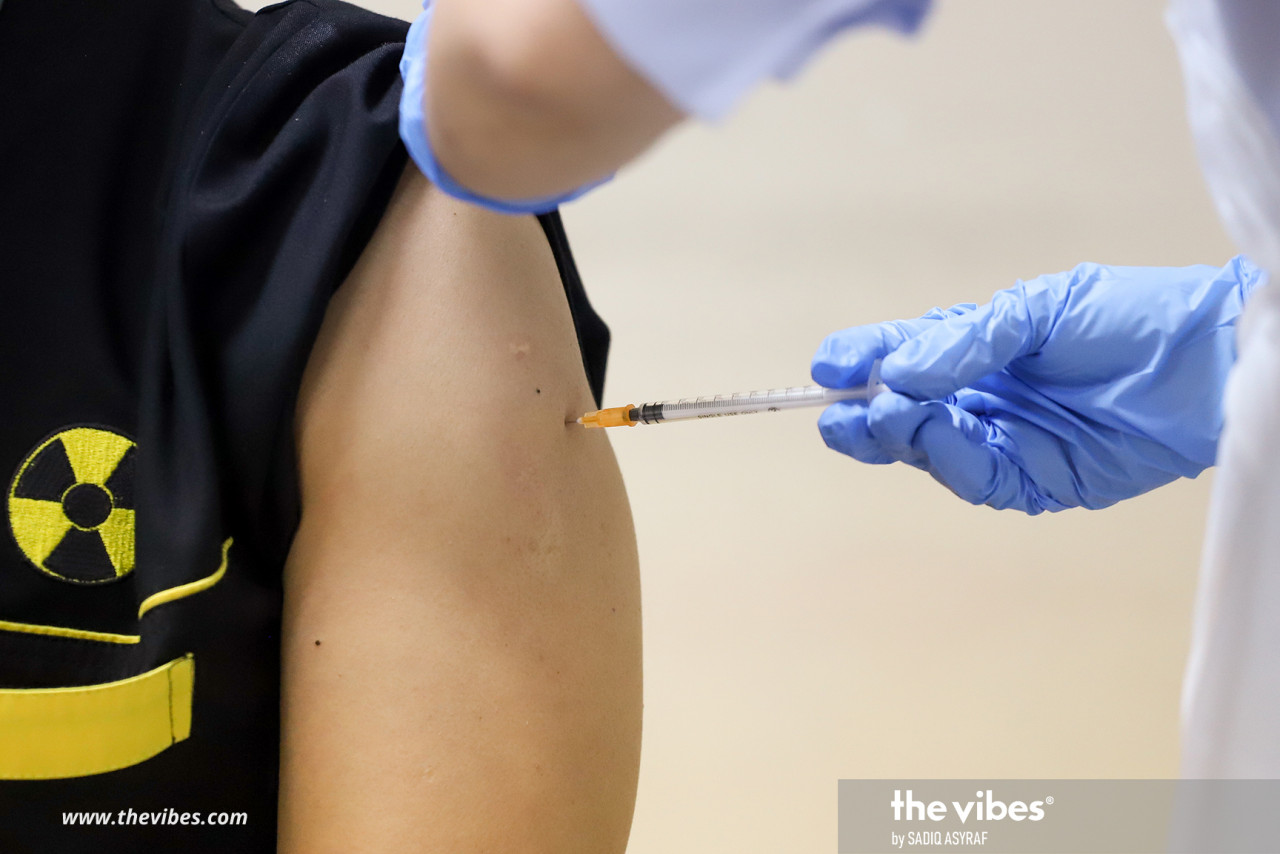
Fact 3: Contracting Covid-19 before, during or after vaccination
As stated in Facts 1 and 2, a person can still get Covid-19 after getting the jab; however, it is limited to only Categories 1 and 2.
One must remember the fact that an exposure to Covid-19 prior to or in between doses is also possible, thus contracting the virus before, during or after receiving the vaccine remains a possibility. The only difference is that after getting the jab, the infection will not likely require hospitalisation.
Now, let’s address Dr Noor Hisham’s announcement.
Yes, 40 healthcare workers were infected with Covid-19 after completing their vaccination, but let’s not forget the fact that none of them suffered from Categories 3, 4 or 5 of Covid-19.
This is what we ultimately want to achieve – less intubation, hospitalisation, and patients in intensive care units, thus reducing coronavirus-related deaths.
Now you may ask: why inform us, then? Why remove these frontliners if it is a small number?
That is an excellent question, and one which we must address as it concerns national interest.
Healthcare staff serves the public 24/7. If these infected workers continue serving patients, they may spread the virus during contact (refer to Facts 1-3). It is important that they do not come into contact with anyone as the public has yet to be immunised.
This is the point I would like to make: the only way we can resume our lives in the new normal is if we get as many people vaccinated as soon as possible.
Imagine this – an inoculated person is infected with Covid-19, and they sneeze: who would you rather be if you were exposed to the sneezing? An immunised person or someone not vaccinated for the virus?
Think about it.
Another cause for concern surrounding the shot is its side effects, which, among others, create blood clots.
There has never been a mass vaccination drive for adults worldwide as what is required now.
Imagine if there are no vaccines; would there still be people suffering from heart attacks, strokes, blood clots, etc.? The answer is yes.
Just because individuals administered with the vaccine are experiencing all of these side effects, the shot is looked upon as the cause.
Let me tell you, it may be nothing but a red herring.
Finally, I would like to say that risk communication must be improved.
There are two sides to a coin; proper dissemination of information to the public is vital to avoid misunderstandings.
News reports should be written in accordance to what is being said after clarification has been given.
Although there is a fine line, the authorities and media need to play their roles in ensuring the public is well-informed.
Please, get the jab. This whole thing concerning Covid-19 is indeed an unfortunate event.
Let’s get back on track so the country can safely open up again. – The Vibes, April 27, 2021
A concerned nationalist is The Vibes’ reader