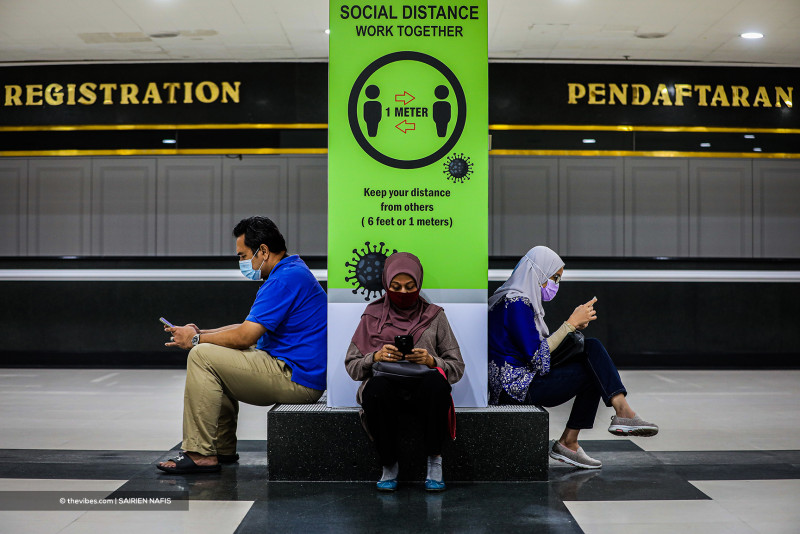
AFTER the first two rounds of the movement control order (MCO), the government is now imposing MCO 3.0.
Unlike the first MCO, the second and third rounds are flexible. The Covid-19 epidemic status in Malaysia today is due to the Health Ministry’s (MoH) refusal to quarantine travellers from Sabah before and after the state election last September. The spread has been spreading. The government is using the epidemic as an excuse to stay in power and strengthen its political base to the detriment of the people.
Will MCO 3.0 change things? In my mind, it will not. The government, particularly MoH, has no decent operational strategy to manage the epidemic. MoH is using the old-school way of managing things, i.e. staying home, hoping to break the chain of transmission, and giving healthcare providers some space. MCO 3.0 was called without any clear operational strategy. Even the SOPs are not properly communicated, and the people are confused.
To have a meaningful MCO, a detailed operational strategy must be deployed. Right now, that is missing. One would expect that certain activities were planned for execution during the MCO. The following are gaps in the current and previous two rounds of the MCO that should have been planned and executed now:
(a) Run the active case detection (ACD) programme at triple the current rate, using all available resources. Supporting logistics should have been prepared in advance to support ACD during the MCO. With aggressive ACD, more positive cases will be identified, hence the need for more isolation centres for those who cannot commit to home isolation.
(b) Lack of community-level isolation centres based on the severity of the illness, managed by co-opted personnel, the state government and local authority, as well as the public, using the emergency ordinance.
(c) Build up the capacity for critical care management in terms of personnel, equipment and supplies as a plan to support a massive increase in cases.
(d) Recall all retired medical professionals and those serving in private practice to support the programme during the MCO.
(e) Display real-time case locations, so that people can make the necessary decisions in terms of travel to any high-risk areas. Surprisingly, the Hotspot Identification for Dynamic Engagement (HIDE) system has been used to shut down business centres, sending the wrong message to the public. If the public knows that a mall is a high-risk area, they should be told to reduce their movements there, increase the use of personal protective equipment, and be more vigilant in their activities for a defined period of time.
(f) Effective public communication is an important element. The government’s continuous use of complicated abbreviations is not helping anyone. Use simple terms, like Stages I, II and III, and colour as a guide to explain to the public which activities are permitted, and which are not, in each zone.
Many other things need to be done before and during the MCO, but clearly, the experts in the government did not put on their thinking cap properly. They just called for the MCO, and are hoping for the best. This is not management. And for not managing, we can expect more rounds of the MCO to be announced, and politicians will use the epidemic to their advantage.
When the government has failed, the people have to step up. We need to do our part. Plan and reduce travel. Stay home as much as possible. Avoid bazaars and congregational prayers. Do not hold open houses. If your neighbourhood has Covid-19 cases, do not invite your neighbours and relatives over. Use lots of common sense, and make sure you register for vaccination. – The Vibes, May 9, 2021
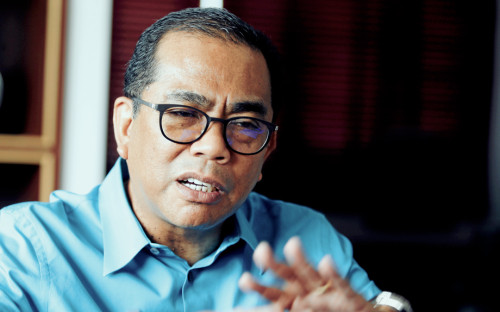
Dr Mohamed Rafick Khan Abdul Rahman is a former military doctor and CEO of Munich Re Retakaful