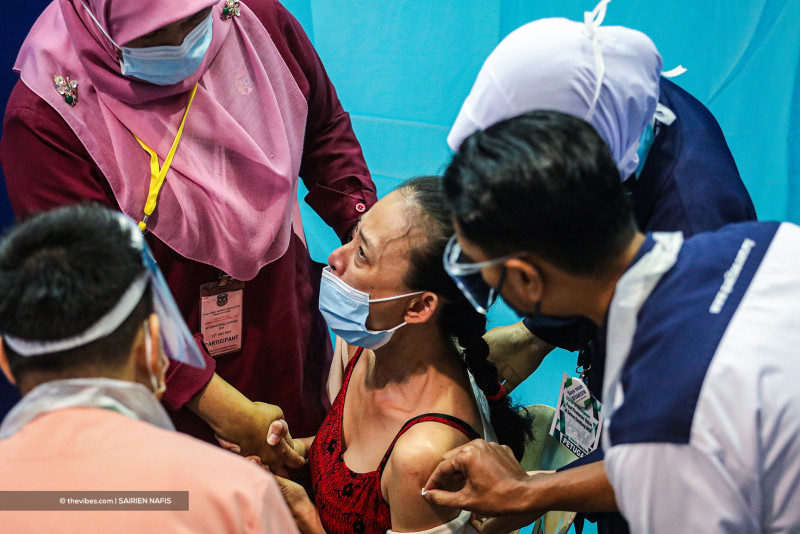
OVER the past weeks, we have seen the ramp-up of vaccinations nationwide. We are heartened by the government’s moves to increase the number of mega vaccination centres, as well as to the increase in the number of general practitioner (GP) clinics who will be providing vaccinations to the public.
However, there will always be a segment of the population who will be difficult to access, and who will in turn face difficulties in trying to access vaccination – often termed in project management as “last-mile delivery challenges”. These include vulnerable groups: the underprivileged, those living in remote rural areas, and those from the lowest socio-economic groups.
Among the challenges these individuals and communities will face in getting vaccinated will be issues of transportation and logistics, language barriers, financial burden, lack of health, and even general literacy in understanding the need to vaccinate among others.
The issues surrounding successful a last-mile delivery are myriad – and added to this mix is the powder keg of fake news, which has further worsened suspicion and distrust among quite significant numbers of our communities.
We the undersigned represent long-standing, long-serving civil society organisations (CSOs) working on the ground, and we would like to offer our services and assistance to the government – especially with the purpose of tackling the last-mile delivery challenges in vaccination and to help ensure that all our communities are equitably and completely vaccinated so that we can return to some semblance of normalcy.
Why CSOs will be beneficial
Our CSOs have the experience of working specifically with communities at the ground level for many years, if not decades. They understand the workings of these communities and in many instances, already have very effective and successful partnerships with them in terms of programmes and services.
What is more important is that these organisations enjoy strong relationships and trust with community members; trust that is needed to be leveraged on to overcome the trust deficit which seems to be prevalent and driving issues of vaccine hesitancy.
Rather than listening to some WhatsApp video of some unknown expert persuading them of the benefits of taking the Covid-19 vaccine, what is needed is the trusted community partner who has worked with them for many years providing individual level explanations and – if needed – even one-to-one counselling that will enable individuals to register and subsequently be guided through the vaccination process.
CSOs will also be extremely beneficial to the process because they draw upon a different reservoir of human resources not from the Health Ministry (MoH). Our news pages and social media pages are filled with stories of how our clinical colleagues in the MoH and Education Ministry are swamped with issues of managing the continuing burden of Covid-19. They are busy treating, contact-tracing, swabbing, and containing the disease spread – and spread quite thinly at that.
CSOs can alleviate this burden somewhat, bringing in external manpower and able to work across both the public/private divide. CSOs also have a strong base of volunteers and capabilities to maximise the use of limited resources to be able to deliver. These will enable delivery to be done using highly cost-effective means.
How will CSOs carry out last-mile delivery?
CSOs can work together with MoH at the ground level, within sub-districts and districts to take on the load of vaccination across many different states. They can be used to deploy in either small teams; or via mobile vehicles to quickly and efficiently reach multiple areas- especially those that have multiple branches and state/district level organisations.
CSOs will also be able to carry out counselling as well as structured health education and outreach in multiple languages within a diverse range of communities and groups. This is critical to convince individuals to overcome their hesitation and accept vaccination. Additionally, CSOs will also be able to provide transport and overcome other logistics barriers that different individuals and communities may face.
How do we engage CSOs into the vaccination effort, and what will they need?
The entire premise of this effort is based on the idea that CSOs are ready and willing to go. Many of us have been continuously engaged since the Covid-19 pandemic in various initiatives including working hand-in-hand with government agencies. We are no strangers to the system and can begin work immediately.
What we need is
i) the approval and willingness of government to utilise us in the vaccination effort, which is why we are appealing to the YAB Prime Minister and YB Minister in charge of the Special Committee on Covid-19 Vaccine Supply (JKJAV) – that is, the Science, Technology, and Innovation Minister – directly; and
ii) integration into the overall vaccination effort via supply of vaccines and direction on geographical distribution of tasks.
Countries like Bhutan managed to vaccinate their entire population entirely based on the strength of volunteers. We, the Malaysian CSOs are ready and willing to serve our nation during this time of dire need and play a role in relieving the burden of our strained public healthcare services. All we need is the green light – so we can finally all see the light at the end of the Covid-19 tunnel. – The Vibes, June 8, 2021
Signed by National Cancer Society of Malaysia medical director Dr M. Murallitharan; Yayasan myNadi trustee and director of operations Datin Seri Sunita Mei Lin Rajakumar; and Malaysian Women’s Action for Tobacco Control and Health (MyWATCH) president Roslizawati Md Ali