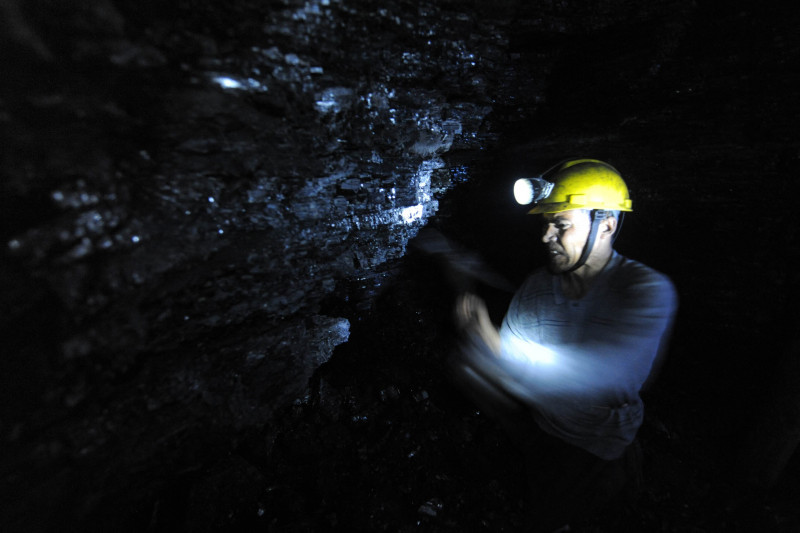
AFGHANISTAN is one of the countries with the most untapped mineral resources in the world. Every individual from politicians to ordinary people believe that the country will witness progress and stability if mineral resources are extracted.
It is difficult to achieve this dream, but it is not impossible.
Afghanistan’s rich natural resources convey hope for the country’s future economy. A mining economy is considered to be one of the few alternatives for building a local economy.
The presence of abundant natural resources in Afghanistan has always captivated the attention of the world. Studies, in this case, show that the key to the country’s self-sufficiency is hidden behind these untapped minerals.
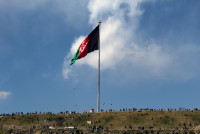
The new government (Taliban) have taken full control over Afghanistan, while the previous government failed to utilise and cherish its resources, vast underground mines, and reserves to rebuild and build the country’s infrastructure.
Afghanistan’s previous government did not pay enough attention to mineral resource management for 19 years. According to studies, not a single mine in this country has been fully extracted so far.
At the beginning of the US occupation of Afghanistan in 2007, the US Geological Survey sought to explore the country’s natural resources.
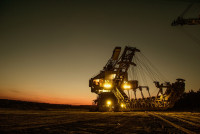
Although the study is said to have been conducted in 70% of Afghanistan, the results were surprisingly well received. In this study, it is estimated that Afghanistan has valuable resources of copper, iron ore, rare earth elements such as lanthanum, cerium, aluminium, gold, silver, zinc, silver, and lithium.
Of these, the value of carbonite reserves in the Helmand province alone is estimated at US$89 billion (RM368 billion).
Iron and copper are considered to be among the largest reserves discovered in Afghanistan. Their amount is massive enough to be the largest producer of iron and copper in the world.
World Bank studies show that mining revenues from Aynak Logar copper and Hajigak iron reserves can reach an average of US$900 million by 2031. These findings illustrate the size and diversity of Afghanistan’s mineral wealth.
However, if an inclusive government is acceptable to the majority of Afghans, the major problems beyond mining can be discussed internally and externally.
Mining, which is to be carried out under the auspices of the new Afghan system and government, shall be for the country’s economic self-sufficiency, a means of prosperity and the well-being of Afghans.
It can also be means to prevent interference and exploitation of the neighbouring countries as well as regional powers. Dependence on foreign technical staff, lack of internal specialists, scarcity of comprehensive mining law, are among the internal problems of mining.
However, poverty is increasing in Afghanistan. Countries around the world are also seeking to reduce their financial aid to Afghanistan’s new government and expect it to eventually become economically self-sufficient.
In such a situation, the mining of Afghanistan, which is considered vital for poverty alleviation and economic self-sufficiency, shall certainly be included in the plans of the Taliban government with legal and international agreements with the countries in the world that urgently need Afghanistan’s minerals.
This will make Afghanistan an economically self-sufficient country. Nevertheless, the implementation of reform plans in mining management in the short term is very unlikely.
In a sequence of existing mining problems in the country, management, and organisation in two steps are considered extremely essential. Firstly, Afghanistan is in dire need of mining development thus, government officials shall pay serious attention to the training of technical and professional staff in the mining sector, this is the first place toward extraction of the mines.
The second step is to hold political and trade consultations with the countries of the region as well as the world that are in great need of these minerals. To do so, clear and detailed contracts shall be jotted down contradictory to the previous government.
On top of that, the safety of these areas shall be fully ensured after each mining area is identified. This, on the one hand, provides the ground for mining and, on the other hand, foreign countries invest in the country.
It is noteworthy that the powerful countries that are known today as the “first world” owe their progress and economic stability to the government’s proper management, in order to make optimal use of domestic resources.
Given that mining is the only hope for Afghanistan’s economic self-sufficiency, it is necessary that mineral resource management be at the forefront of the plans of Afghanistan’s new political system. – The Vibes, September 12, 2021
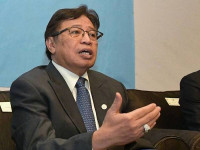
Nasir Ahmad Yousefi is assistant councillor to the embassy of the Islamic Republic of Afghanistan in Malaysia
.jpeg)