THE current bottleneck in the public health response is not unexpected following various avenues of Covid-19 testing, which is not matched with the ongoing limited, strained capacity in tracing and isolation as per the FTTIS (find, test, trace, isolate, support) framework by the World Health Organisation (WHO).
Battling the emergence of the Delta variant, silent hypoxia and increasing brought-in-dead (BID) cases, vaccination, along with double-masking, are the latest public health interventions introduced.
The breakthrough cases infection rate, based on a follow-up study among a quarter million Health Ministry healthcare workers with higher exposure than the normal population is low (1.26% in February-July; 3.05% in February-August).
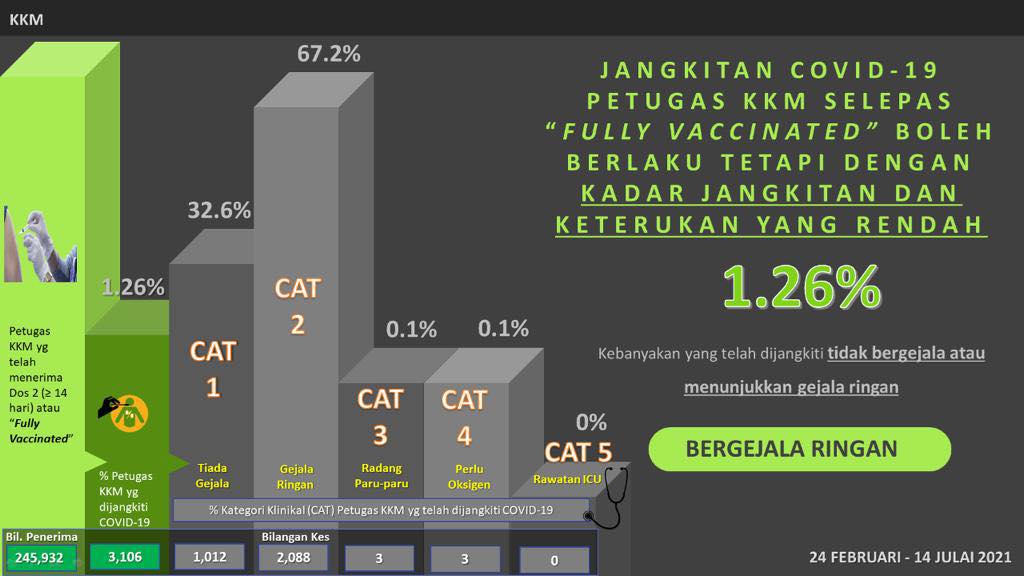
Such findings are reassuring, as most of these cases are consistently of a mild category and usually allowed for home isolation.
While stakeholders are exploring various innovative ways to clear the backlog in tracing and isolating positive cases, patients in home isolation can benefit from some essential tips on self-care and monitoring.
1) MDA approved pulse oximeter an essential equipment
About 3.5% of low-risk patients may deteriorate into Category 4-5 with warning signs.
The 2-infographic on Risk Stratification & #COVIDー19 Warning Signs are based on Dr Suresh Kumar's #CME presentation on 30 Oct 2020. Source of info frm ClinData_COVID19 research team & MOH Malaysia's National Consensus Guidelines.#fightcoronavirus? #beatcovid19 #frontliners? pic.twitter.com/dRipJZ2Jrb
— Clinical Updates in COVID-19 (@clinUp_covid) November 9, 2020
Thus, patients need to be empowered to self monitor and be alert, report those warning signs (e.g. persistent or new onset fever, extreme fatigue, respiratory compromise, profuse sweating, blue lips or change of colour in the skin) that warrant immediate medical attention.
The Health Assessment Tool (HAT) in the MySejahtera app is developed for that purpose. The Malaysia Drug Authority (MDA) has approved the pulse oximeter (www.mda.gov.my) as an essential tool to identify the need for medical evaluation, oxygen therapy or hospitalisation, even before the onset of warning signs.
It is a safe, non-invasive way to assess oxygen saturation in the blood at any given time. It is also recommended by the WHO in its guideline for home care for Covid-19 patients to prevent silent hypoxia.
Therefore, setting a ceiling price for such an essential device is certainly timely and helpful. High-quality equipment consistently provides results within minimal margin (+/-2%). However, factors such as movement, temperature, or nail polish are known to impact its accuracy.
2) Equip patients with tips on self-care and management
Firstly, staying calm, positive and being aware of baseline oxygen saturation is important. Generally, SpO2 (percent saturation of oxygen in the blood) above 95% is considered normal. Practical breathing exercises, rehabilitation tips and self-management after a Covid-19 related illness can be obtained from WHO self-management leaflet.
Patients isolating at home should not be deprived of tips on rehabilitation. A simple, easy to follow method on effective breathing techniques and a guide on self-proning (helpful in improving SpO2) can be referred to by patients at home.
The Occupational Therapy Unit under Penang General Hospital has produced a video to ensure all Covid-19 patients get access to the relevant rehabilitation tips.
3) Remember self-isolation is a great social responsibility
Self-isolation is a great social responsibility for the purpose of public health. This requires awareness and discipline, although continuous enforcement does play a role.
Non-pharmacological interventions applied globally are rather similar, notwithstanding the timing of implementation, the main difference, perhaps, is the compliance of these measures, which ultimately falls back to the discipline and awareness of its society.
Finally, it is high time for all stakeholders to recognise and accept digital home surveillance orders (HSO) as part of the digitisation initiative as the nation moves towards a recovery plan. Such effort is not just environmental friendly but time saving. – The Vibes, September 13, 2021
Dr Chow Sze Loon is a public health medicine specialist. He is trained in public health and is a former state public health surveillance officer involved in surveillance, preparedness and response activities on infectious diseases outbreak, crisis, disaster and emergency in Penang