MOST early deaths caused by Covid-19 happened in developing economies. The global scale of the pandemic made clear where most vaccines are distributed and who bears the disproportionate health burden due to not having access to them. Low-income economies, clearly, had less access to vaccines.
Vaccine manufacturers have been heavily criticised by advocates for prioritising profit over making access to vaccines equitable by retaining high-profit margins, holding on to intellectual property rights and production rights, and prioritising “those who can pay most”.
Criticism of “pandemic profit” is particularly directed at manufacturers who use mRNA technology, a relatively new and promising vaccine technology.
Meanwhile, the term “vaccine nationalism” was used to describe how countries – especially developed ones – saved large amounts of vaccine doses for their own population, limiting access to doses for low-income economies.
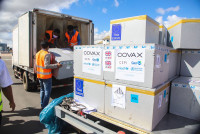
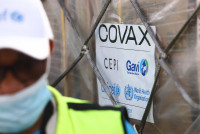
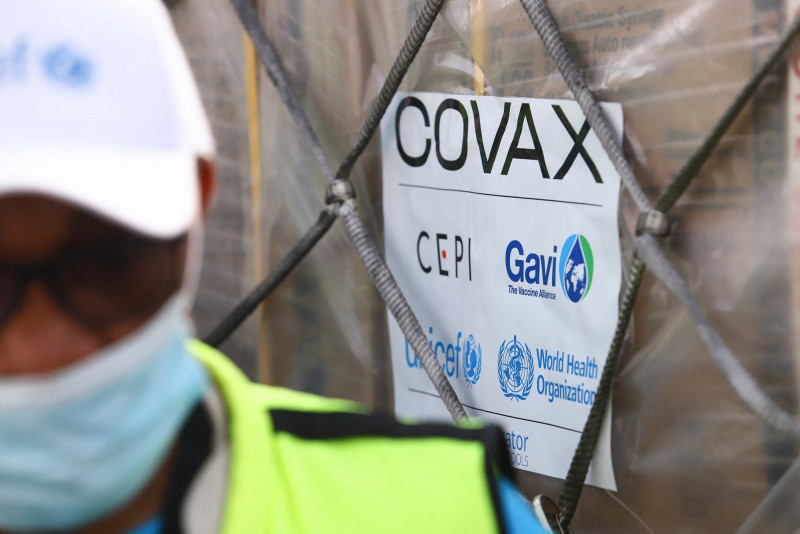
To improve international vaccine equity, the Covid-19 Vaccine Global Access (Covax) mechanism was developed, co-led by the World Health Organisation (WHO), vaccine alliance Gavi, and the Coalition For Epidemic Preparedness Innovations (Cepi).
It’s designed to be a global pool of funds that serves as a procurement mechanism. Backed by donors and high-income economies, the goal is to make Covax the most attractive customer bidding for vaccines, with the bargaining power to negotiate pricing and enter advanced purchase agreements with manufacturers.
In reality, Covax is plagued by complex political power imbalances between the countries in need, developed economies and the private sector.
For example, the so-called self-financing countries that helped finance Covax had – in many cases – already struck purchasing deals with vaccine manufacturers before Covax amassed enough buying power to secure doses at scale for developing economies.
Donor countries failing to honour their pledge to “dose share”, lagging on their deliveries, earmarking donations, or donating on an ad hoc basis, all caused delays that meant only a small proportion of pledged doses were delivered and many near-expired doses wound up being dumped as “donations”.
Meanwhile, manufacturers have not donated any pledged vaccine doses to Covax and shifted instead to selling doses “at cost” through commercial deals.
Work is underway to develop domestic capacities in developing economies that will reduce dependence on more powerful countries. Tech-transfer can play an important role in expanding the vaccine manufacturing capacity in developing economies, improving access and lessening donor dependency.
In June 2021, WHO announced a partnership with a South African consortium to establish a multilateral technology transfer hub for mRNA vaccines for Covid-19 and other diseases. The consortium, Afrigen Biologics and Vaccines, will manufacture the mRNA vaccines themselves and train up another manufacturer.
An additional 10 countries will receive tech transfer from the WHO for mRNA vaccines: Indonesia, Bangladesh, Pakistan, Serbia, Vietnam, Tunisia, Kenya, Egypt, Nigeria, and Senegal.
Important elements for vaccine production are the transfer of the technological know-how and relevant clinical data, human resource training and capacity building, and addressing the issue of intellectual property rights.
Another partner for the tech-transfer hubs, the Medicines Patent Pool, has stated that “technology used in the hub is either not covered by patents or that licences and/or commitments-not-to-enforce are in place to enable freedom to operate” via “voluntary participation of intellectual property holders”.
There is still concern from experts that the reluctance of mRNA vaccine manufacturers to fully abandon their intellectual property rights will significantly undermine the hub’s activities and its sustainability.
Overcoming high costs of mRNA technology
The innovative financing mechanism tried by Covax – and the challenges it faced – raises a critical issue for technology transfer sites in developing economies: how to find and sustain financing.
The methods and materials used in mRNA technology are still relatively expensive, challenging the potential for scalability and cost-effectiveness. The upfront total cost to produce 100 million doses of mRNA vaccines annually is between US$127 million and US$270 million (RM549 million and RM1.17 billion), according to modelling.
One widely cited as a successful example of innovative vaccine financing is the International Finance Facility for Immunisation (IFFIm).
The facility issues “vaccine bonds” to investors, mostly based in developed economies, mobilising the funds to frontload the immunisation of children in developing economies with secondary support from government donors.
IFFIm has helped deliver vaccines to children who would have otherwise missed out but its model has issues.
Its complex relationship between the development sector and the private capital market has transferred a significant amount of profit to the private actors involved in the form of costly transaction fees, intermediary fees, or interest with financial risks backed up by public money.
Health interventions that can save many lives, such as vaccines, should be accessible to everyone at the time they need them – especially those who are most vulnerable. Many approaches have been taken to make vaccine equity a reality, from ethical-based pledged agreements to market and tech-based solutions.
But the pandemic and issues around vaccine access show the right mix is needed to solve a highly complicated problem in which political and commercial interests intersect with a need to save as many lives as possible. – The Vibes, April 23, 2022
Putri Widi Saraswati is an Indonesian public health specialist and medical doctor currently working as a research intern at the United Nations University-International Institute for Global Health (UNU-IIGH), the UN think tank on global health.
Published under Creative Commons and in partnership with 360info.org