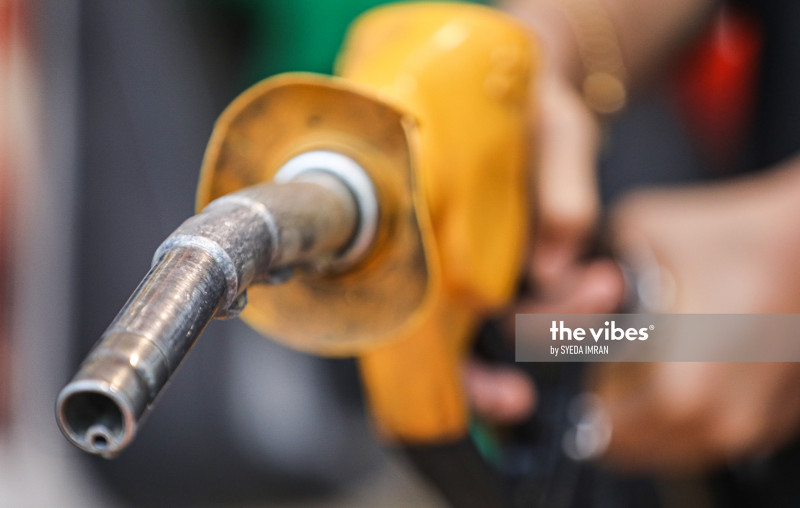
THE Consumers Association of Penang welcomes the government’s announcement of a plan to implement targeted fuel subsidies for those in the B40 group.
We urge the government to speed up the implementation because the war in Ukraine is not likely to end soon and on the contrary to what some consumers may think, the subsidy comes from taxpayers. It is, therefore, not advantageous to Malaysia or the people.
In fact, the war in Ukraine is a wake-up call for Malaysia. It resulted in the Brent crude oil index exceeding US$130 per barrel in early March, its highest in 14 years. Till now, the price is still above US$100 per barrel.
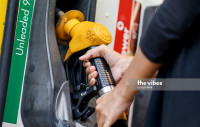
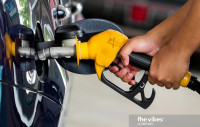
Currently the government is subsidising RON95 petrol, diesel, and liquefied petroleum gas (LPG) and the Finance Minister Datuk Seri Tengku Zafrul Tengku Abdul Aziz had estimated that the subsidy alone is going to cost as much as RM28 billion in 2022.
The price of Malaysia’s subsidised petrol (RON95) makes it most affordable among nine of the Asean member countries listed. The petrol price in Malaysia is 42.77% less than that of Indonesia (RM4.77) and 34.34% less than that of Thailand (RM5.94).
In fact, the current subsidy system across the board is flawed because it benefits the rich rather than the poor. The reason is that most cars, including many expensive ones, can also run on RON95 and this means that the petrol price subsidy would be unevenly distributed between the various income groups with those in the lower income bracket benefiting less since they are more likely to own fewer and lower engine capacity vehicles.
Moreover, subsidised petrol is also open to abuse such as smuggling of diesel. The government should consider adopting the electronic subsidy card system to provide targeted subsidies to those in the B40 group for the purchase of RON95, cooking gas (LPG), cooking oil and even other price-controlled items as determined by the government. The lower M40 group should be provided aid as well.
The government can credit fixed minimal monthly subsidies into the person’s electronic subsidy card which the person can use to purchase petrol, cooking oil, cooking gas, and whatever the government decides to subsidise. To make a purchase, the person just needs to show his or her identification card for validation purposes.
At RM28 billion, the subsidy is more than what the RM25 billion allocated in 2022 to Yayasan Keluarga Malaysia which would be used to protect the welfare, education, and the future of orphans or the RM20 billion allocated for execution of Malaysian Incentive Community Empowerment Initiative.
With savings on subsidies, the government should improve public transportation, which is generally lacking in the country, ensuring frequent service as well as ensuring an efficient feeder bus system for greater convenience to the commuters.
As such, we are of the opinion that any subsidy programme by issuing electronic subsidy cards to the poor and for an effective control of food prices which is one of the priorities to improve the peoples’ livelihoods.
Such electronic subsidy cards are relatively easy to implement since the government already has the database on B40 recipients for various forms of aid and the Inland Revenue Board should also have data on those in the lower M40 group. – The Vibes, May 24, 2022
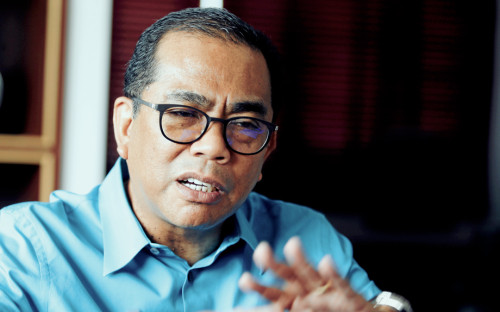
Mohideen Abdul Kader is president of Consumers Association of Penang (CAP)