A BUDGET that could positively influence environmental decisions based on sustainable development goals (SDGs) is how WWF-Malaysia perceives Budget 2021.
In his budget speech, Finance Minister Datuk Seri Tengku Zafrul Tengku Abdul Aziz announced a number of allocations under the budget’s fourth strategy, "Ensuring Resource Sustainability".
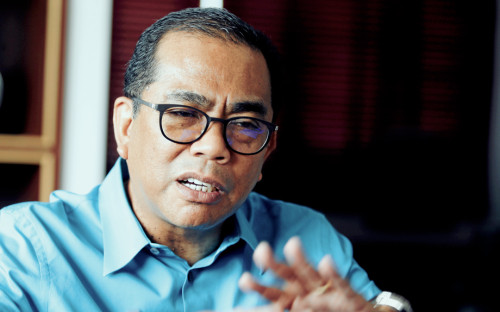
“It’s reassuring to know that the government has taken environmental considerations into account when making its allocations,” said Sophia Lim, CEO of WWF-Malaysia.
“In alignment with the global clarion call for a New Deal for Nature and People (NDNP), WWF-Malaysia has actively lobbied for the enhancement of progressive policies that protect and restore nature. It’s encouraging to know that the government has considered some of our concerns in Budget 2021.”
Measure 1: Alternative Service Delivery
WWF-Malaysia welcomes the RM20 million matching grant allocated to NGOs for environmental conservation initiatives, which is to be matched with contributions from GLC-owned foundations. In the current trying times of Covid-19, when public donations and corporate social responsibility (CSR) contributions for environmental causes are reducing, the matching grant that could raise RM40 million is a real shot in the arm. We see this as a move to encourage GLCs to proactively fulfil their CSRs and a benchmark for other corporate organisations to follow suit. WWF-Malaysia also expresses its appreciation to the minister for heeding the call of NGOs, including WWF-Malaysia, to financially support their goals for a better environment.
Measure 2: Sustainable Development Agenda
The allocation of RM20 million under the Malaysia-SDG Trust Fund could create a mechanism to coordinate public and private financing for SDGs to be achieved by 2030. Private sector top-up to the allocation must be guided by a stringent code of governance to protect investments and enable efficient management based on key SDG criteria.
Allocating RM5 million to the All-Party Parliamentary Group Malaysia on SDGs (APPGM-SDG) is a positive endorsement of bipartisan cooperation to localise SDG programmes. Through this allocation, WWF-Malaysia is hopeful of seeing processes initiated under Budget 2020, such as mapping of issues on the ground, to be replicated in more constituencies.
Measure 3: Sustainable finance
On the basis of subscriptions to Sukuk Prihatin that has reached RM666 million, the government has decided to issue its first sustainability bond in Malaysia for environmental and social initiatives in 2021. WWF-Malaysia sees this sustainability bond as an opportunity that could boost participation of investors in the green growth of Malaysia. To bolster the sustainable bond, a blended finance approach combining public and private funds based on landscape approaches, such as the Tropical Landscape Finance Facility and Land Degradation Neutrality Fund, is recommended.
The income tax exemption for Sustainable and Responsible Investment (SRI) Green Sukuk grant that includes all types of sukuk and bonds has been extended up till 2025. This exemption should encourage more institutions to come forward to initiate fundraising initiatives for green projects that are compliant with the SRI Sukuk Framework.
Additionally, the allocation of RM2 billion for two years up to 2022 as a continuation of the Green Technology Financing Scheme could support Malaysia towards achieving the renewable energy target of 20% by 2025.
Measure 4: Environmental conservation
Budget 2021 supports the preservation of our natural resources through an overall allocation of RM100 million.
From this, RM50 million is allocated to address waste and solid waste trapped in rivers. We hope that the funds will not only be used for river water treatment on an ad hoc basis, but also to set up instruments that could raise overall river water quality. River pollution from wastes and solid waste must be addressed by tackling the very source of pollution itself and through education and increasing awareness of more sustainable material choices.
We note that only RM40 million is provided over a period of five years to strengthen enforcement activities related to environmental quality monitoring, which includes the establishment of 30 monitoring stations nationwide. Given the increased number of river pollution cases that cause closure of water treatment plants, we hope that the government will allocate more resources for this purpose to safeguard and improve environmental quality, which is crucial for the well-being of the rakyat.
Towards reducing the effects of coral reef destruction and marine life, an allocation of RM10 million has been made to implement the Integrated Island Waste Management project around the islands in Johor and Terengganu. WWF-Malaysia hopes that the collaboration between the United Nations Development Programme (UNDP), state governments and the private sector to carry out this programme will capitalise on coral reef management initiatives. These may include monitoring coral reef health using the citizen science method; creating awareness and education programmes for local communities to curb activities that threaten reefs; engaging greater research efforts to contribute to effective management of marine habitats; and, providing more platforms for collaborations with research institutions.
The government has also increased its allocation under the Economic, Infrastructure and Welfare Development-Based Grants (TAHAP) to all state governments to RM400 million, compared with RM350 million in Budget 2020. Of this amount, RM70 million is allocated to state governments for the purposes of biodiversity conservation.
"The allocation of RM70 million, an increase of RM10 million compared with the 2019 budget, can encourage state governments to safeguard biodiversity,” said Lim. She added that it is important for ecological fiscal transfer measures to be institutionalised and form part of the yearly federal allocation to state governments. She also hopes that the allocations will be used by states to conserve important forests and marine areas as well as enhance protected area management.
The final initiative to preserve our natural resources include the continued implementation of mangrove tree-planting programmes to preserve mangrove swamp areas and other tree species along the coast, which include Tg Piai, Johor and Kuala Sepetang, Perak. WWF-Malaysia hopes that this initiative will further prompt the Water, Land and Natural Resources Ministry to increase its efforts to meet objectives that offer multiple socio-economic and environmental benefits, as well as climate change mitigation and adaptation.
The SAVE 2.0 programme provides an e-rebate of RM200 to purchase locally produced energy efficient air-conditioners and refrigerators. A total of 140,000 households will directly benefit from this initiative during the Covid-19 pandemic, especially those of us who work from home. Amounting to RM30 million, the SAVE 2.0 programme will help Malaysians practise a greener lifestyle by having more energy-efficient appliances and supporting local products that presumably have a lower carbon footprint, compared with imported products. For similar reasons, WWF-Malaysia also appreciates the government’s support of the initiative undertaken by the Sarawak government to have public buses operate on hydrogen fuel cells.
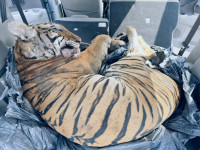
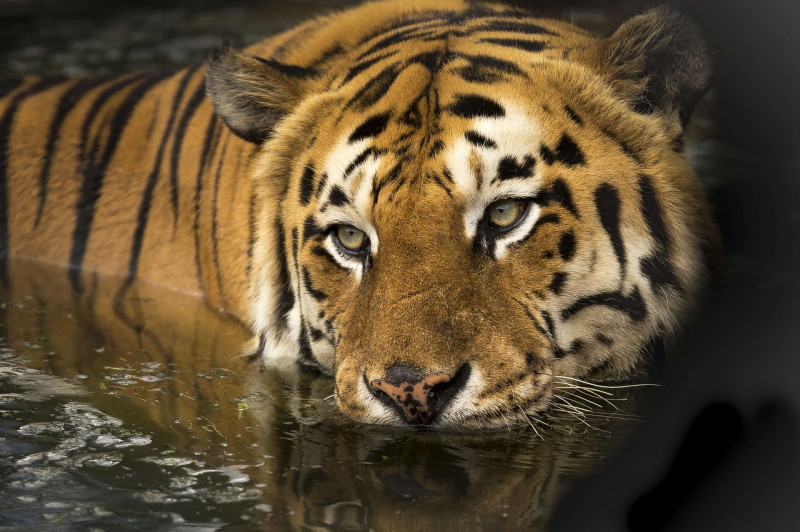
Malaysia’s national Icon, the Malayan tiger, is on the brink of extinction as a result of poaching and the illegal wildlife trade. The RM20 million allocated to recruit more than 500 people is a crucial step to stop the poaching of Malayan tigers. There are three tiger priority landscapes in Malaysia covering millions of hectares of forests, and including Orang Asli communities who are skilled jungle trackers and navigators in patrolling activities is a smart and positive move. However, to effectively address the threat of tiger poaching, we need, at a minimum, a team of five persons to patrol 10,000ha of forests over a 12-month period; spending 14 days every month in the deep forest. The RM20 million allocation is, therefore, inadequate to effectively prevent encroachment of natural forests and poaching. WWF-Malaysia is of the opinion that the private sector, which is largely dependent on our natural resources should also play proactive roles in funding similar efforts.
WWF-Malaysia also hopes that in future budget announcements, the government will take into consideration the need to also enhance conservation efforts in the coastal and marine ecosystems. This is crucial to deter activities, including illegal, unreported and unregulated (IUU) fishing, which depletes our seafood that serves the food needs of millions of Malaysians, besides halting poaching of marine wildlife and preventing marine pollution and habitat destruction.
Generating, creating jobs
In Budget 2021, the government provided allocations under its strategy of generating and retaining jobs, which WWF-Malaysia sees as opportunities to generate more green jobs in the country.
For the year 2021, a total of RM1 billion is allocated for reskilling and upskilling programmes that are expected to benefit 200,000 trainees. WWF-Malaysia hopes that some of the funds, especially the RM100 million allocated for regional corridor authorities, are channelled to the reskilling of employees to build a low-carbon, resilient and inclusive economy. Similar opportunities for green training could also be included under the RM4.6 billion allocated to boost and empower Bumiputera entrepreneurs.
Strengthening key sectors
Allocations of RM150 million and RM10 million for improvement of the fisheries and aquaculture sectors, respectively, can help transition these sectors towards environmentally sustainable practices. Safeguarding and clear accountability measures need to be in place to avoid jeopardising the environmental well-being of these sectors.
The government announced that, under the 12th Malaysia Plan, it will provide a revolving fund amounting to RM500 million towards the Forest Plantation Development Loan (PPLH) programme, dedicated for the development of forest plantations with an area of 4ha and above. While WWF-Malaysia recognises the need to develop forest plantations, which could reduce deforestation pressure on natural forests, we hope that stringent criteria are set in disbursing the funds to ensure that forest plantations are not developed at the expense of clearing natural forests. Apart from this, adherence to certification standards, such as is the Malaysian Criteria and Indicator for Sustainable Forest Management and the Forest Stewardship Council, is a must.
12MP development agenda
To increase the mobility of Malaysians, the government announced that RM15 billion will be allocated in 2021 to fund the Pan-Borneo Highway, Gemas-Johor Baru Electrified Double-Tracking Electrified Project and Klang Valley Double-Tracking Project Phase One and to continue with several key projects, such as the Rapid Transit System Link from Johor Baru to Woodlands, Singapore, and MRT3 in the Klang Valley.
While development is fundamental for growth, government-initiated infrastructure projects must not come at the expense of deforestation and degradation of the natural environment. Policies, such as the National Physical Plan, and initiatives, such as the Central Forest Spine Masterplan and the Heart of Borneo, serve to protect and manage critical ecosystems that serve as the source of the goods and services vital to society and the economy. If and where conversion of natural habitat is inevitable, it is important that the nation’s infrastructure projects account for the potential costs incurred from the degradation of natural capital that the projects eventually stand on.
Among the projects worth RM3.8 billion under Budget 2021 that could cause adverse impacts on the natural environment is the continued Central Spine Road, with the new road alignment from Kelantan all the way to Negri Sembilan through Pahang, and the construction of the Pan-Borneo Highway in Sabah from Serusop to Pituru. Lim said in the case of the Central Spine Road, the government should ensure that the connectivity between Taman Negara and Belum-Temengor, which are core tiger habitats, is not further compromised due to the project.
WWF-Malaysia hopes that in constructing and improving linear infrastructures, such as the Central Spine road, the government will recognise that it is important for road alignments to avoid fragmenting forests and wildlife habitats. We also hope that, where necessary, provisions for ecological linkage needs are included in the planning of road designs to enhance connectivity and that the cost of such provisions are factored in the project. In the case of the Pan-Borneo Highway, WWF-Malaysia has concerns that the current alignment of the two-lane coastal road from Tuaran to Simpang Mengayau, Kudat, will cross several mangrove forest reserves and the Kota Belud Bird Sanctuary, which are important habitats for protected and endangered species. We hope that the government will consider a more sustainable planning and development of the Pan-Borneo Highway alignment.
In essence, it is encouraging to know that Budget 2021 has attempted to address the nation’s compelling need for SDGs. In light of current events, the various allocations aimed at ensuring resource sustainability are seen as a good move for conservation and environmental protection. At the same time, we also wish to see that the allocations are not, at any time, used on projects that could adversely affect the environment. Additionally, environmental sustainability criteria need to be applied across all development projects to ensure that Malaysia is effectively steered towards achieving the 2030 SDGs. – The Vibes, November 23, 2020
WWF-Malaysia, established in 1972, currently runs more than 90 projects covering a diverse range of environmental conservation and protection work