THE world’s population will reach 8 billion in the middle of November – a testament to scientific breakthroughs and improvements in nutrition, public health and sanitation. But as our human family grows larger, it is also growing more divided.
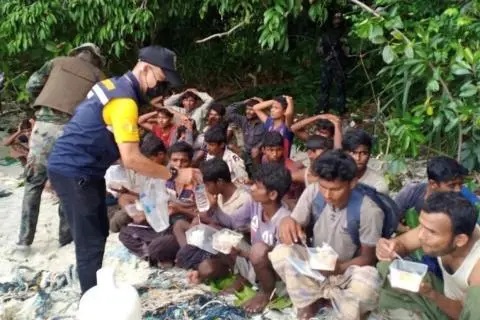
Billions of people are struggling; hundreds of millions are facing hunger and even famine. Record numbers are on the move seeking opportunities and relief from debt and hardship, wars and climate disasters.
Unless we bridge the yawning chasm between the global haves and have-nots, we are setting ourselves up for an 8-billion-strong world filled with tensions and mistrust, crisis and conflict.
The facts speak for themselves. A handful of billionaires control as much wealth as the poorest half of the world. The top 1% globally pocket one-fifth of the world’s income, while people in the richest countries can expect to live up to 30 years longer than those in the poorest. As the world has grown richer and healthier in recent decades, these inequalities have grown too.
On top of these long-term trends, the accelerating climate crisis and the unequal recovery from the Covid-19 pandemic are turbocharging inequalities. We are heading straight for climate catastrophe, while emissions and temperatures continue to rise. Floods, storms and droughts are devastating countries that contributed almost nothing to global heating.
The war in Ukraine is adding to ongoing food, energy and finance crises, hitting developing economies hardest. These inequalities take their greatest toll on women and girls, and on marginalised groups that already suffer discrimination.
Many countries in the Global South face huge debts, increasing poverty and hunger, and the growing impacts of the climate crisis. They have little chance of investing in a sustainable recovery from the pandemic, the transition to renewable energy, or education and training for the digital age.
Anger and resentment against developed countries are reaching breaking points.
Toxic divisions and lack of trust are causing delays and deadlock on a host of issues, from nuclear disarmament to terrorism to global health. We must curb these damaging trends, repair relationships and find joint solutions to our common challenges.
The first step is acknowledging that this runaway inequality is a choice, and one that developed countries have the responsibility to reverse – starting this month at the United Nations climate conference in Egypt and the G20 summit in Bali.
I hope COP27 will see a historic Climate Solidarity Pact under which developed and emerging economies unite around a common strategy and combine their capacities and resources for the benefit of humankind. Wealthier countries must provide key emerging economies with financial and technical support to transition away from fossil fuels. That is our only hope of meeting our climate goals.
I also urge leaders at COP27 to agree on a roadmap and institutional framework to compensate countries in the Global South for climate-related loss and damage that is already causing enormous suffering.
The G20 summit in Bali will be an opportunity to address the plight of developing countries. I have urged G20 economies to adopt a stimulus package that will provide governments of the Global South with investments and liquidity, and address debt relief and restructuring.
As we push for action on these medium-term measures, we are working non-stop with all stakeholders to ease the global food crisis.
The Black Sea Grain Initiative is an essential part of those efforts. It has helped to stabilise markets and bring food prices down. Every fraction of a percent has the potential to ease hunger and save lives.
We are also working to ensure Russian fertilisers can flow into global markets, which have been severely disrupted by the war. Fertiliser prices are up to three times higher than before the pandemic. Rice, the most widely consumed staple in the world, is the crop that will suffer the most.
Removing the remaining obstacles to the exports of Russian fertilisers is an essential step towards global food security.
But among all these serious challenges, there is some good news.
Our eight-billion-strong world could yield enormous opportunities for some of the poorest countries, where population growth is highest.
Relatively small investments in healthcare, education, gender equality and sustainable economic development could create a virtuous circle of development and growth, transforming economies and lives.
Within a few decades, today’s poorest countries could become engines of sustainable, green growth and prosperity across entire regions.
I never bet against human ingenuity, and I have enormous faith in human solidarity. In these difficult times, we would do well to remember the words of one of humanity’s wisest observers, Mahatma Gandhi: “The world has enough for everyone’s need – but not everyone’s greed.”
This month’s big global meetups must be an opportunity to start bridging divides and restoring trust, based on the equal rights and freedoms of every single member of humanity’s eight-billion-strong family. – The Vibes, November 10, 2022
António Guterres is the secretary-general of the United Nations