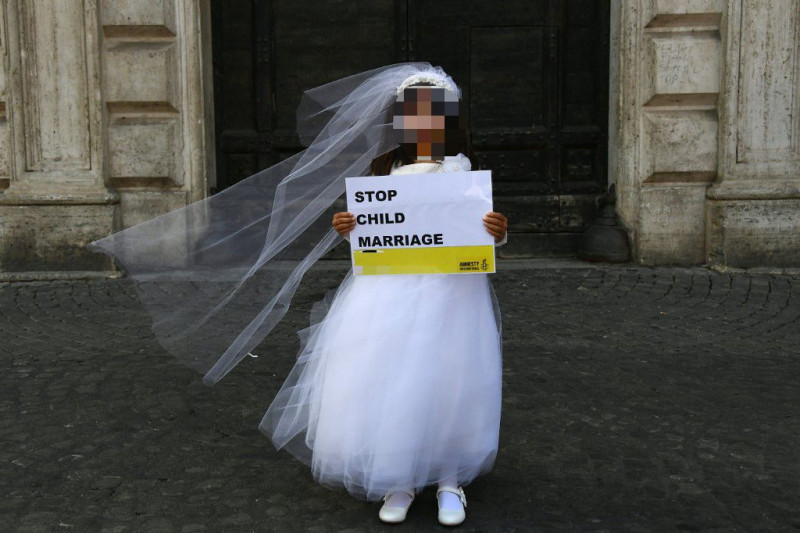
IN 2018, news of a 41-year-old man marrying an 11-year-old girl in Kelantan caused outrage, with many people demanding the Malaysian government take a stronger stance in banning child marriages.
Malaysia has been criticised for not doing enough to address child marriage and is under pressure to lift its game.
Selangor and Kedah are the only states to have increased the legal minimum age of marriage to 18.
Many scholars have explained marriage below the age of 18 is an irresponsible action leading to uncertainty in married life. This uncertainty has led to long-term economic impacts, domestic violence, divorce and psychological issues for girls at a very young age.
While Malaysian MPs have approved several amendments to the Child Act 2001 throughout the years, they have failed to include a ban on child marriage despite several proposals.
It would seem to make any headway in Malaysia’s multi-ethnic, cultural and legal settings, there has to be a commitment from all parties to agree to put an end to child marriage.
Child marriage deprives children of their rights to education, safety, health, social mobility and economic opportunity. According to Save the Children, by 2030, 150 million girls worldwide will be affected.
Under Malaysian law, underage marriage for non-Muslims is governed by civil marriage law while Muslims are governed by Islamic family law in the shariah courts. Under this dual legal system, the legal minimum age of marriage for Muslim men is 18 and 16 for women; for non-Muslim men and women, the legal minimum age is 18.
Issue of minimum age for marriage
Malaysia’s federal constitution gave each state the power to implement and change certain sections of the law as they see fit.
The most debatable point of current Islamic family law relates to sections allowing the marriage of females below the age of 18 by obtaining permission from a chief minister or shariah judges.
The public has opposed such regulations, as children at this age are considered too young to be forced into adulthood before they are prepared physically and mentally.
In 2019, the Indonesian government changed its child marriage laws by increasing the minimum age to 19.
Thailand and the Philippines have set the legal minimum age of marriage at 17 and 18 respectively.
Having countries, including developed countries, set the legal minimum age of marriage to 18 allows children to develop cognitively, emotionally and physically.
In Malaysia, the decentralised enforcement of marriage law is the greater challenge, and reaching a consensus to ban child marriage is a struggle.
From 2010 to 2015, nearly 6,268 marriage applications from those under 18 were recorded and approved by shariah courts across Malaysia.
According to the latest report, about 1,500 cases of child marriages were reported between 2007 and 2017 and, as of 2018, 1500 children have married annually, slightly lower compared to 2,107 marriages in 2017.
Unicef reported that in 2018, 1,856 children were married, with 90% of these being girls.
The number of Muslim children married vastly outnumbered non-Muslims, with 1,542 Muslim children compared to 234 non-Muslim children.
Poverty is one reason parents marry off their children to ease the financial pressure.
The government released a National Strategic Plan in Handling the Causes of Child Marriage to identify five major factors placing children at risk of early marriage: poverty or low household income, lack of access to reproductive health education and parenting skills, lack of access to education and poor school attendance, stigma and social norms on child marriage, and laws that allow for marriage under the age of 18.
Need for partnering, early intervention
The plan to end child marriages calls for strategic partnerships between government agencies at the federal and state levels, non-governmental organisations and the public.
However, insufficient resources due to various crises and a lack of political will have hampered implementation.
Despite the preventive measures highlighted in the plan, the haphazard enforcement of marriage laws by state governments and the need to improve the availability of data on child marriage remain stumbling blocks.
Due to the complexity and devastating consequences of child marriage, early intervention is vital.
A ban on child marriage and an increase in the legal minimum age ensures a far-reaching impact in reducing child abuse cases, early pregnancy and, subsequently, child marriages.
Even legitimate cultural practices would have to be phased out, but policymakers would need to be more responsive and prepared to make tough decisions.
The benefits of increasing the minimum age outweigh the costs. This would, of course, put pressure on religious leaders to also act and to help build a better future and sustainability of life for children and achieve equality and empowerment of all women and girls.
The implementation of tighter laws could lead to a fall in child brides, which would align with the concept of the prime minister’s vision of Malaysia Madani (a civil Malaysia) and a more compassionate government, which could curb child marriages through legal reforms.
It helps to understand this issue from a child’s perspective.
Understanding this issue from their perspective is critical, as their input could in hindsight put an end to any policy stalemate.
This would be an important milestone in the policymaking process, since their opinions are undervalued in research and policies.
The conceptualisation of children’s rights can be best understood by studying and incorporating their perspective into policy measures. This would carry meaningful messages from children to policy problems and the general public, and create a better environment for a child’s development and well-being for the future. – The Vibes, April 9, 2023
Norhaslinda Jamaiudin is an assistant professor in political science at the International Islamic University Malaysia. Her specialisation includes public governance and public sector management, public sector reforms, public policy analysis and personnel management in the Malaysian civil service.
Published under Creative Commons and in partnership with 360info.org