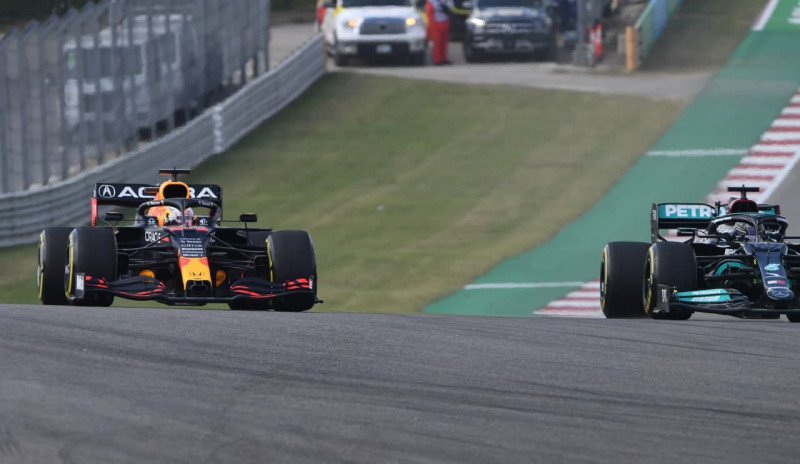
THE Fédération Internationale de l'Automobile (FIA) has, for the first time, classified the Singapore Grand Prix as a 'heat hazard' race due to soaring temperatures and punishing humidity levels forecast for the weekend.
The ruling comes in response to expected ambient temperatures of 31°C, coupled with tropical humidity, which threaten to test the physical endurance of Formula 1 drivers in one of the most gruelling events on the calendar.
Under the new FIA regulation introduced following last year’s Qatar Grand Prix — where several drivers required medical attention — teams must equip their cars with driver-cooling vests. The use of the vests remains optional, but their availability ensures that any driver choosing not to wear one does not gain a competitive weight advantage.
The Singapore Grand Prix has long held a reputation as the most physically demanding race of the season. Run at night under floodlights and nearing the two-hour time limit, it takes place on a bumpy street circuit in stifling tropical conditions where cockpit temperatures can exceed 40°C.
Mercedes driver and Grand Prix Drivers’ Association (GPDA) director George Russell welcomed the safety measure, noting, “Not everybody finds the top comfortable, but some find it more comfortable than others. When you're racing in 90 per cent humidity and the cockpit gets close to 60 degrees Celsius, it's a bit of a sauna inside the car, so I think we all welcome it.”
His GPDA counterpart, Williams’ Carlos Sainz, agreed, calling the ruling “fair” and adding, “Only hot is not too bad for us. Humidity on its own is not too bad. But when it's 28, 30 degrees Celsius plus humidity, that's when it gets to Singapore levels, and it's tough.”
The cooling system comprises a flame-retardant vest embedded with tubes through which chilled fluid is pumped. The FIA requires the system to function for the full race duration, although some teams admit performance can degrade after 20 minutes, with the liquid eventually heating up and intensifying discomfort.
Aston Martin’s Fernando Alonso highlighted the trade-offs: “The shirt is a little bit thicker with the system on it, so it’s less comfortable. It’s a trade-off – less comfy when you drive it, but a little bit cooler.”
The heat safety provision was introduced after incidents at the 2023 Qatar Grand Prix, where Alpine’s Esteban Ocon vomited in his helmet and Logan Sargeant of Williams was forced to retire due to heat exhaustion.
As Formula 1 continues to expand its calendar into more extreme climates, the FIA’s latest move reflects growing concern for driver wellbeing and performance under increasingly harsh race conditions. - October 3, 2025