THE Governments of the United States of America and Malaysia have reached a landmark ‘Agreement on Reciprocal Trade’, designed to expand market access, dismantle trade barriers, and strengthen bilateral economic and security cooperation.
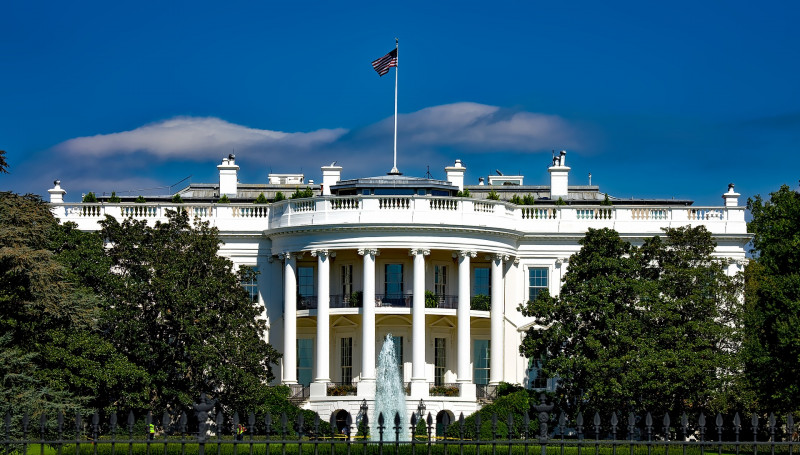
The US White House, in release on Sunday said the accord, which builds upon the United States–Malaysia Trade and Investment Framework Agreement signed in 2004, grants both nations’ exporters unprecedented access to each other’s markets and reflects a deepening partnership in key sectors such as critical minerals, digital trade, and environmental protection.
Under the agreement, Malaysia has committed to provide significant preferential market access for U.S. industrial and agricultural exports, including chemicals, machinery, metals, passenger vehicles, dairy, poultry, rice, and fuel ethanol.
In turn, the United States will maintain a 19 per cent reciprocal tariff on Malaysian-originating goods as outlined in Executive Order 14257 of April 2025, and will apply a zero per cent tariff to certain products identified in Annex III to Executive Order 14346 of September 2025.
Malaysia has also pledged to eliminate non-tariff barriers in priority industrial sectors.
This includes accepting U.S.-manufactured vehicles built to American safety and emissions standards, streamlining import licences for alloy steel and pipe products, simplifying halal certification for cosmetics, pharmaceuticals, and medical devices, and addressing U.S. concerns with conformity assessment procedures.
In the agricultural sector, Malaysia has agreed to accept certificates issued by U.S. regulatory authorities and to simplify halal and facility registration requirements to facilitate food imports.
The agreement also commits Malaysia to implementing regionalisation for U.S. animal disease protocols.
Environmental and labour protections form a key part of the deal. Malaysia has undertaken to adopt and enforce high environmental standards by tackling illegal logging, fisheries subsidies, and wildlife trafficking, while also committing to stronger action against counterfeiting, piracy, and forced labour.
To protect internationally recognised labour rights, Malaysia will implement measures to identify and address violations in high-risk sectors for forced and child labour.
Digital trade provisions are among the most progressive to date in a U.S. bilateral agreement.
Malaysia has agreed not to impose discriminatory digital services taxes or mandatory payments on U.S. technology firms, to permit cross-border data flows with appropriate protections, and to support the World Trade Organization’s moratorium on customs duties for electronic transmissions. Restrictions on broadcasting terrestrial airtime for U.S. programming will also be lifted.
Both countries have committed to improving intellectual property protection, customs procedures, good regulatory practices, and the transparency of state-owned enterprises.
In a strategic move to bolster supply chain resilience, Malaysia has agreed not to ban or restrict exports of critical minerals or rare earth elements to the United States and will partner with U.S. firms to expand domestic production capacity.
Malaysia will grant extended operating licences to provide certainty for businesses and ensure unrestricted sales of rare earth magnets to American companies.
The agreement also notes a series of major commercial deals between U.S. and Malaysian firms, including the procurement of 30 aircraft with an option for 30 more, semiconductor and aerospace component purchases valued at USD150 billion, and up to 5 million tonnes of liquefied natural gas annually worth USD3.4 billion.
Additional trade in coal, telecommunications services, and capital fund investments totalling USD70 billion are also included.
The United States stated it may take the agreement into consideration when determining trade actions under section 232 of the Trade Expansion Act of 1962, reflecting its potential national security significance.
To ensure balanced economic relations, the U.S. Department of the Treasury and Bank Negara Malaysia are finalising a mutual understanding on currency policy.
Both nations will complete domestic ratification processes in the coming weeks before the agreement enters into force, marking a milestone in U.S.–Malaysia relations and setting a new benchmark for equitable and sustainable trade partnerships in the Asia-Pacific region. - October 26, 2025