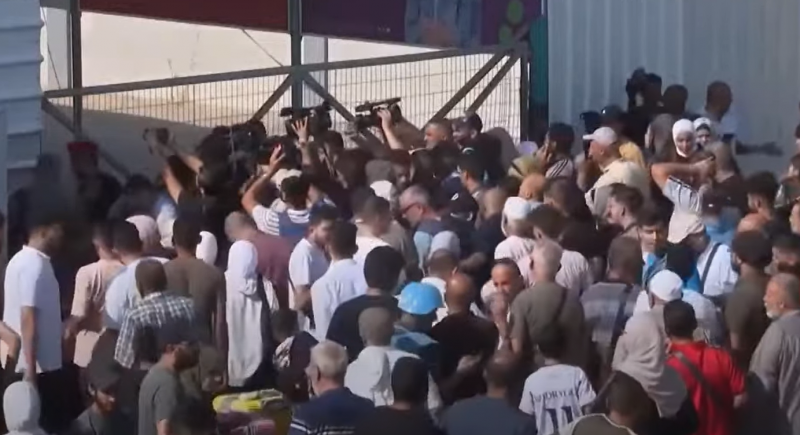
PALESTINIANS and aid agencies are bracing for the possible reopening of the Rafah border crossing as early as Sunday, following months of closure during Israel’s ongoing military campaign in Gaza.
Reuters cited Israel’s foreign minister saying on Thursday that the crucial gateway between southern Gaza and Egypt could reopen in the coming days, although it remains unclear whether this would allow for both humanitarian deliveries and the movement of people.
The Rafah crossing has long served as Gaza’s primary humanitarian lifeline and its only access point to the outside world not directly controlled by Israel before the war. Its closure since May has left Gaza's 2.3 million residents cut off, even as they endure extreme shortages of food, fuel and medicine amid widespread destruction and famine.
“This was the only safe route for those who wanted to travel from the Gaza Strip to the outside world,” said Adel Amr, a West Bank-based transport coordinator trying to organise aid shipments into Gaza. “Closing the crossing was breaking the backbone that many families relied on as a lifeline.”
Before the conflict escalated in October 2023, Rafah had facilitated the flow of goods and people to and from Egypt. Following the Hamas-led attack on southern Israel that month, which left 1,200 Israelis dead and over 250 taken hostage, Egypt further restricted movement through Rafah.
When Israeli forces seized the Gaza side of the crossing in May 2024, it was effectively shut to all but a handful of medical evacuations.
Israel’s assault, launched in response to the Hamas attack, has since killed over 67,000 Palestinians, according to Gaza’s health ministry. Much of the territory has been reduced to rubble, and the humanitarian situation is increasingly dire.
On Wednesday, some 400 trucks carrying aid were allowed to pass through Egypt towards a buffer zone and then onto an Israeli-controlled crossing a few kilometres away. The World Food Programme confirmed that a portion of those deliveries did make it through, although aid agencies remain uncertain about the scale and consistency of access.
UN aid chief Tom Fletcher, who is en route to the Rafah area, said on Thursday he hoped to see the road “full of trucks, as part of a massive surge of aid following the peace deal.”
A January 2025 ceasefire agreement includes terms for a daily quota of humanitarian aid to be allowed into Gaza. However, with Hamas now excluded from running the Strip, questions remain over who will manage the Palestinian side of the Rafah crossing once it reopens.
“This is a Palestinian town — a Palestinian city,” said Sami al-Arian, director of the Center for Islam and Global Affairs at Istanbul Zaim University. “And Palestinians should mainly comprise the majority of the people coming in and out of Rafah.”
He added: “Whoever runs the crossing, it should be completely Palestinian, with some help from the UN or the European Union. Israel should have no veto power over the entry of aid and goods or the movement of Palestinians through the crossing.”
The European Union this week said it is prepared to redeploy its longstanding humanitarian mission to Rafah once conditions allow, potentially taking a key role in monitoring operations and coordinating aid.
A reopened Rafah crossing would not only allow vital relief supplies to reach the enclave, but also give Gazans access to medical care, international travel, and family networks in Egypt. It could also help revive Gaza’s crippled economy, as Palestinian exports such as olive oil had previously found buyers across Egypt and the wider Arab world.
For now, all eyes remain on Sunday – and whether Rafah’s gates will finally swing open once again. - October 18, 2025