THE United States has imposed sweeping sanctions on Colombian President Gustavo Petro and several senior officials, as President Donald Trump escalated a growing confrontation with Bogotá over alleged failures to curb cocaine trafficking into the U.S.
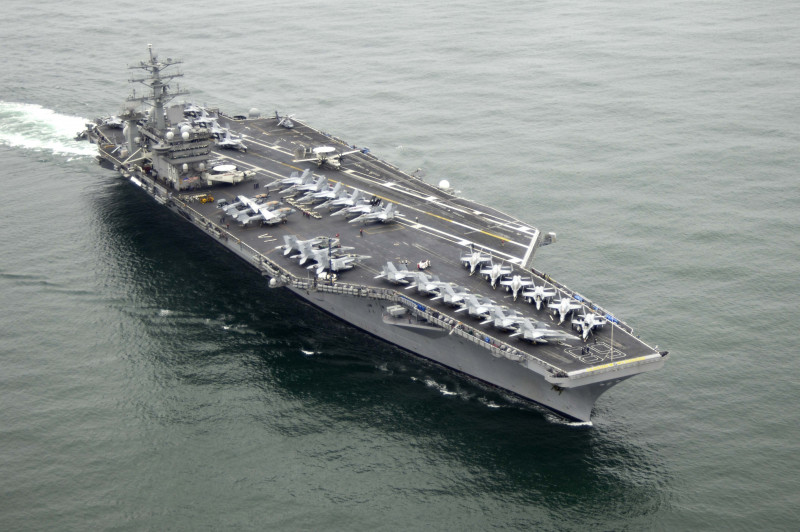
The announcement came just hours after the Pentagon confirmed the deployment of the USS Gerald R. Ford carrier strike group to the southern Caribbean — a significant military escalation that marks Washington’s most assertive counter-narcotics move in the region in decades.
The twin actions — sanctions and military build-up — underscore deteriorating relations between the U.S. and one of its traditional Latin American allies, and heighten regional unease as tensions also rise with neighbouring Venezuela.
“Since President Gustavo Petro came to power, cocaine production in Colombia has exploded to the highest rate in decades, flooding the United States and poisoning Americans,” Reuters cited U.S. Treasury Secretary Scott Bessent saying in a statement. “President Petro has allowed drug cartels to flourish and refused to stop this activity. Today, President Trump is taking strong action to protect our nation.”
The sanctions freeze any U.S. assets belonging to those targeted and bar Americans from conducting business with them. Petro’s wife, his son, and Colombia’s Interior Minister Armando Benedetti were also included under U.S. legislation targeting global narcotics traffickers.
Petro, who leaves office in ten months, rejected the allegations outright. “What the U.S. Treasury says is a lie,” he wrote on X, insisting that his government had seized more cocaine “than in the whole history of the world.” He called the sanctions “a complete paradox” and said he had hired a U.S. lawyer to challenge them, adding that he holds no assets in the United States.
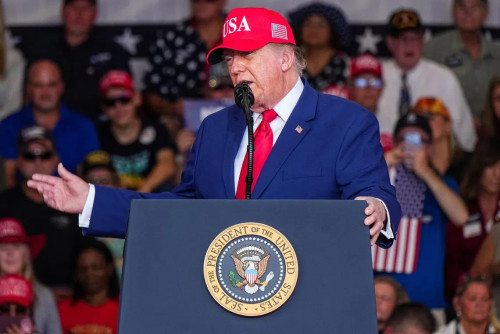
The leftist leader has long opposed U.S. military strikes against alleged drug vessels in international waters, warning that such actions amount to “murder”. Trump, in turn, labelled Petro an “illegal drug leader”, intensifying personal attacks that have further strained relations.
U.S. officials said the new sanctions form part of a broader counter-narcotics effort that includes the Gerald Ford deployment — a naval formation that adds to eight warships, a nuclear submarine, and F-35 aircraft already operating in the region.
“The enhanced U.S. force presence in the USSOUTHCOM area will bolster our capacity to detect, monitor and disrupt illicit actors and activities that threaten the security of the United States and our hemisphere,” Pentagon spokesperson Sean Parnell said on X.
The Ford, the world’s largest aircraft carrier, carries over 5,000 personnel and 75 aircraft, including F-18 fighter jets and early warning systems. Its supporting fleet includes the guided missile cruiser Normandy and four Arleigh Burke-class destroyers.
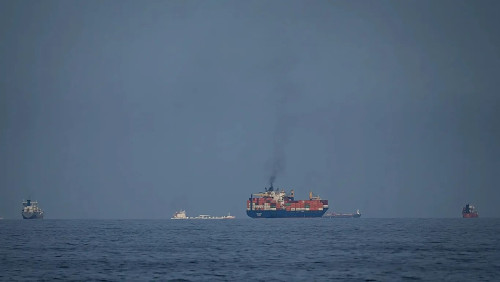
Since early September, the U.S. military has carried out ten strikes on what it described as drug vessels, mostly in the Caribbean, reportedly killing about 40 people. The Pentagon said some of those killed were Venezuelan nationals.
Venezuelan President Nicolás Maduro accused Washington of attempting to provoke regime change, warning that any U.S. intervention would trigger “a general insurrectional strike” and that “millions of men and women with rifles would march across the country.”
Amid the rising tensions, the U.S. has doubled its reward for information leading to Maduro’s arrest to US$50 million, accusing him of ties to transnational criminal groups — allegations he denies.
White House spokeswoman Anna Kelly said, “President Trump has been clear that President Petro better close up these killing fields immediately, or the United States will close them up for him, and it won’t be done nicely.”
Defence Secretary Pete Hegseth later announced that the latest U.S. strike had killed six suspected “narco-terrorists” in the Caribbean, adding that Trump would soon brief Congress on expanded operations against drug cartels, which “do not require a declaration of war.”
Some Democrats and legal experts have raised concerns about the legality of the strikes, while Republican lawmakers have applauded Trump’s hardline approach. “President Trump is not messing around when it comes to protecting the U.S. and our Western Hemisphere neighbourhood,” Congressman Rick Crawford of Arkansas said.
Former U.S. diplomat Brett Bruen, who served under Barack Obama, criticised the move, saying, “These cowboy theatrics may play well to his base on social media, but they are creating very combustible conditions we will soon have to contend with on our doorstep.”
The Colombian foreign ministry said Petro had met the U.S. chargé d’affaires in Bogotá to “reiterate the importance of the United States basing its assessments on accurate data regarding Colombia’s fight against drugs.”
With the sanctions, military escalation and diplomatic fallout converging, Washington’s relations with Latin America appear at one of their most fragile points in years — a dramatic shift from cooperation to confrontation under Trump’s second term. - October 25, 2025