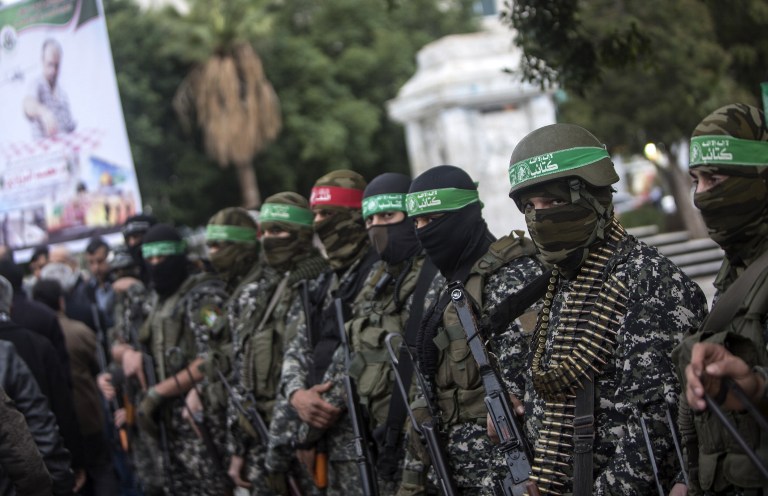
HAMAS has signalled that it is prepared to relinquish its weapons in Gaza to a Palestinian authority administering the territory, provided Israel fully ends its military occupation.
The movement framed the existence of its arsenal as directly tied to continued Israeli presence and military action.
“Our weapons are linked to the existence of occupation and aggression. If the occupation ends, these weapons will be placed under the authority of the state,” AFP reported Khalil al-Hayya, the group’s chief negotiator saying, adding, referring explicitly to the establishment of a sovereign and independent Palestinian state.
Hayya added that Hamas would accept the deployment of United Nations forces as a buffer to oversee border arrangements and ensure compliance with any ceasefire in Gaza—an implicit rejection of proposals for an international force tasked specifically with disarming the group.
In parallel, ceasefire diplomacy intensified over the weekend. Reuters reported on Sunday that efforts to consolidate the truce in Gaza had entered a “critical moment,” according to Qatar’s Prime Minister, Sheikh Mohammed bin Abdulrahman al-Thani.
Addressing a panel at the Doha Forum on Saturday, he said mediators were working to move the United States-backed peace plan into its next phase.
Although violence has diminished since the ceasefire took effect on 10 October, Al-Thani noted it had not halted entirely, with at least seven deaths reported on Saturday.
“We are at a critical moment. It is not yet where we want it to be. What we have now is only a pause,” he said.
“We cannot consider it a full ceasefire. It is only complete when there is full withdrawal of Israeli forces, when stability returns to Gaza and when people are free to move in and out—something that has not happened today.”
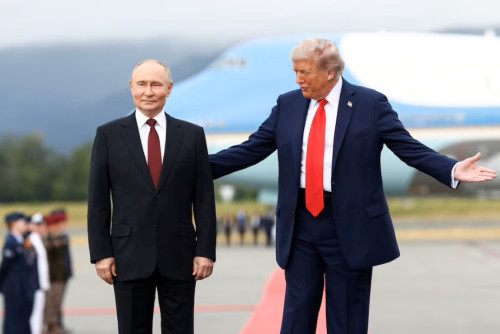
Reuters reported that talks continue over the second phase of US President Donald Trump’s plan to end the two-year war in Gaza.
On Thursday, an Israeli delegation met mediators in Cairo to discuss the release of the remaining hostages, a key requirement for completing the initial phase of the plan.
Since the ceasefire began, Hamas has returned 20 surviving hostages and 27 bodies in exchange for the release of roughly 2,000 Palestinian detainees and prisoners.
Israel said this week that the Rafah crossing would soon reopen for outbound movement into Egypt, while entry into Gaza via Rafah would be permitted once the final hostage remains have been transferred.
Trump’s plan also envisages the creation of an interim technocratic Palestinian administration governing Gaza, overseen by an international “security board” and supported by foreign security forces. Agreement on the composition and mandate of these forces is understood to be one of the most difficult outstanding issues.
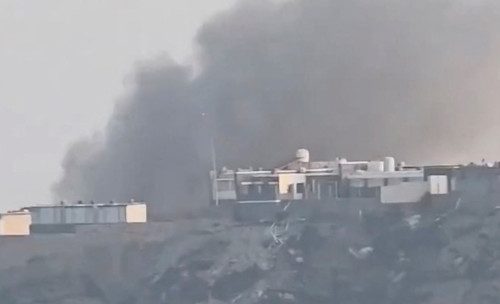
Despite the relative lull in fighting, Israel has continued to strike Gaza, claiming to target Hamas infrastructure. According to Palestinian health officials, Israeli fire killed seven people on Saturday in Beit Lahiya, Jabalia and Zeitoun in northern Gaza, including a 70-year-old woman who died in a drone strike. - December 7, 2025