NEW South Wales’ state parliament has passed far‑reaching gun control and anti‑terror laws in the wake of the mass shooting at Bondi Beach, tightening firearm ownership rules, banning public display of terror symbols and granting police expanded powers to restrict protests.
The Terrorism and Other Legislation Amendment Bill was approved by the upper house with 18 votes to eight during an emergency sitting, after the lower house passed the bill with bipartisan support from the centre‑left Labor government and the opposition Liberal Party.
Premier Chris Minns acknowledged that not all residents would welcome the reforms but said his government was doing everything possible to enhance public safety following the December 14 attack on a Jewish Hanukkah event, in which 15 people were killed and dozens wounded.
“Sydney and New South Wales has changed forever as a result of that terrorist activity,” Minns told reporters.
Under the new gun legislation, individual firearm licences will generally be capped at four, although farmers will be permitted to hold up to 10 guns. Gun club membership will be compulsory for all firearms licence holders.
The rural‑focused National Party, the Liberal Party’s junior coalition partner, opposed the caps on the grounds that they would unfairly disadvantage farmers.
The laws also grant police greater authority to impose restrictions on protests for up to three months after a declared terrorist incident.
Public display of flags and symbols associated with outlawed militant organisations such as Islamic State, Hamas or Hezbollah has been outlawed, with offenders facing up to two years’ imprisonment or fines of A$22,000 ($14,742).
Minns said concerns had been raised over chants such as “globalise the intifada”, commonly heard at pro‑Palestine demonstrations, and that hateful statements used to vilify and intimidate must be banned.
Authorities believe the two suspected gunmen were inspired by the militant Sunni Muslim group Islamic State. Sajid Akram, 50, was shot dead by police at the scene, and his 24‑year‑old son Naveed has been charged with 59 offences, including murder and terrorism.
Several activist organisations, including the Palestine Action Group, Jews Against the Occupation and the First Nations‑led Blak Caucus, have condemned the laws and signalled their intent to launch a constitutional challenge.
In a joint statement they described the anti‑protest provisions as “draconian” and accused the state government of exploiting the Bondi attack to suppress political dissent and criticism of Israel, curtailing democratic freedoms.
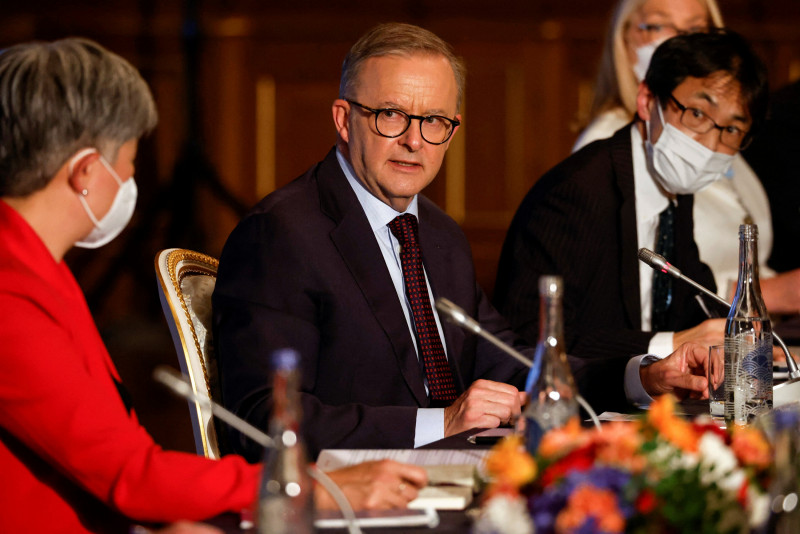
At the federal level, Prime Minister Anthony Albanese has vowed a crackdown on hate speech and is preparing legislation to make it easier to prosecute those promoting hatred and violence, as well as to cancel or deny visas for individuals involved in hate speech.
Albanese, facing criticism that his government has not done enough to address antisemitism, said he had spoken with Israeli President Isaac Herzog and had invited him to make an official visit to Australia at the earliest opportunity. - December 24, 2025