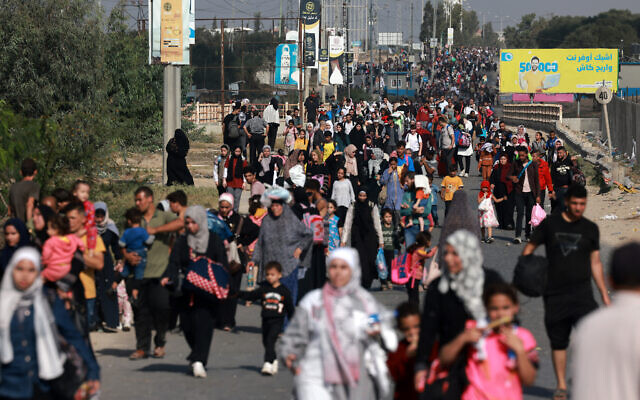
ISRAEL’S decision to revoke the licences of 37 humanitarian organisations working in Gaza this week has sent shockwaves through the aid community, leaving groups scrambling to assess the impact on their operations and on the tens of thousands of Palestinians reliant on their assistance.
AP reported today that the suspended organisations, among the most prominent of more than 100 independent non-governmental organisations operating in Gaza alongside United Nations agencies, include Doctors Without Borders, the Norwegian Refugee Council, Oxfam, and Medical Aid for Palestinians.
They provide essential services ranging from medical care and clinic support to the delivery of tents, water, and emergency supplies.
According to Israel, the affected groups must halt operations by 1 March, and they will no longer be permitted to bring supplies into Gaza or send international staff into the territory.
Some organisations, including the Norwegian Refugee Council, have already been barred from delivering aid for months, leaving them dependent on stocks brought in by other groups.
While Israel maintains that the suspended organisations constitute only a small portion of aid operations in Gaza, the United Nations and other leading NGOs insist that the remaining licensed groups are insufficient to meet even the most basic needs.
In a joint statement, they warned that “the organisations that are still licensed by Israel are nowhere near the number required just to meet immediate and basic needs” in Gaza.
The revocation comes amid a continuing humanitarian crisis more than twelve weeks after a ceasefire.
The UN reports that although famine has been averted, more than a quarter of families in Gaza subsist on a single meal a day, food prices remain prohibitive, and over a million people require improved shelter as winter storms batter the territory.
Israel has introduced stringent new registration requirements for NGOs, demanding detailed personal information for local and international staff and barring organisations for criticism of Israeli policies.
The Ministry for Diaspora Affairs and Combating Antisemitism, led by a far-right member of the ruling Likud party, oversees the process, citing concerns that militant groups could infiltrate aid operations—a claim denied by both the UN and independent organisations.
Doctors Without Borders described the requirement to provide staff lists as “an outrageous overreach,” noting that Israeli officials had rejected attempts to find alternative arrangements.
The group also dismissed allegations that an employee killed in 2024 had links to militants, insisting that “MSF would never knowingly employ anyone involved in military activities” and that its public statements merely reflected the destruction observed in Gaza.
Aid organisations warn that the revocation will have a particularly devastating effect on medical services.
Doctors Without Borders operates six hospitals, two field hospitals, eight primary health centres, and two of Gaza’s five stabilisation centres for severely malnourished children, treating 100,000 trauma cases and conducting 10,000 surgeries in the past year.
Its international and local staff provide essential technical expertise and support, which, according to Shaina Low of the Norwegian Refugee Council, “is a morale booster for our staff who are already feeling isolated.”
The ban also formalises previous restrictions on aid deliveries, allowing Israel to limit imports and block organisations it opposes.
Many groups have resorted to purchasing supplies within Gaza, a slower and costlier process, while some have drawn on reserves or reduced distributions.
Amed Khan, an American humanitarian philanthropist who supplies medicine and nutrition through NGOs in Gaza, warned that “the fewer groups that Israel approves, the harder it is to find one,” describing the new restrictions as “death by bureaucracy.”
Aid organisations have until 7 January to appeal the revocation, but the immediate concern remains the growing strain on Gaza’s already overstretched humanitarian network. - January 5, 2025