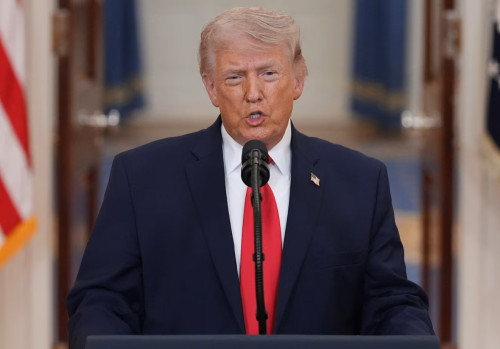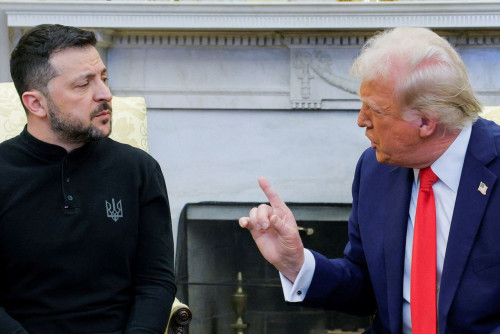
EUROPEAN Union (EU) ambassadors have reached a broad accord to intensify efforts to dissuade U.S. President Donald Trump from imposing tariffs on European allies, while also preparing retaliatory measures should the duties proceed, diplomats said on Sunday.
Trump last Saturday pledged to implement escalating tariffs from February 1 on Denmark, Sweden, France, Germany, the Netherlands, Finland, the United Kingdom, and Norway, demanding access to Greenland, a move widely condemned by major EU states as tantamount to blackmail.
AP reported today that EU leaders are scheduled to meet at an emergency summit in Brussels on Thursday to determine their next steps.
One immediate option is the activation of a 93 billion euro ($107.7 billion) tariff package, which could automatically come into effect on February 6 following a six-month suspension.
Another, yet unused, tool is the EU’s Anti-Coercion Instrument (ACI), which could restrict access to public procurement, investments, banking, or trade in services, sectors where the U.S. holds a surplus, including digital services.
An EU official suggested the tariff package commands broader initial support, while opinions on the use of the anti-coercion measures remain “very mixed.”
European Council President Antonio Costa, who chairs EU summits, highlighted in a social media post that consultations with member states underscored their commitment to support Denmark and Greenland and to resist any form of coercion.
Danish Foreign Minister Lars Lokke Rasmussen, speaking from Oslo, emphasised diplomacy in the response and noted that a working group had been established as part of an agreement between Denmark, Greenland, and the U.S.
"The U.S. is also more than the U.S. president. I've just been there. There are also checks and balances in American society," Rasmussen said.
EU efforts to resolve the dispute diplomatically are expected to feature prominently at the World Economic Forum in Davos, where Trump is scheduled to deliver a keynote address on Wednesday, marking his first appearance at the event in six years.
"All options on the table, talks in Davos with the U.S. and leaders gather after that," said one EU diplomat, summarising the bloc’s current strategy.
The eight countries targeted are already subject to U.S. tariffs of 10% and 15% and have deployed small numbers of military personnel to Greenland amid the escalating row over Denmark’s Arctic territory.
Joint statements from the nations warned that "tariff threats undermine transatlantic relations and risk a dangerous downward spiral" while reaffirming their commitment to dialogue "based on principles of sovereignty and territorial integrity."
Danish Prime Minister Mette Frederiksen welcomed the support from fellow European states, stating: "Europe will not be blackmailed."
The tariff threat has unsettled global financial markets, with the euro and sterling falling against the dollar and volatility expected to continue.
French President Emmanuel Macron reportedly supports activation of the Anti-Coercion Instrument, while Irish Prime Minister Micheal Martin described such a move as "a bit premature."
Italian Prime Minister Giorgia Meloni, who maintains closer ties with Trump, labelled the tariff threat a "mistake" and said she had personally conveyed her views to the U.S. President.
Asked about Britain’s response, Culture Secretary Lisa Nandy stressed the need for diplomacy. "Our position on Greenland is non-negotiable ... It is in our collective interest to work together and not to start a war of words," she said.
The tariff threats also cast doubt over recent U.S. trade deals, including agreements with Britain in May and the EU in July, which have faced criticism for their perceived imbalance, with the U.S. maintaining broad tariffs while its partners remove import duties.
The European Parliament is expected to suspend consideration of the EU-U.S. trade deal, with approval for removing many EU import duties no longer anticipated at the vote scheduled for 26-27 January.
German lawmaker Juergen Hardt suggested that as a last resort, the EU might even consider boycotting the U.S.-hosted World Cup to compel Washington to reconsider its Greenland policy. - January 19, 2026