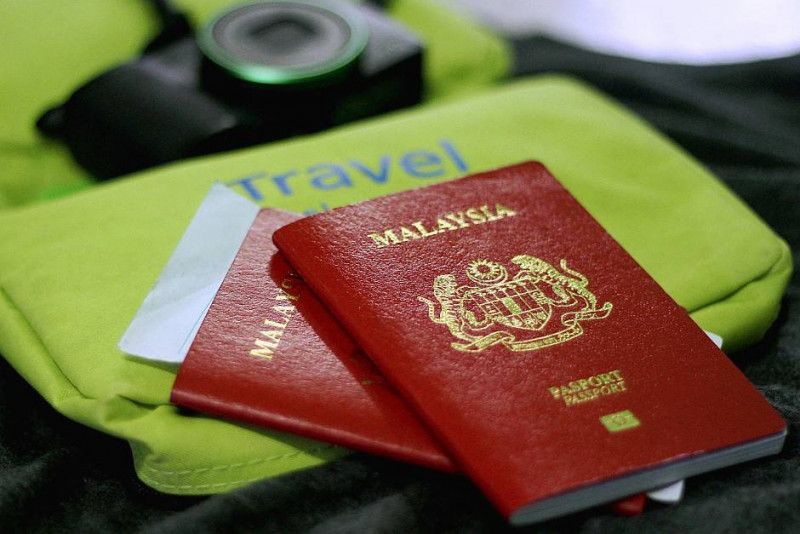
SINGAPOREANS continue to hold the world’s most powerful passport, with visa-free or visa-on-arrival access to 192 destinations, according to the latest Henley Passport Index released on July 21.
The Republic retained the top position in the 2026 rankings, marking the second consecutive time it has led the global passport power index this year.
The Staits Times reports on Thursday that the United Arab Emirates recorded the biggest improvement since the previous ranking in January, rising three places to share second position with Japan and South Korea, with each passport providing access to 188 destinations.
Sweden ranked third with access to 187 destinations, while 11 European countries jointly occupied fourth place with entry access to 186 destinations.
The fourth-ranked countries were Belgium, Denmark, Finland, France, Germany, Ireland, Italy, Luxembourg, the Netherlands, Norway and Spain.
Austria, Greece, Malta, Portugal and Switzerland shared fifth place with access to 185 destinations, while Hungary, Poland and the United Kingdom ranked sixth.
Malaysia, Australia and New Zealand joined Canada and four European nations in seventh place, reflecting their continued strength in global travel access.
At the opposite end of the rankings, Afghanistan remained the world’s weakest passport, ranked 199th with access to only 22 destinations.
The latest ranking showed a record 170-destination mobility gap between Singapore and Afghanistan, highlighting the widening divide in global travel freedom.
Despite geopolitical tensions and declining global peace levels, Henley & Partners said passport strength had expanded significantly over the past two decades.
The index, now in its 20th year, showed that the average passport currently provides access to 108 destinations without requiring a visa in advance, compared with just 58 destinations when the ranking was first introduced in 2006.
In 2006, the world’s strongest passports, held by citizens of the United States, Denmark and Finland, offered access to 130 destinations.
Henley & Partners noted a strong correlation between passport strength and national stability, comparing its rankings with the latest Global Peace Index by the Institute for Economics & Peace.
Singapore, which ranked eighth on the Global Peace Index, also topped the Henley Passport Index, while countries including Japan, Switzerland, Ireland, Austria, Portugal, Finland, Denmark, New Zealand, Canada, Czechia and Malaysia performed strongly across both measures.
However, some countries recorded contrasting results, including Israel, the United States, South Korea, Ukraine and Russia, which ranked highly in passport strength despite lower positions in global peace rankings.
Henley Passport Index creator and Henley & Partners chairman Christian H. Kaelin said passport power represented more than travel convenience, reflecting a country’s broader international standing.
"20 years of data show that passport power is one of the clearest expressions of a country’s geopolitical capital. It reflects far more than peace or prosperity alone.
"The world’s strongest passports belong to nations that other countries want as partners – for trade, investment, security or cooperation. Mobility is ultimately a measure of the value other countries place on their relationship with you," he said.
The Henley Passport Index ranks passports twice a year based on the number of destinations holders can enter without obtaining a visa before travel.
The ranking is compiled using official travel data maintained by the International Air Transport Association (IATA), which is used by airlines and governments worldwide to determine entry requirements. - July 23, 2026








.jpg)