WITH two wounded Ukrainian soldiers trapped in one of the most dangerous stretches of the battlefield, army commander Vladyslav Polskyi knew leaving them behind was not an option.
The 29-year-old former science teacher, who joined the army in 2023, was monitoring the men from a command post about 15km away when he saw that one remained stranded on a disabled land drone after a Russian attack.
Between him and the soldiers was a battlefield kill zone littered with mines and constantly watched by aerial drones capable of striking anything that moved.
Polskyi, whose military call-sign is “Teacher”, climbed into a grey pick-up truck and drove towards them through scorched fields and past the burnt-out remains of vehicles abandoned on the battlefield in northern Ukraine.
He went without a helmet or body armour.
“If it had happened to me, I would've wanted them to come take me away, and not just leave me there,” the junior lieutenant told Reuters, recalling the August 15 rescue mission.
The two men belonged to another Ukrainian battalion and had been wounded during a combat operation in the Kharkiv region.
They were being evacuated on an unmanned ground vehicle when a Russian small helicopter drone carrying explosives struck it, disabling the vehicle and cutting its connection to the operator.
One of the soldiers managed to crawl into a ditch and hide among vegetation. The other was left exposed on the four-wheeled vehicle, unable to move, with his right foot badly mangled.
Polskyi raced into the danger zone, planning as he drove how he would get both men onto the flatbed of his truck and out of the area.
Surveillance drone footage obtained exclusively by Reuters from Polskyi’s unit, the 475th Assault Regiment, captured the rescue. It shows his truck speeding along a gravel road before turning and rapidly reversing towards the damaged unmanned vehicle.
Reuters verified the location of the rescue using the full-length footage, although the regiment declined to identify the precise site for security reasons.
At a nearby command post, 22-year-old drone-platoon leader “Malyi” watched the operation unfold live on screens.
“Everyone in the command centre was shocked,” he said, adding that a single Russian drone or land mine could have killed all three men.
Polskyi, wearing only a T-shirt and shorts, managed to lift both wounded soldiers onto his truck and speed back to safety.
Russian drones were detected moving towards the vehicle, but he managed to evade them.
The rescue highlighted both the growing importance and the limitations of unmanned technology in Ukraine’s war with Russia.
Kyiv has increasingly deployed remote-controlled ground vehicles for hazardous tasks such as evacuating wounded troops, reducing the need to send soldiers into exposed areas.
But the Russian strike demonstrated the vulnerabilities of the relatively slow and rudimentary systems. By destroying the vehicle’s Starlink terminal, the Russian drone severed its connection with the operator and left it stranded.
Both Russia and Ukraine have made extensive use of drones on the battlefield, with the two sides regularly releasing footage showing unmanned aircraft tracking and attacking enemy soldiers in the kill zone.
Ukraine says it is killing or wounding about 30,000 Russian soldiers a month, although Moscow has dismissed the figure as exaggerated.
For Polskyi, however, the mission was less about battlefield statistics than bringing two wounded men home alive.
His actions soon drew national attention.
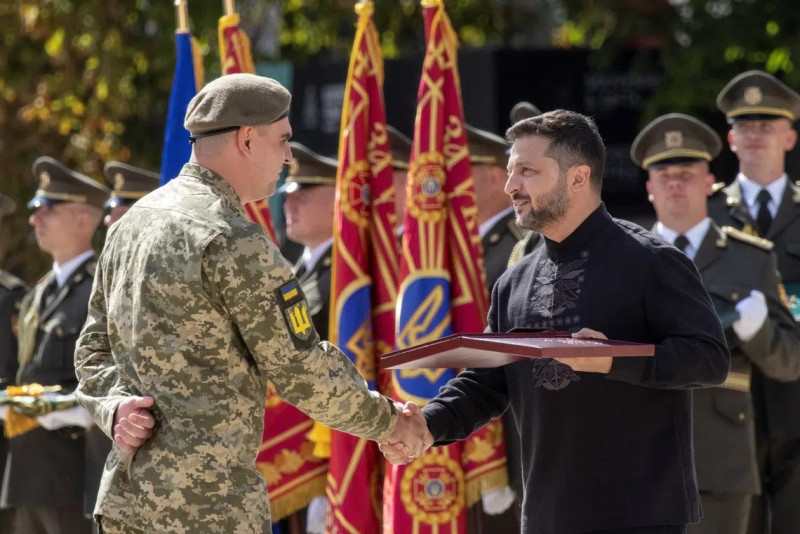
Days after the rescue, President Volodymyr Zelenskiy presented him with Ukraine’s highest military honour, Hero of Ukraine, during Independence Day celebrations in Kyiv on Monday.
“People must be taken care of. Thank you, Vladyslav!” Zelenskiy said as he announced the award.
Recalling the rescue, Polskyi said he could still remember the fear in the soldiers’ eyes — and acknowledged that he was frightened too.
“But you need to know how to control it,” he said. - August 26, 2026