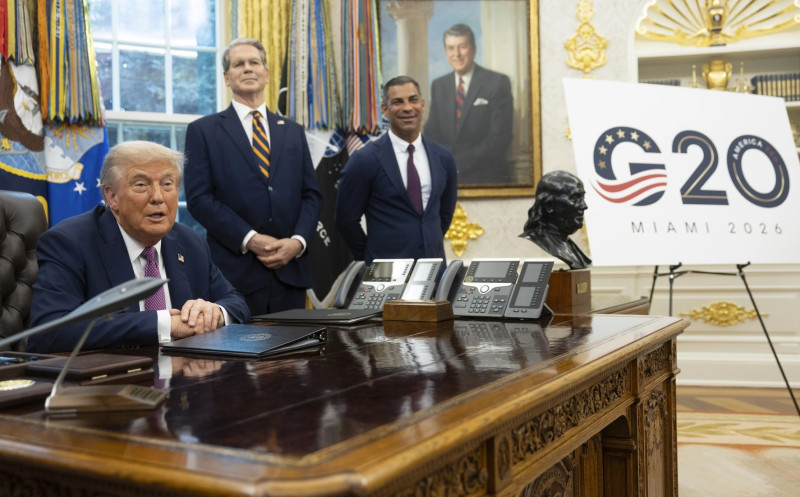
THE United States will press fellow G20 economies to cut remaining business ties with Iran at a meeting of finance ministers and central bank governors next week, as the Trump administration seeks to use the forum to advance its economic and sanctions agenda.
US Treasury Secretary Scott Bessent is expected to deliver a strong warning to G20 counterparts that countries continuing to do business with Iran risk secondary US sanctions and could jeopardise their access to the dollar-based Western financial system.
The meeting, which will be held on Monday and Tuesday in Asheville, North Carolina, marks a renewed US engagement with the G20 after Washington largely shunned the South Africa-led process last year.
A senior US Treasury official said the administration also wanted the meeting to produce progress on economic growth, global trade imbalances and sovereign debt, while promoting more resilient supply chains and private-sector investment.
“After the Treasury warned countries on Monday that they face secondary U.S. sanctions if they fail to cut remaining business ties to Iran, the official said that Bessent would be making a "strong statement" to G20 officials that they must adhere to the U.S. sanctions campaign against Iran if they want to continue to do business in the dollar-based, Western financial system.”
“I expect that this will come up in every single bilateral meeting that the secretary is hosting with our G20 counterparties over the coming days,” Reuters quoted the official saying.
“This is a critical aspect right now of our economic campaign against Iran, and so we want to ensure that there's consistency across all of the G20 members.”
Washington's push comes after the Treasury Department warned countries that they could face secondary sanctions if they failed to end remaining commercial links with Iran, intensifying pressure on governments and companies still conducting business with Tehran.
Beyond Iran, the US plans to make global trade imbalances a central issue at the G20 talks, with the administration arguing that economies should compete through productivity, innovation and investment rather than policies that generate excess production and channel surplus goods into global markets.
The Treasury official said other G20 economies had experienced “tremendous amounts of dumping on their shores” as the United States tightened its own trade barriers, although the official did not directly identify China as the source.
The US also intends to promote more resilient supply chains for critical resources, including energy, while encouraging private-sector innovation as a means of raising productivity and supporting economic growth.
Business leaders are expected to take part in discussions on barriers to investment, innovation and productivity, as well as regulatory reforms that could encourage greater private-sector activity.
The talks are also expected to address concerns over US government debt and elevated Treasury bond yields.
The Treasury official said yields, which have remained elevated since the start of US-Israeli attacks on Iran in late February, were expected to decline as inflation cooled.
However, the Treasury was also seeking to bring down yields on longer-maturity government bonds, with Bessent having increased the size of Treasury buybacks involving 10- to 30-year securities.
The Asheville meeting will therefore put Washington's economic priorities — from Iran sanctions and trade imbalances to supply-chain resilience and US debt — at the centre of discussions among the world's major economies. - August 28, 2026