THE United States and Iran have exchanged fresh strikes, sharply escalating hostilities after a month-long lull and raising renewed concerns over the security of the Strait of Hormuz and global energy supplies.
The US military struck Iranian military targets on Tuesday, including air defence sites, radar systems and maritime assets, while Iran retaliated with ballistic missiles and drones against sites across the region.
US Central Command said the strikes were carried out in response to Iranian attempts to attack commercial vessels and American forces in the Middle East.
AP reported the latest escalation comes just days after US forces resumed military action against Iran, ending a month without direct attacks and threatening to reignite a conflict that has already pushed global oil prices higher.
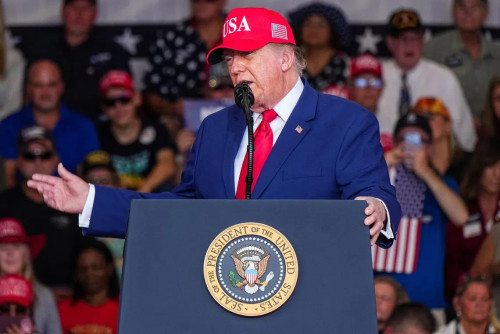
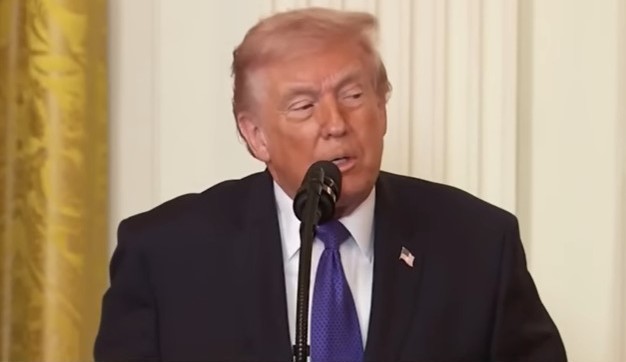
President Donald Trump warned Iran that it would face an even stronger response if it retaliated.
“If the failed Nation of Iran retaliates for this very justified attack, they will be hit again at a much harder and higher level, but it will not be the biggest attack of them all, that is waiting in the wings,” Trump said on social media.
Trump also told Fox News that US forces had targeted Iranian radar systems, saying Tehran had attempted to rebuild them.
“They tried to rebuild their radar because they can’t see anything,” Trump told Fox. “We waited until it was almost built and then we hit it.”
Iran, meanwhile, warned that the latest attacks would trigger a forceful response and said the conflict had strengthened its resolve to maintain its effective closure of the Strait of Hormuz.
Iran’s Armed Forces General Staff and joint military command said its forces would deliver what it described as “crushing and devastating blows” against the United States.
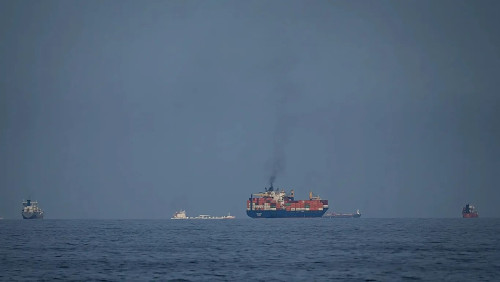
The Revolutionary Guard also warned that the attacks had only strengthened Iran’s determination and tightened its effective closure of the Strait of Hormuz, a narrow waterway off Iran’s coast that is one of the world’s most important oil shipping corridors.
The escalation has already been felt in energy markets, with crude prices rising sharply this week. Oil was already up about 7% for the week following the renewed clashes, while crude prices have risen more than 50% this year.
The conflict also threatens to deepen pressure on motorists and consumers as higher oil prices feed into fuel costs and broader transport and production expenses.
Iranian attacks and US military operations have extended beyond the two countries, with Jordan reporting that its military intercepted 10 Iranian missiles while three others landed in unpopulated areas.
The United Arab Emirates also said it had intercepted an Iranian drone over its waters, while Kuwait reported that its air defences had intercepted drone attacks.
Iran said it had launched a drone attack against US forces in Bahrain, although there was no immediate confirmation from Bahraini authorities.
The human cost of the latest strikes was also highlighted after Iranian officials said a US attack hit a home where a wedding ceremony was taking place in Kuhestak in southern Iran.
Ahmad Nafisi, deputy governor of Hormozgan province, told Iranian state television that five people, including a child, were killed and at least 68 others wounded.
“Make no mistake: these crimes will not go unpunished,” said Ebrahim Azizi, chairman of the Iranian parliament’s National Security and Foreign Policy Committee, on X.
US Central Command said it was aware of reports of civilian casualties but noted that they “originated from Iranian state media”.
“The U.S. military never targets civilians, unlike the IRGC,” said Capt Tim Hawkins, a Central Command spokesman.
Iranian state media also reported strikes on civilian sites in Hormozgan province, including a fishmeal factory on Qeshm Island, a fishing pier and a Ports and Maritime Organization tower in Sirik.
It further reported that the civilian Jiroft Airport in Kerman province had been struck, although the projectile landed outside the runway and caused no casualties or damage to airport infrastructure.
Several parts of Hormozgan’s electricity network were also reportedly hit, with Iran’s electricity grid management company Tavanir saying authorities were working to restore power.
The renewed fighting comes despite signals earlier Tuesday from Iranian President Masoud Pezeshkian that Tehran remained prepared to return to an interim ceasefire agreement reached with Washington in June.
“If the U.S. returns to its commitments in the memorandum of understanding, the Islamic Republic of Iran will immediately reciprocate,” Pezeshkian was quoted by Iranian state media as saying at the Shanghai Cooperation Organisation summit in Kyrgyzstan.
The June agreement had called for an immediate ceasefire and opened a 60-day period for negotiations towards a broader settlement, but the arrangement subsequently collapsed.
The renewed confrontation now threatens to widen further, particularly as both sides seek control over the Strait of Hormuz.
The waterway normally carries about 20% of the world's oil, making any prolonged disruption a potential shock to global energy markets.
The US administration had previously sought to pressure Tehran through economic sanctions and financial isolation rather than sustained military action. The return to direct strikes comes as US stockpiles of advanced interceptors have been diminishing and the conflict faces opposition among many Americans.
US Central Command has continued to describe the renewed military campaign as limited, maintaining that its operations were prompted by Iranian attacks on commercial vessels and US troops in the region.
But with Iran warning of further retaliation, military activity spreading across the Gulf and oil prices climbing, the latest escalation risks turning a limited exchange of strikes into a much broader regional crisis. - September 2, 2026