


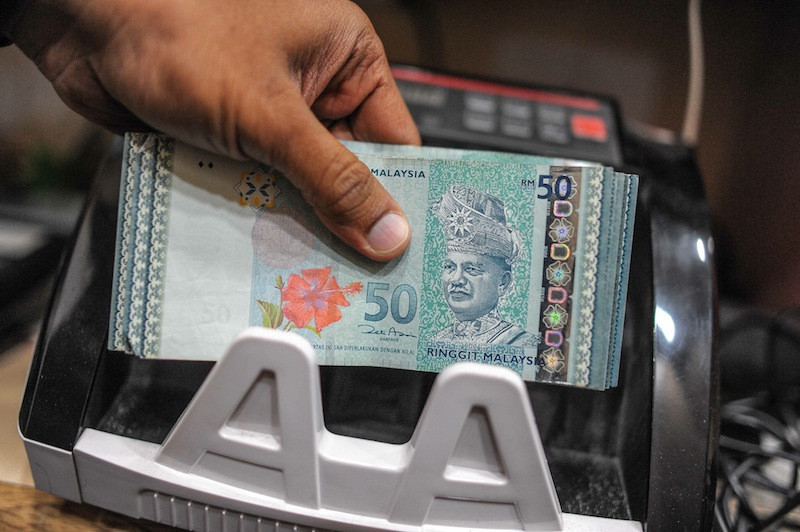
THE ringgit is expected to continue its gradual appreciation through the rest of the year, buoyed by a softening US dollar and solid domestic economic fundamentals, according to market analysts.
The local currency is currently trading at a seven-year high against the US dollar, at levels last seen in mid-2018. On Friday, the ringgit briefly strengthened past the psychological 4.00 mark before easing slightly.
Year-to-date, the ringgit has appreciated 1.37 per cent to around RM4.00 per U.S dollar at press time on Saturday, from RM4.06 at the start of 2026. It ended the trading week at 4.0025, having tested an intraday high of 3.998.
Since Datuk Seri Anwar Ibrahim assumed office as Prime Minister in November 2022, the ringgit has strengthened by nearly 11 per cent, rising from around RM4.50 against the US dollar.
SPI Asset Management managing partner Stephen Innes said the recent move below the 4.00 level reflects mounting unease among investors over the long-term outlook for US dollar-denominated assets.
“Investors are becoming increasingly uneasy about the longer-term US story – large fiscal deficits, heavy debt issuance and the sense that the dollar’s premium is slowly being eroded.
“That has pushed global capital to look for alternatives, rather than doubling down on the greenback,” he told StarBiz.
The softer US dollar has also lifted other Asian currencies, as investors reassess regional risk.
Innes said Asia is increasingly being viewed “less as a high-risk trade and more as a relatively safe” destination for capital, particularly economies anchored by real economic activity and commodity exports.
“Malaysia fits that bill well.
“The ringgit has benefited from steady export income, reasonable external balances and the perception that policy credibility has been maintained, even as volatility rises elsewhere.”
Echoing this view, Bank Muamalat Malaysia Bhd chief economist Mohd Afzanizam Abdul Rashid said Malaysia’s economic fundamentals continue to underpin the ringgit’s resilience.
Against this backdrop, he said traders and investors have become increasingly “constructive” on the local currency.
“The geopolitical temperature has cooled somewhat after the World Economic Forum (WEF) summit, where President Donald Trump gave an assurance that the United States will not use force to achieve its objectives. But, more importantly is the resilience of the Malaysian economy.”
Afzanizam pointed to Malaysia’s stronger-than-expected economic growth, coupled with Bank Negara Malaysia’s decision to keep the overnight policy rate unchanged at its first Monetary Policy Committee meeting of the year, as a sign of confidence in the economic outlook.
“This gives the impression the OPR might be kept steady throughout the year.
“Should the US Federal Reserve (Fed) cut their benchmark rate, this will effectively narrow the gap between the OPR and Fed Fund Rate, leading to greater interest towards the ringgit.”
Malaysia’s economy expanded by 4.9 per cent in 2025, exceeding official projections of between 4.0 per cent and 4.8 per cent. Bank Negara kept the OPR unchanged on Thursday, citing a positive growth outlook.
Local bond markets have also remained well supported, with the 10-year Malaysian Government Securities yield easing by 0.3 basis points to 3.54 per cent.
The ringgit’s strength has been broad-based, extending beyond the US dollar to both major and regional currencies, while also boosting Malaysians’ overseas purchasing power.
The ringgit now trades at about 1.74 against the Chinese yuan, up 1.44 per cent from 1.72 at the start of the year. The euro is priced at around RM4.70, compared with RM4.77 previously.
Against the Singapore dollar, the ringgit has strengthened by about 0.9 per cent to a four-year high of RM3.13, from RM3.16 at the beginning of the year. It has also reached record levels against the Japanese yen, with one ringgit buying approximately 39.59 yen, up from 38.55 earlier in the year.
Meanwhile, the US Dollar Index stood at 98.43, well below the 100 level that typically signals broad-based dollar strength.
Looking ahead, Innes expects the US dollar-ringgit pair to remain on a “gently lower path” for the rest of the year, despite continued volatility.
“But the bigger picture still points to gradual dollar softening rather than a renewed uptrend.
“As investors rethink dollar exposure and look for currencies backed by trade flows and real assets, Malaysia continues to benefit from being in the right place at the right time,” he said. - January 24, 2026




.jpeg)







