Business

Cuba kicks off 2021 with new currency structure

Plan sees convertible peso, which is pinned to greenback, phased out over 6 months

Updated 5 years ago · Published on 02 Jan 2021 8:16AM

Cuba kicks off 2021 with new currency structure
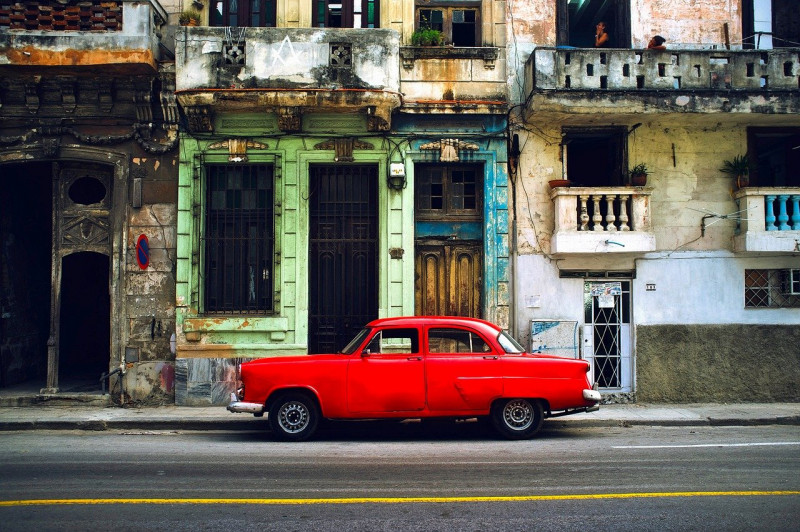
Reforms announced weeks ago by President Miguel Diaz-Canel are intended to make the Cuban economy more efficient and easier to understand for foreign investors. – Pixabay pic, January 2, 2021

HAVANA – Cubans awoke on New Year’s Day to a new currency structure under long-awaited economic reforms that come with a double-edged sword of salary increases and price hikes.

The reforms entered into force on the communist island yesterday – dubbed “Day Zero” – just weeks after they were announced by President Miguel Diaz-Canel.

The policy is intended to make the Cuban economy more efficient and easier to understand for foreign investors, 62 years after Fidel Castro’s communist revolution.

The plan will see the convertible peso, which is pinned to the dollar and was introduced in 1994 to replace the US currency, phased out over six months.

This will leave only the regular peso, worth about 24 times less.

Inflation will soar as a result, and authorities have warned of a 160% average hike in prices. 

Bread and electricity costs will rise, and in an added blow, the government has said it will also curb subsidies on some consumer goods as part of the reforms.

In exchange, the minimum wage will be hiked from 400 pesos to 2,100 pesos (RM60 to RM321).

Many are concerned that higher salaries will not make up for inflation.

“Everyone is worried. The Cuban lives in fear,” said 36-year-old merchant Yusbel Pozo.

“The future is uncertain.

“We don’t know what is going to happen. The electricity (price) is going up, food will follow.”

Last year, the Cuban economy shrank 11%, its worse decline in 27 years.

The country is reeling from sanctions toughened by the administration of US President Donald Trump, and a decline in tourism and remittances due to the coronavirus pandemic.

University of Havana economist Ricardo Torres told AFP that despite months of planning, some aspects of the reform “are beyond the government’s control, such as the possibility of uncontrolled inflation”. – AFP, January 2, 2021


Related News

World / 3y

China spied on US using Cuba military base since 2019: US official

World / 3y

Cuba postpones International Workers’ Day parade over fuel shortages

World / 3y

US plane makes emergency landing in Cuba after hitting birds 

World / 3y

Five dead, 12 missing after Cuba migrant boat sinks

Food / 3y

Cuba mixes up a series of hits with its cocktail creativity

World / 3y

Court orders four cruise lines to pay nearly US$450 mil for using Cuba port

Spotlight

Malaysia

RM245m Penang Hill cable car project 32 per cent complete - CM

By Ian McIntyre

Malaysia

Six locals charged over alleged kidnapping of Singaporean couple in Johor

Malaysia

PM: No political, racial or religious shield for those found guilty in TH, Felda probes

Malaysia

Singapore security guard jailed 14 days, fined RM7,000 for insulting Islam

Health

Dengue cases soar 56% to 58,079 as nation records 55 deaths

Malaysia

NGOs urge BERSAMA to put Indian community agenda on political radar

By Alfian Z.M. Tahir

Health

MOH warns seniors against unproven hydrogen inhalers

Malaysia

Former Tabung Haji CEO remanded seven days as MACC RCI probe deepens

Malaysia

21 held in KLIA-Nilai crackdown on alleged online love scam syndicate

You may be interested

Business

Tey Por Yee and four others ordered to pay RM103.75m in SC civil suit

Business

Oil prices surge as US-Iran standoff, Ukraine strikes rattle global energy markets

Business

Independent review needed, not blind denial, to address US claims – maritime expert

Business

FMM urges input tax credits as government reviews GST features for SST

Business

Oil prices hold above US$84 as Middle East tensions persist

Business

Robo.ai expects shareholders’ equity to turn positive after restructuring

By Alfian Z.M. Tahir