


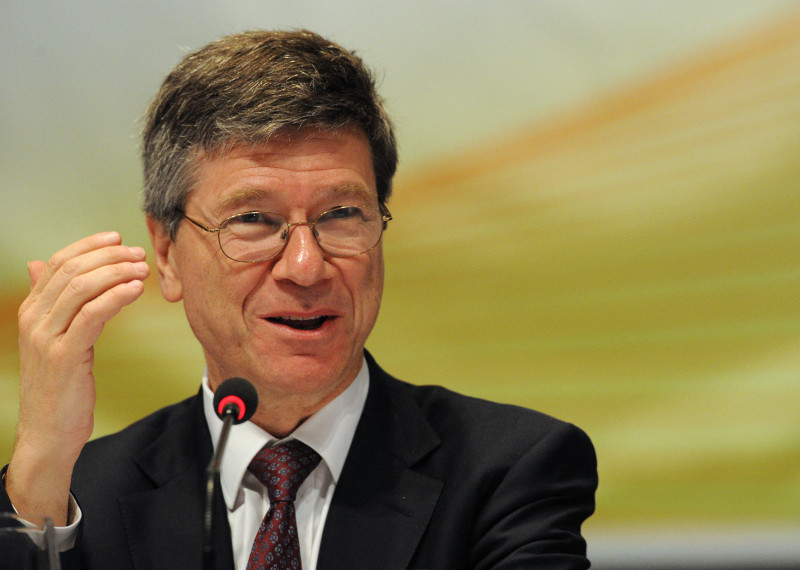
THE centre of global economic power is shifting decisively away from the West and back towards Asia, according to prominent economist Jeffrey D. Sachs, who described the transition as part of a long-term historical cycle.
Speaking on Money Matters produced by TV3 on Saturday, Sachs said Asia is re-emerging as the world’s primary economic hub, driven by its vast population and rapid technological advancement.
"Of course, the most fundamental change is the rise of Asia to once again become the centre of the world economy.
“For two millennia, Asia was the global economic centre before Europe took over, followed later by the era of American imperial dominance," he said.
He pointed to China as a leading example of this transformation, highlighting its rapid ascent over the past four decades.
"The rise of China is truly remarkable because within forty years, China has become one of the largest economies in the world. Today, China is ahead in many areas of technology," he added.
Sachs stressed that global economic development should not be viewed as a zero-sum competition, arguing that growth in one country does not necessarily come at the expense of another.
"For example, the rise of China does not automatically mean losses for the United States. However, from the perspective of the United States, China is seen as a threat," he said.
He added that geopolitics continues to play a defining role in shaping economic outcomes, particularly as traditional powers attempt to maintain influence.
"Europe and the United States, which were previously dominant economic powers, are no longer at the top, but they still seek to remain powerful.
"Especially the United States, which is trying to maintain hegemonic power even though it may no longer be able to do so, and in the process is creating considerable instability," he said.
Sachs also noted that the global economy functions best through cooperation rather than rivalry, warning that ongoing conflicts—particularly in West Asia—underscore how geopolitical tensions can disrupt economic stability.
Recent developments, including strain on global energy markets and surging oil prices, have been exacerbated by disruptions to key trade routes such as the Strait of Hormuz, a critical artery for global oil and liquefied natural gas supplies. - April 5, 2026




.jpeg)







