


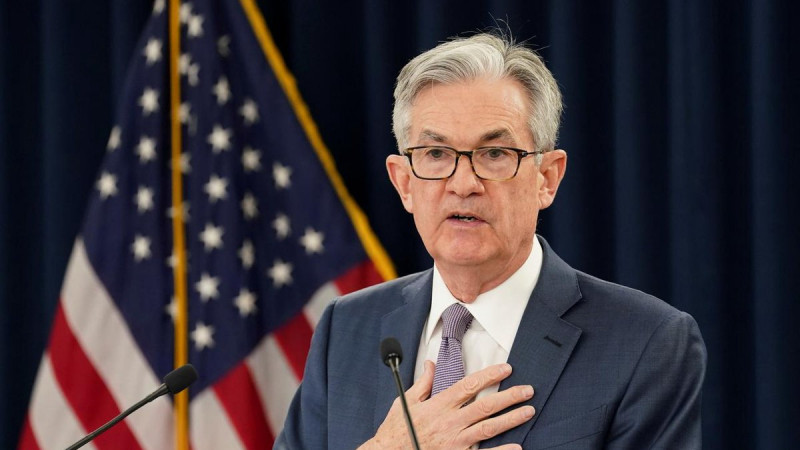
THE simmering conflict at the US Federal Reserve has entered a more confrontational phase, as outgoing chairman Jerome Powell declared he would remain on the Board of Governors beyond the end of his term, prompting a fresh public rebuke from President Donald Trump.
AFP reported Powell confirming that although his tenure as chair concludes on May 15, he intends to exercise his right to stay on as a governor “for a period of time to be determined.” His decision reflects growing concern over what he described as mounting political interference in the central bank’s operations.
“I worry that these attacks are battering the institution and putting at risk the thing that really matters to the public, which is the ability to conduct monetary policy without taking into consideration political factors,” he told reporters.
The announcement drew an immediate and characteristically sharp response from US President Donald Trump, who has long criticised Powell for resisting calls to cut interest rates.
“Jerome ‘Too Late’ Powell wants to stay at the Fed because he can’t get a job anywhere else – Nobody wants him,” the president posted on his social media platform.
While it is uncommon, it is not without precedent for a former chair to remain on the Board. Powell indicated he would “keep a low profile” under the incoming chair, Kevin Warsh, whose confirmation has been contentious.
However, Treasury Secretary Scott Bessent criticised the move, describing it as a “violation” of established norms and “an insult” to Warsh.
The dispute unfolds against a backdrop of broader institutional strain. Since returning to office, Trump has repeatedly pressed for faster monetary easing to stimulate economic growth, despite concerns that such measures could exacerbate inflation.
In parallel, legal pressures have emerged. The administration sought to remove Fed governor Lisa Cook over mortgage fraud allegations, a case now before the Supreme Court.
Meanwhile, the Justice Department launched a criminal investigation into Powell and the Fed over renovation cost overruns, a move the chairman characterised as an attempt to undermine the institution’s independence. That probe has since been paused.
Powell emphasised he would not step down while the investigation remains unresolved. He reiterated the importance of a central bank operating “free of political influence” and welcomed recent progress in Warsh’s confirmation.
The Federal Reserve’s latest policy meeting underscored internal divisions, with officials voting to hold interest rates steady for a third consecutive time amid heightened uncertainty linked to the Middle East conflict.
The Fed noted that “inflation is elevated, in part reflecting the recent increase in global energy prices,” maintaining rates between 3.50 per cent and 3.75 per cent.
Dissent within the committee reached its highest level in more than three decades, with four of 12 voting members opposing the decision.
Governor Stephen Miran advocated a quarter-point cut, while three regional presidents supported the pause but rejected accompanying guidance suggesting a bias towards easing.
Analysts say the split points to a more contentious policy environment ahead. ING economists James Knightley and Padhraic Garvey observed: “This suggests a tougher two-way debate on rates at Kevin Warsh’s first (Fed) meeting as chair in June.”
Although the Fed has been easing rates since late 2025, rising energy costs and disrupted supply chains linked to the US-Israel war with Iran have complicated the outlook, raising the possibility that policymakers may yet need to reconsider tightening if inflationary pressures persist. - April 30, 2026




.jpeg)







