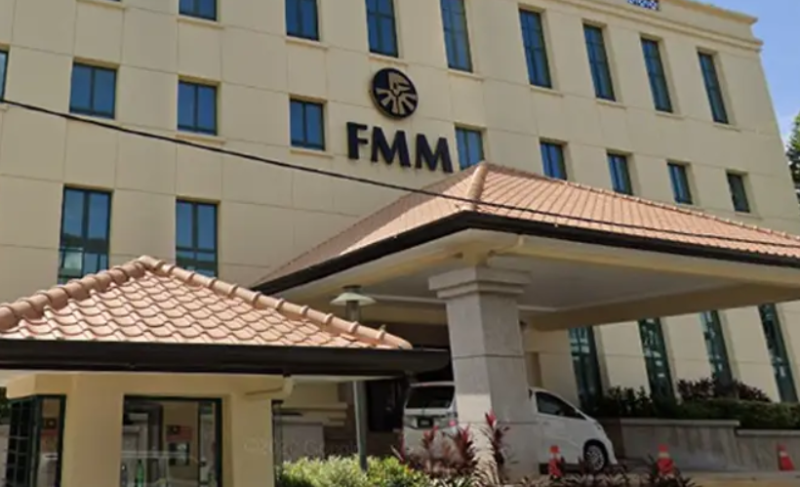
THE Federation of Malaysian Manufacturers (FMM) wants Budget 2027 to focus on expanding Malaysia’s productive capacity, arguing that tax reform and targeted support for businesses are needed to free up cash for investment, innovation and stronger domestic supply chains.
FMM president Jacob Lee Chor Kok said the industry group’s proposals were centred on building a more competitive and resilient industrial base, with four strategic priorities covering industrial competitiveness, domestic industrial development, a highly skilled workforce, and faster adoption of energy transition and circular economy practices.
“Our main proposal is to reintroduce the Goods and Services Tax (GST) at a rate of three per cent, with safeguards for essential goods, simplified compliance requirements for SMEs, and a reliable refund mechanism.
“We also propose improving the corporate tax rates for SMEs, including setting a 15 per cent tax rate for the first RM1 million, 17 per cent for the second RM1 million and 24 per cent for amounts exceeding RM2 million. This would provide SMEs with lower tax rates,” he said.
Lee said the proposed measures would give businesses greater financial headroom to raise workers’ wages and increase spending on research and development (R&D), innovation and commercialisation.
The aim, he said, was to turn improved business cash flow into higher productivity and broader economic growth rather than allowing cost pressures to constrain investment.
FMM also proposed a RM100 million National Supply Chain Resilience Fund to help manufacturers secure critical inputs, develop alternative suppliers and reduce dependence on overseas sources.
The fund would strengthen domestic sourcing capacity and help manufacturers mitigate disruptions to global supply chains, particularly for strategically important inputs.
“We also hope the government can improve and simplify export enhancement incentives, including support for indirect exporters, penetration of new markets and companies recording significant export growth,” he said.
Turning foreign worker levies into productivity investment
FMM also wants revenue collected through foreign worker levies to be channelled into measures that raise productivity and reduce long-term dependence on low-skilled foreign labour.
Lee proposed that 60 per cent of levy collections be allocated to skills development and 40 per cent to automation, supported by government seed funding of RM100 million and RM500 million respectively.
He said the approach would turn levy payments into sustained investment in local talent and productivity-enhancing technology.
On the energy transition, FMM called for targeted and temporary assistance to manage energy costs, alongside mechanisms to address increases in industrial electricity costs.
“For green investment, FMM proposes that the government enhance green tax incentives, provide financing at three per cent or below, offer guarantees of up to 80 per cent of the financing amount, and provide grants to SMEs covering up to 30 per cent of eligible investment costs,” he said.
Lee said the proposals were aligned with the direction of the 13th Malaysia Plan (RMK-13), the New Industrial Master Plan 2030 (NIMP 2030) and the country’s energy transition agenda.
He said the overall objective was to build a Malaysian industrial sector that could compete more effectively, raise productivity and withstand future supply and cost shocks while preparing businesses for the demands of the future economy. - September 3, 2026