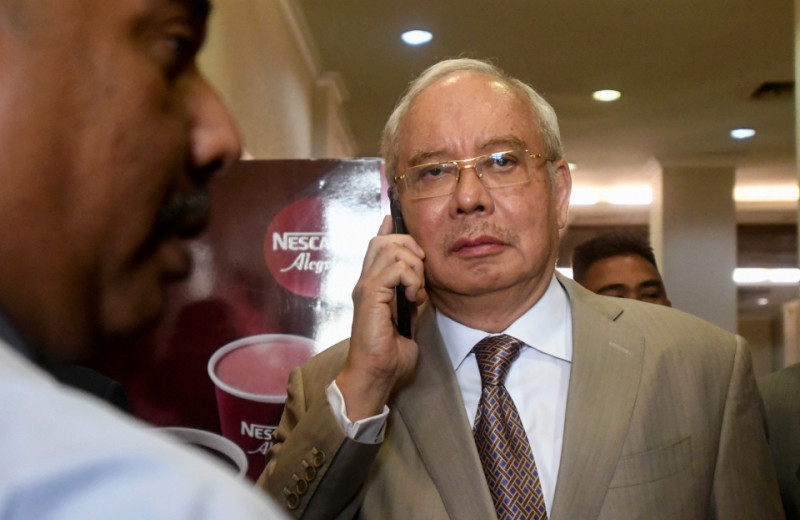
THE Attorney-General and Federal Territories Minister Hannah Yeoh opposed allowing former prime minister Datuk Seri Najib Razak to serve the remainder of his prison sentence under house arrest, according to minutes of the Federal Territories Pardons Board meeting.
The minutes of the board’s 64th meeting, held at Istana Negara on Sept 18, 2026, record both objections before the Yang di-Pertuan Agong approved a conditional pardon allowing Najib to serve the remainder of his sentence at home.
Contents of the minutes have been widely shared on social media, saying they showed that the Government’s representatives had opposed the arrangement.
From the minutes it was clear that the Attorney-General and the FT Minister Hannah Yeoh both objected to house arrest for Najib, representing the unity government of Datuk Seri Anwar Ibrahim.
According to the minutes, the Attorney-General maintained that Najib should continue serving his sentence until 2028, arguing that house arrest was not recognised under existing Malaysian law.
He also warned that such an arrangement could affect political stability, the economy, investment and Malaysia’s international reputation.
Hannah told the meeting that her position was consistent with the Attorney-General’s objections and her stance at the previous meeting.
The King nevertheless approved the conditional pardon, subject to Najib paying a RM50 million fine.
This has been described as an exercise of the King’s constitutional prerogative despite the objections raised by the Attorney-General and the Federal Territories Minister.
The minutes further state that neither the Attorney-General nor Hannah commented on the draft conditions attached to the pardon because they disagreed with the decision to grant conditional clemency.
The question of who should sign the pardon order also featured in the deliberations.
Hannah raised the possibility of having another government official, such as the Chief Secretary to the Government, sign the order, citing the political implications of the decision and the circulation of purportedly fake pardon documents on social media.
The King rejected the suggestion, pointing out that the Chief Secretary was not a member of the Pardons Board.
Then Inspector-General of Police Tan Sri Razarudin Husain also cautioned that having another official sign the order could create a bigger issue by giving the impression that the minister had not attended the meeting.
The King subsequently decided that Hannah should sign the order, as it was her responsibility as the minister overseeing Federal Territories matters.
The minutes also disclose two amendments made personally by the King to the proposed house-arrest conditions.
The first changed the word “wife” to “wives” in paragraph 2.3, while the second removed a provision in paragraph 5.4 requiring Najib to obtain prior written permission from the Prisons Commissioner-General.
During the meeting, Tan Sri Datuk Harmindar Singh Dhaliwal acknowledged that there was no specific legislation governing house arrest but maintained that Article 42 of the Federal Constitution empowered the King to grant conditional clemency.
The King subsequently approved the draft conditional pardon order and its accompanying conditions, with the amendments recorded in the minutes. - November 18, 2026