Business

Moody’s Asian Liquidity Stress Indicator down slightly

But it still remains well above the long-term average, the investors service says

Updated 5 years ago · Published on 15 Jan 2021 2:20PM

Moody’s Asian Liquidity Stress Indicator down slightly
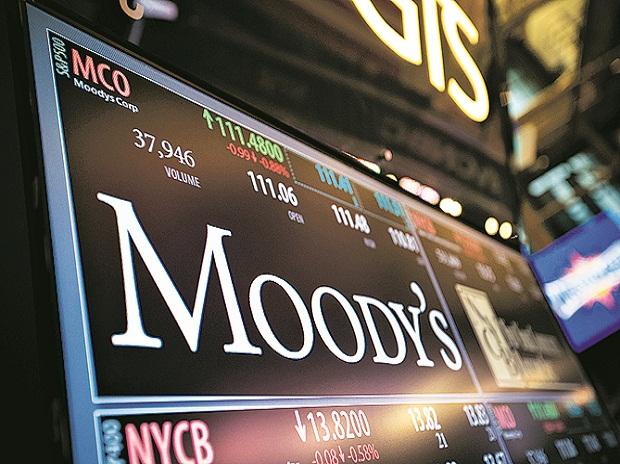
As of December 31, Moody's rated 145 HY companies, of which 138 are included in its indicator. – Twitter pic, January 15, 2021

KUALA LUMPUR – The Asian Liquidity Stress Indicator (ALSI) decreased slightly to 32.6% in December from 33.6% in November, but remains well above the long-term average, Moody’s Investors Service said.

In a statement today, it said that the ALSI remains elevated as liquidity remains weak for 45 of 138 rated high-yield companies.

The ALSI measures the percentage of high-yield (HY) companies with Moody's weakest speculative-grade liquidity score as a proportion of the total number of corporate family ratings.

The indicator decreases when liquidity across the portfolio broadly improves.

As of December 31, Moody's rated 145 HY companies, of which 138 are included in its indicator.

“Liquidity stress increased significantly in 2020 for the rated HY portfolio amid extensive coronavirus disruptions and tightening credit conditions.

“Despite some improvement in recent months, the ALSI remains well above the pre-pandemic level of 29.4%,” said senior vice-president Annalisa Di Chiara in the statement today.

She noted that the ALSI remains significantly weaker than the US’ Liquidity Stress Indicator (LSI) and Europe, the Middle East and Africa LSI, as relationship banking – which relies on rolling over short-term and uncommitted credit lines rather than committed levels of funding – is far more common in Asia than in other major economic regions.

Meanwhile, Moody's South and Southeast Asian sub-indicator continued its improving trend to 37.5% in December from 40.0% in November and a record high of 54.8% in June.

It added that the North Asian sub-indicator remained stable at 30.6% in December, with the China industrials sub-indicator improving to 58.1% in December from 60.0% in November.

Rated HY issuance reached US$1.2 billion (RM4.8 billion) in December, pushing full-year issuance to US$37.7 billion – the second-highest annual level on record, with 76% of total issuance coming from China property companies in 2020. – Bernama, January 15, 2021

Related News

Business / 3y

Moody’s affirms Malaysia’s A3 rating with stable outlook

Business / 3y

Moody’s: higher data, broadband consumption in Apac to drive growth through 2023

Business / 3y

Govt policies will spur Emerging Asia towards decarbonisation: Moody’s

Business / 4y

Geopolitical trends working in Malaysia’s favour: Moody’s

Business / 4y

Malaysia’s 2022 exports outlook positive: Moody’s

Business / 4y

Moody’s lifts Malaysia’s 2022 growth forecast to 5%

Spotlight

Malaysia

RM245m Penang Hill cable car project 32 per cent complete - CM

By Ian McIntyre

Malaysia

Six locals charged over alleged kidnapping of Singaporean couple in Johor

Malaysia

PM: No political, racial or religious shield for those found guilty in TH, Felda probes

Malaysia

Singapore security guard jailed 14 days, fined RM7,000 for insulting Islam

Health

Dengue cases soar 56% to 58,079 as nation records 55 deaths

Malaysia

NGOs urge BERSAMA to put Indian community agenda on political radar

By Alfian Z.M. Tahir

Health

MOH warns seniors against unproven hydrogen inhalers

Malaysia

Former Tabung Haji CEO remanded seven days as MACC RCI probe deepens

Malaysia

21 held in KLIA-Nilai crackdown on alleged online love scam syndicate

You may be interested

Business

Tey Por Yee and four others ordered to pay RM103.75m in SC civil suit

Business

Independent review needed, not blind denial, to address US claims – maritime expert

Business

Robo.ai expects shareholders’ equity to turn positive after restructuring

By Alfian Z.M. Tahir

Business

Oil prices surge as US-Iran standoff, Ukraine strikes rattle global energy markets